For commercial and industrial contractors across the Ohio Valley, wetlands permitting under the Clean Water Act is not an abstract environmental topic. It is a front-end risk issue that directly affects bidding, scheduling, and contract performance on projects from Cincinnati to Lima and across Northern Kentucky and Southeastern Indiana.
Key Takeaways
Wetlands permitting involves federal, state, and local agencies, and the rules that govern it are actively shifting. Contractors who fail to account for permitting risk early in project planning expose themselves to schedule slips, cost overruns, and scope disputes that erode profitability. Here is what Ohio Valley construction leaders need to know heading into 2026.
- Federal jurisdiction over “waters of the United States” (WOTUS) determines whether a proposed project needs an Army Corps of Engineers Section 404 permit for discharging dredged or fill material, along with a related Section 401 water quality certification from the state.
- Ohio contractors may also need isolated wetlands permits from Ohio EPA, even where the Army Corps has no jurisdiction. Kentucky and Indiana each add their own state and local requirements that can catch contractors off guard.
- Early wetland delineations, timely jurisdictional determinations, and complete application materials are essential to avoid schedule disruptions, bid disputes, and change orders on earthwork, utility, and civil packages.
- ABC Ohio Valley members can use the chapter’s merit shop advocacy and federal policy updates, Ohio commercial construction growth signal coverage, and latest ABC backlog numbers to understand how permitting delays affect backlog, cash flow, and contract risk.
Wetlands Permitting Basics for Ohio Valley Contractors
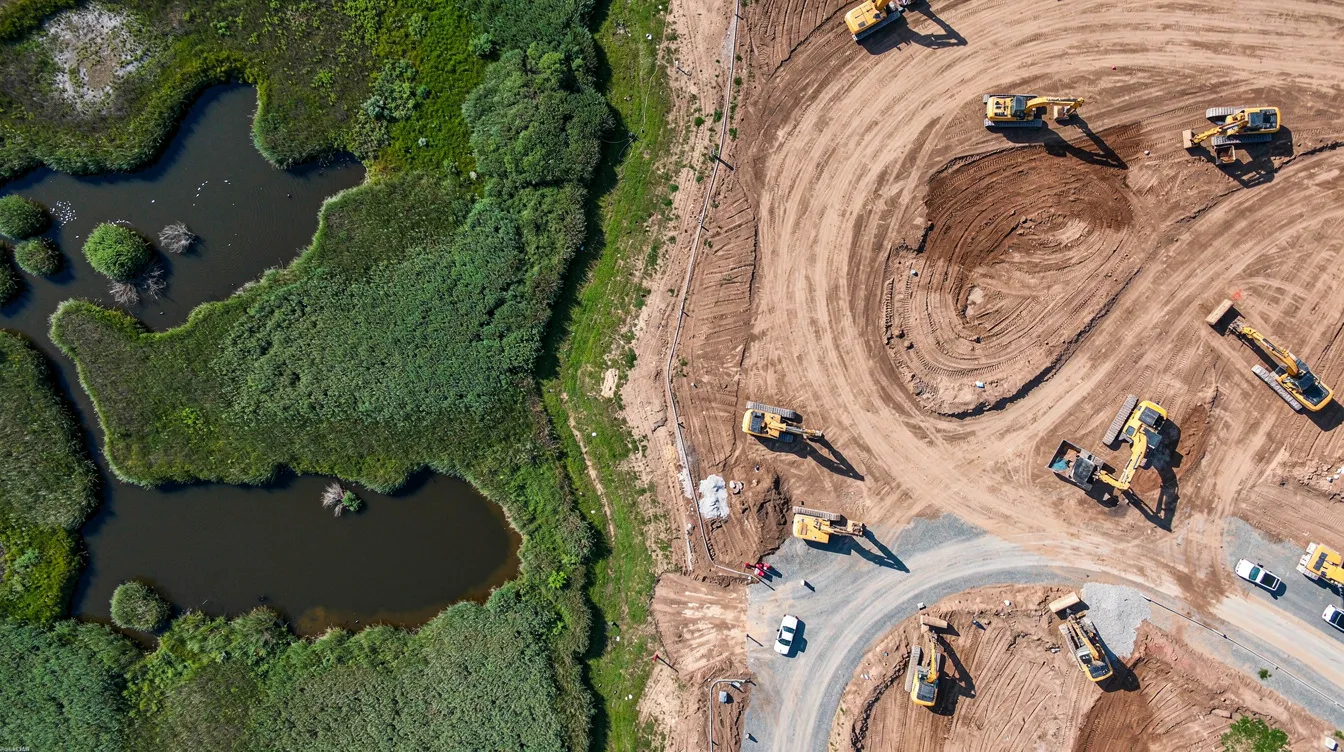
Wetlands permitting is the regulatory process that determines when and how construction activities can affect wetlands, streams, and other water resources on or near a project site. For contractors working in the Cincinnati, Dayton, Springfield, Lima, Northern Kentucky, and Southeastern Indiana markets, understanding this process is essential to managing scope, schedule, and cost on commercial and industrial projects.
The Clean Water Act (CWA), significantly amended in 1972, regulates the nation’s water protection and governs discharges into U.S. waters. Here is how the system works at a high level:
- The CWA establishes the legal framework. When a project involves placing fill material or discharging dredged material into jurisdictional waters or wetlands, a federal permit is required.
- The U.S. Army Corps of Engineers issues Section 404 permits when activities trigger review for discharging dredged or fill material into jurisdictional waters. States handle the associated Section 401 water quality certification before federal permits can be issued.
- Wetlands permitting applies to common sitework packages: mass grading, building pads, utility corridors crossing streams, culvert installations, stormwater management basins, and access road construction.
- Wetlands serve critical natural resources functions. They purify water by filtering harmful pollutants, protect against flooding by soaking up stormwater, absorb excess carbon dioxide (mitigating climate change), and provide habitat for numerous animal species. More than half of the nation’s wetlands were destroyed by the 1980s, which is why regulations are stringent today.
- Federal agencies must comply with all water pollution control requirements, and state agencies can impose additional rules beyond the federal baseline.
How WOTUS and the Clean Water Act Shape Wetlands Permitting
The evolving federal definition of “waters of the United States” is the gateway to Clean Water Act jurisdiction. That definition determines permit triggers on Ohio Valley job sites, and every shift in interpretation can change the rules mid-project.
WOTUS defines which rivers, streams, wetlands, navigable waters, surface waters, and adjacent features fall under federal jurisdiction. When a wetland or waterway meets WOTUS criteria, the Environmental Protection Agency and the Army Corps have regulatory authority, and a permit application is required before any discharge of pollutants or fill occurs. The Supreme Court’s Sackett v. EPA decision changed federal jurisdiction over wetlands, and as of March 12, 2025, jurisdiction is limited to wetlands with a direct connection to navigable waters. Wetlands must have a continuous surface connection to navigable waters for federal protection.
The federal government continues to refine the standard. On September 3, 2026, the EPA and the Department of the Army released a supplemental notice of proposed rulemaking to refine the WOTUS definition. Among the key alternatives under consideration is adjusting the definition of adjacent wetlands to require a continuous surface connection to jurisdictional waters. This could reduce the number of certain wetlands subject to federal permits while increasing the importance of state and local requirements.
For contractors, this means a wetland that triggered a federal permit last year may not trigger one next year, or vice versa. Even with narrower federal jurisdiction, states can regulate wetlands even if they are not federally jurisdictional. That reality matters for sites in western Ohio and along the I-75 and I-70 corridors, where isolated wetlands and ephemeral channels are common. ABC Ohio Valley’s broader coverage of merit shop advocacy and federal policy provides ongoing context for how these federal regulatory changes affect project delivery.
Federal Permits, Wetland Delineations, Jurisdictional Wetlands, and Jurisdictional Determinations
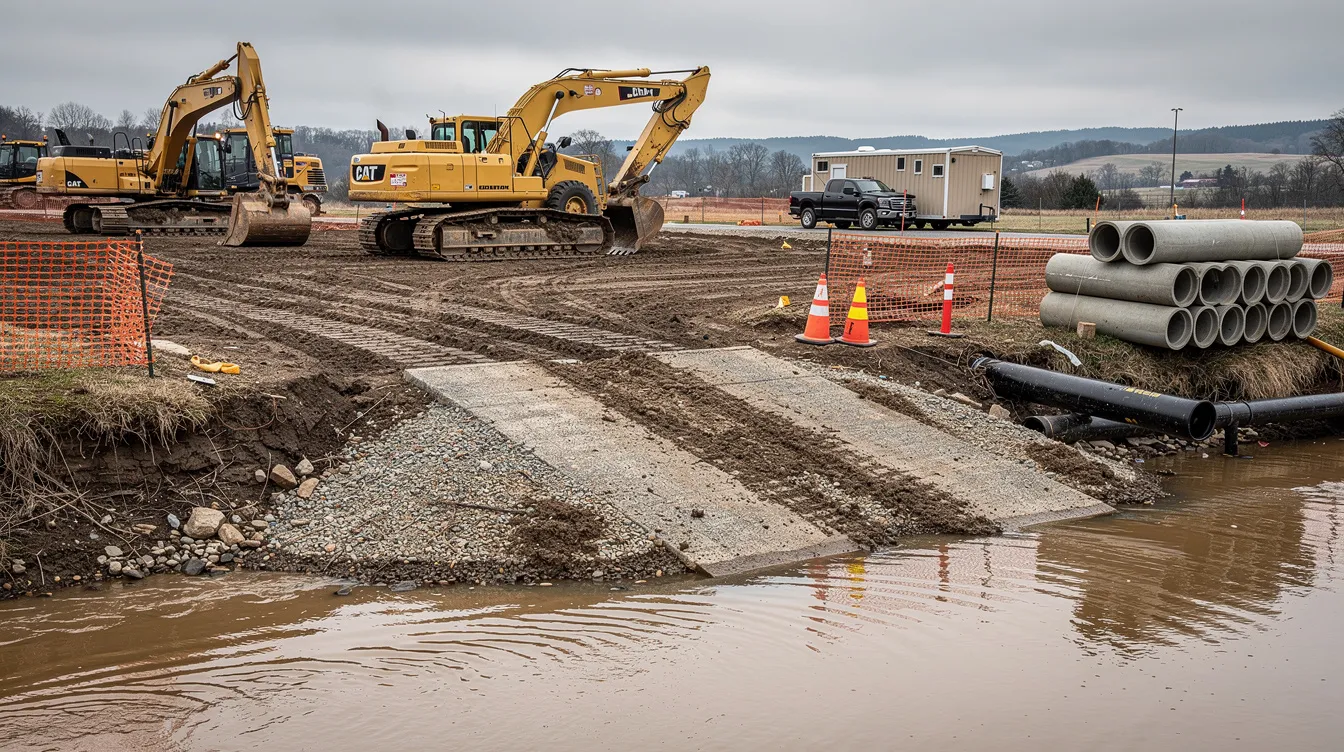
Before a contractor can move soil or place fill material on a site with potential wetlands, three key steps must be completed: a wetland delineation, a jurisdictional determination, and the formal permit application. Each step carries its own timeline and documentation burden.
- Wetland delineation. A wetland delineation must be conducted to map wetlands before applying for permits. Contractors typically rely on qualified consultants who identify boundaries using the following criteria defined by the 1989 Federal Manual: hydric soils, hydrophytic vegetation, and wetland hydrology. The delineation report must be in a format acceptable to the Army Corps and state regulators.
- Jurisdictional determination (JD). After delineation, the Army Corps of Engineers determines whether the identified wetlands or waterways constitute jurisdictional waters under the WOTUS standard. A preliminary JD is advisory; an approved jurisdictional determination (AJD) carries legal weight and is valid for five years. In regional Corps districts, obtaining an AJD can take three to eight months once the applicant submits delineation data. Getting an approved determination often takes significant effort because the Corps closely reviews delineation support.
- Permit application. The permitting process typically requires identifying jurisdiction, determining impacts, and submitting an application with documentation; agencies often require specific checklists and forms as part of the submittal package. Application materials for a Section 404 permit include site plans, impact calculations (acreage of wetland impacts), construction sequencing details, a mitigation proposal, and an alternatives analysis. The regulatory agencies evaluate the project based on comprehensive environmental criteria, including threatened and endangered species consultation, and stakeholder engagement often includes public notice to gather community feedback on permit applications.
- Mitigation. Applicants must demonstrate efforts to avoid, minimize, and compensate for wetland impacts. Mitigation includes restoring, creating, or enhancing wetlands to offset ecological losses, and may involve purchasing credits from a mitigation bank or paying in-lieu fees.
- Risk of incomplete submissions. Incomplete or inaccurate delineations and jurisdictional determinations can trigger resubmittals, Requests for Information from the federal agency, and work stoppages that ripple through the critical path. Federal permits require concurrent state water quality certification before issuance, which adds another review layer. Section 401 of the CWA requires states to review federal permit applications for water quality compliance.
State and Local Layers: Ohio, Kentucky, and Indiana Compared
Federal WOTUS decisions are only one part of wetlands permitting. Ohio, Kentucky, and Indiana each add regulatory overlays that contractors must navigate. States operate independent wetland protection programs alongside federal regulations, and permitting rules vary significantly by state, making specific regional knowledge essential.
- Ohio. Ohio’s isolated wetland permitting program regulates wetlands not under federal jurisdiction. Ohio EPA issues Isolated Wetland Permits for non-jurisdictional wetlands, meaning a project may require both a Section 404 permit from the Army Corps and an isolated wetlands permit from Ohio EPA. Ohio requires a Section 404 permit for dredged or fill material in jurisdictional waters and a separate Ohio EPA Section 401 Water Quality Certification for dredged material. Wetland categorization tools (such as ORAM) determine review levels and mitigation hierarchy.
- Kentucky. The Kentucky Division of Water handles Section 401 water quality certifications for any project requiring federal permits. Northern Kentucky counties (Boone, Kenton, Campbell) may impose additional stormwater or floodplain ordinances that affect sitework approvals. Kentucky does not have a broadly analogous isolated wetlands permit program like Ohio, but state and local rules still govern impacts.
- Indiana. Indiana regulates state-regulated wetlands under its own program administered by IDEM. Two state permit types exist: the Isolated Wetland General Permit and the Individual Permit. A “no federal permit” finding does not automatically mean “no permits at all.” Local planning or drainage boards in Southeastern Indiana counties may impose additional requirements.
- Other states for comparison. Permitting structures differ widely across the country. For instance, New Jersey issues coastal wetlands permits and freshwater wetlands permits and has three categories of wetlands permits: coastal, freshwater, and transition area waivers. New Jersey offers 30 general permits for freshwater wetlands. This illustrates why a program that works in one state cannot simply be transplanted to another.
- Local overlay. Local zoning departments sometimes enforce stricter wetland protection ordinances than federal or state rules, adding another layer for contractors to verify during preconstruction.
Where Wetlands Permitting Shows Up in Ohio Valley Project Delivery
Wetlands permitting issues can emerge at almost every phase of project delivery: due diligence, land acquisition, schematic design, preconstruction, and early grading. Catching them late is expensive. Here is where they typically surface:
- Site selection. Proximity to rivers, floodplains, or low areas near tributaries may affect whether a location is viable for a manufacturing plant, warehouse, or healthcare facility in markets like Dayton and Lima.
- Layout and design. Routing parking areas, truck courts, and building pads around delineated wetlands can fundamentally change site plans.
- Utility crossings. Utility corridors that cross streams or wetlands require separate review, and schedule impacts are often underestimated.
- Stormwater management. Basin design, drainage swales, and outfall locations frequently intersect regulated features.
- Rail and road corridors. Infrastructure improvements that cross tributaries or wetlands carry their own permit requirements, separate from the primary site permit.
- Design-build and design-assist delivery. On these projects, clear roles must be spelled out for who handles wetland delineations, jurisdictional determinations, and the federal or state permit application submittals. Gaps in responsibility create gaps in the schedule.
Permit Application Timelines, Bid Contingencies, and Schedule Buffers
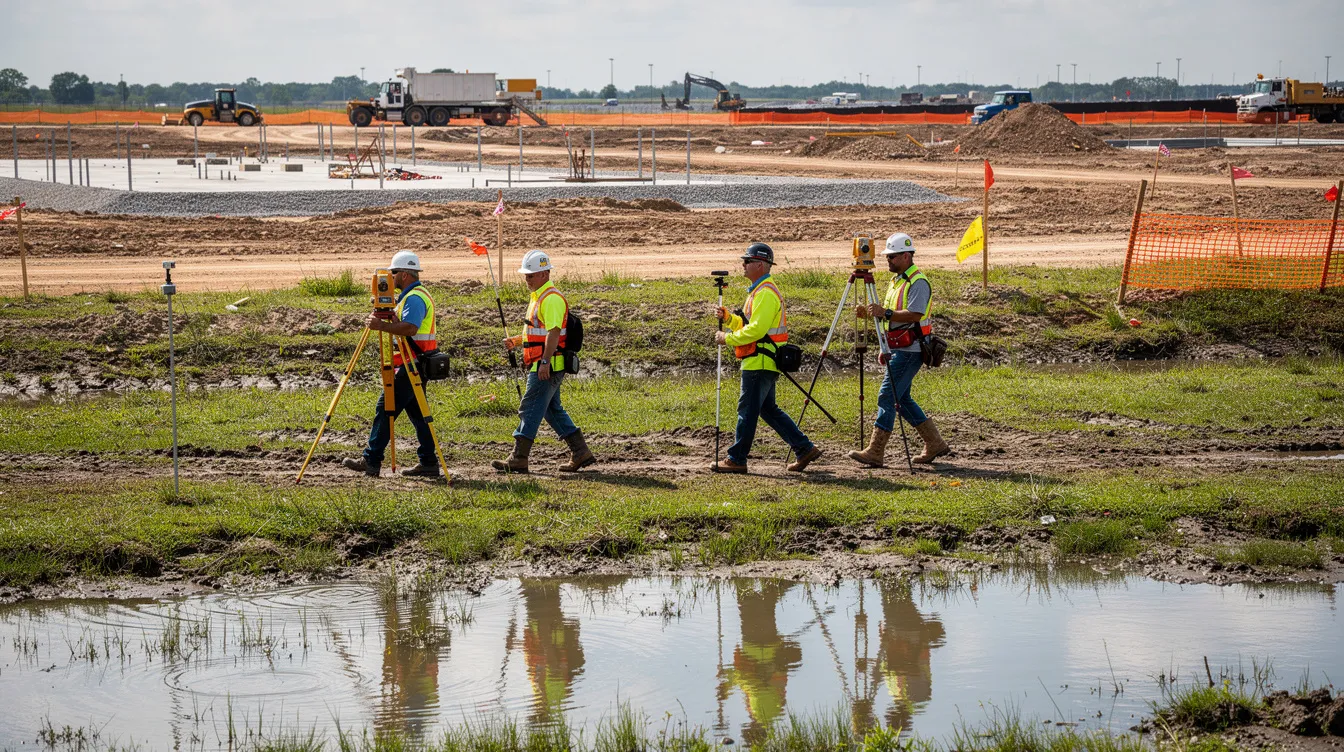
Wetlands permitting timelines connect directly to construction scheduling, cash flow, and the ability to promise realistic completion dates to owners. Permitting timelines can vary from weeks to months depending on the complexity of the proposed project and the completeness of the applicant’s submission.
- Typical review windows. In Ohio, individual Section 404 and 401 permit processes often require 8 to 12 months from complete application to decision. General permit processes and smaller state isolated wetland permits can take 30 to 90 days. In Indiana, state-regulated wetland individual permits have a 15-business-day completeness review window, followed by a 30-day public involvement period and a 90-day decision window.
- Bid contingencies. Contractors should reflect wetlands permitting uncertainty in bid contingencies, especially for earthwork, utility, and civil packages on large industrial and infrastructure jobs. Document assumptions about permit timing in the bid and carry them forward into the contract.
- CPM schedule buffers. Best practice is to set clear “no-earlier-than” dates for mass grading and in-stream work tied to expected permit approvals. This prevents premature mobilization and potential stop-work orders.
- Backlog context. In a busy market, additional permitting delays erode margins. ABC Ohio Valley’s coverage of the latest ABC backlog numbers provides context for why schedule certainty matters to profitability right now.
Managing Contract Risk: Scope, Change Orders, and Legal Support
Wetlands permitting risk is as much a contract and communication issue as it is a technical environmental issue. Identify who is responsible for permit delays or unexpected mitigation costs before the contract is signed, not after a stop-work notice arrives.
- Allocate responsibility clearly. Contracts should specify who obtains federal, state, and local permits, who pays for additional wetland delineations or mitigation, and who handles redesigns if field conditions differ from the plan.
- Force majeure and notice provisions. Review these clauses to ensure they cover delays caused by evolving jurisdictional determinations, new Clean Water Act guidance, or newly discovered jurisdictional waters. Notice provisions should require prompt communication when any change in permit scope or schedule is identified.
- Change order processes. Define in advance how to handle field discoveries of additional wet areas, including responsibility for redesign, cost adjustment, and construction sequencing changes.
- Legal support. When permit denials, high mitigation requirements, or stakeholder disputes arise, engaging construction attorney guidance is essential. Counsel experienced in Clean Water Act issues can help navigate stop-work orders, appeals, and contract disputes related to wetlands permitting.
- Contemporaneous documentation. Maintain dated delineation reports, correspondence with the Army Corps and state agencies, meeting notes, formal JD or AJD letters, and schedule updates. These records support entitlement for time extensions or added compensation when permitting delays affect performance.
Key Questions to Ask Before Breaking Ground on a Site With Wetlands Risk
Before mobilizing on any project with potential wetlands exposure, Ohio Valley contractors should work through the following questions during preconstruction meetings and go/no-go decisions.
- Has a current wetland delineation been completed, and is it less than five years old?
- Has the Army Corps issued a jurisdictional determination for the site, and is it preliminary or approved?
- Are any isolated wetlands permits or other state approvals still pending?
- Who owns the permit application process: the owner, the design team, or the contractor?
- What assumptions were made in the bid about permit timing and regulatory review?
- How much schedule float is reserved for regulatory reviews, public involvement periods, and potential Requests for Information?
- What happens if additional wet areas are discovered during stripping or early grading, and who has authority to stop work and revise plans?
- Has the project team confirmed whether local requirements (zoning, floodplain, drainage board) apply in addition to federal and state permits?
- Are mitigation bank credits available in the service area, or will on-site mitigation be required?
- Has environmental counsel reviewed the contract language related to permitting risk, force majeure, and change orders?
How ABC Ohio Valley Helps Members Navigate Wetlands Permitting
ABC Ohio Valley serves as a regional resource for regulatory intelligence, training, and advocacy on issues like wetlands permitting that directly affect project risk and profitability.
- The chapter’s merit shop advocacy and federal policy updates help members track changes in WOTUS, Clean Water Act interpretation, and related state actions that influence permitting strategies in Ohio, Kentucky, and Indiana.
- Education and professional development programs can include sessions on sitework permitting, environmental compliance, and coordination with consultants, tailored for superintendents, project managers, and executives.
- Peer learning opportunities, including safety and operations peer groups, give members a forum to discuss practical lessons from projects involving complex wetlands permitting.
- Members are encouraged to contact ABC Ohio Valley for updates, training, and connections that support better planning around wetlands permitting in the Ohio Valley construction market.
Practical Next Steps for Ohio Valley Construction Leaders in 2026
2026 is a pivotal year to tighten wetlands permitting practices. Ongoing WOTUS clarification efforts at the federal level, combined with strong regional demand for commercial and industrial construction, make proactive planning a competitive advantage.
- Audit current and upcoming projects for wetlands exposure. Review contract language related to permitting, and confirm the status of every permit application on jobs scheduled to mobilize in the next 6 to 12 months.
- Align estimating, preconstruction, and field teams around a consistent approach to wetlands permitting so that no person or department is making assumptions without the others’ knowledge.
- Connect permitting-sensitive work with ABC Ohio Valley resources: advocacy alerts, education offerings, and referrals to trusted consultants or legal counsel.
- Firms that integrate wetlands permitting risk into their planning now will be better positioned to maintain schedule certainty and owner confidence as regulations continue to evolve.

Frequently Asked Questions About Wetlands Permitting in the Ohio Valley
These questions address practical issues that Ohio Valley contractors commonly encounter beyond what is covered in detail above.
Does every Ohio Valley commercial project need a wetlands-related permit?
Not every project requires a wetlands permit. Redevelopment on previously disturbed urban sites, for example, may have no regulated features. However, any work involving grading, utility crossings, or stormwater features near streams, ditches, or low areas should be screened for potential jurisdictional waters or isolated wetlands. A desktop review followed by a site walk with someone familiar with wetland indicators is often enough to determine whether to engage a formal delineation professional.
How far in advance should we start permit application work before breaking ground?
Contractors and owners should ideally begin wetlands due diligence at site selection and at least several months before the planned notice to proceed. Wetland delineations, jurisdictional determinations, and permit reviews can extend across multiple design milestones. Complex greenfield sites or projects in environmentally sensitive corridors along major rivers or floodplains in Ohio, Kentucky, or Indiana warrant additional lead time.
Can wetlands permitting requirements change after we have already bid the project?
Yes. Evolving federal guidance, updated jurisdictional determinations, certain activities that trigger added review, or new site information discovered during construction can alter permit requirements after bids are submitted. This underscores the need for clear contract language and documented permitting assumptions. Contractors should keep owners informed about regulatory developments and formally submit any material changes through the contract’s change order or adjustment mechanisms.
Who should coordinate with environmental consultants and regulators on our team?
A designated preconstruction or project executive should lead wetlands permitting coordination, supported by the project manager and estimator. This ensures communications with consultants, the Army Corps, and state agencies remain consistent and well documented. On design-build or CM at-risk work, the contract should clearly define the contractor’s role in this coordination to avoid gaps with the design team or owner.
How can we stay informed about future WOTUS and Clean Water Act changes affecting wetlands permitting?
Monitor ABC Ohio Valley communications, including advocacy alerts and educational events, for updates on federal and state water-related policy that may shift permitting triggers or timelines. Combine those updates with periodic consultation from in-house or outside counsel experienced in Clean Water Act issues to help contractors adjust project planning and risk management before new rules take effect, while recognizing that separate laws govern groundwater and drinking water concerns even when wetlands permitting turns on Clean Water Act standards.