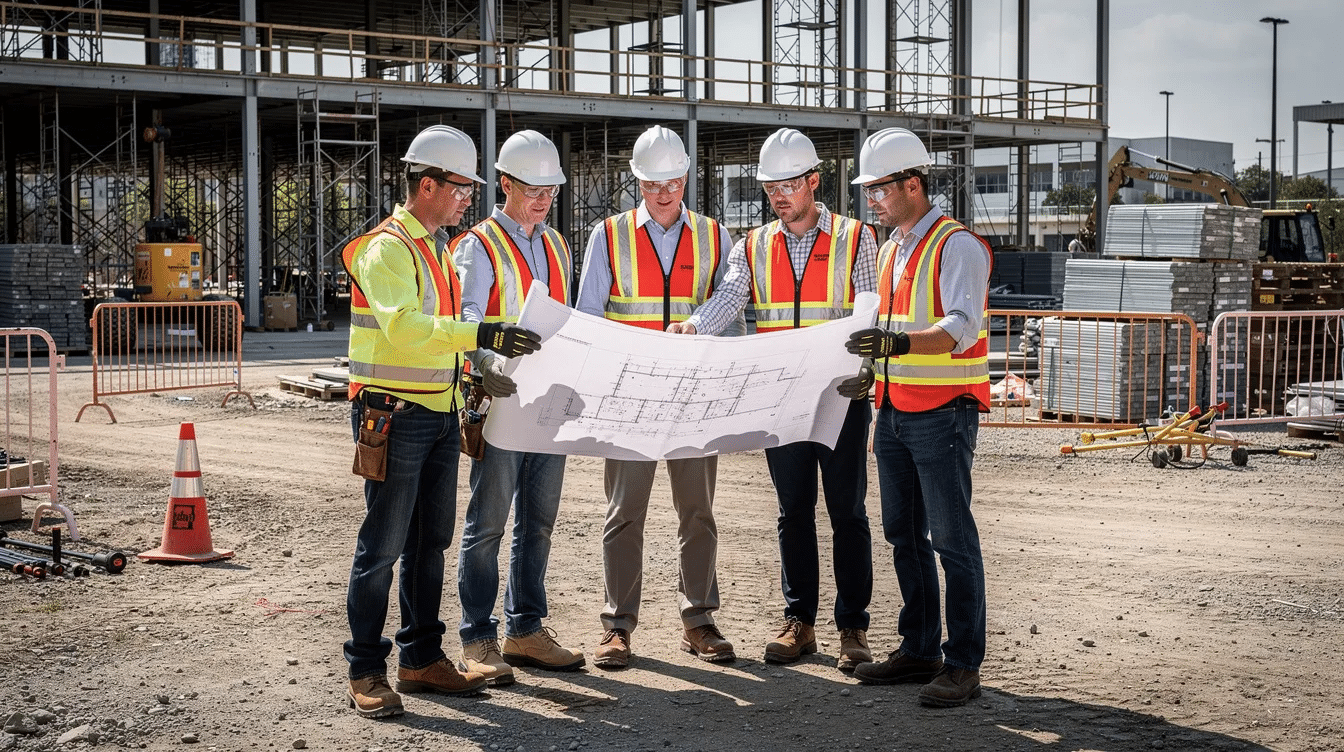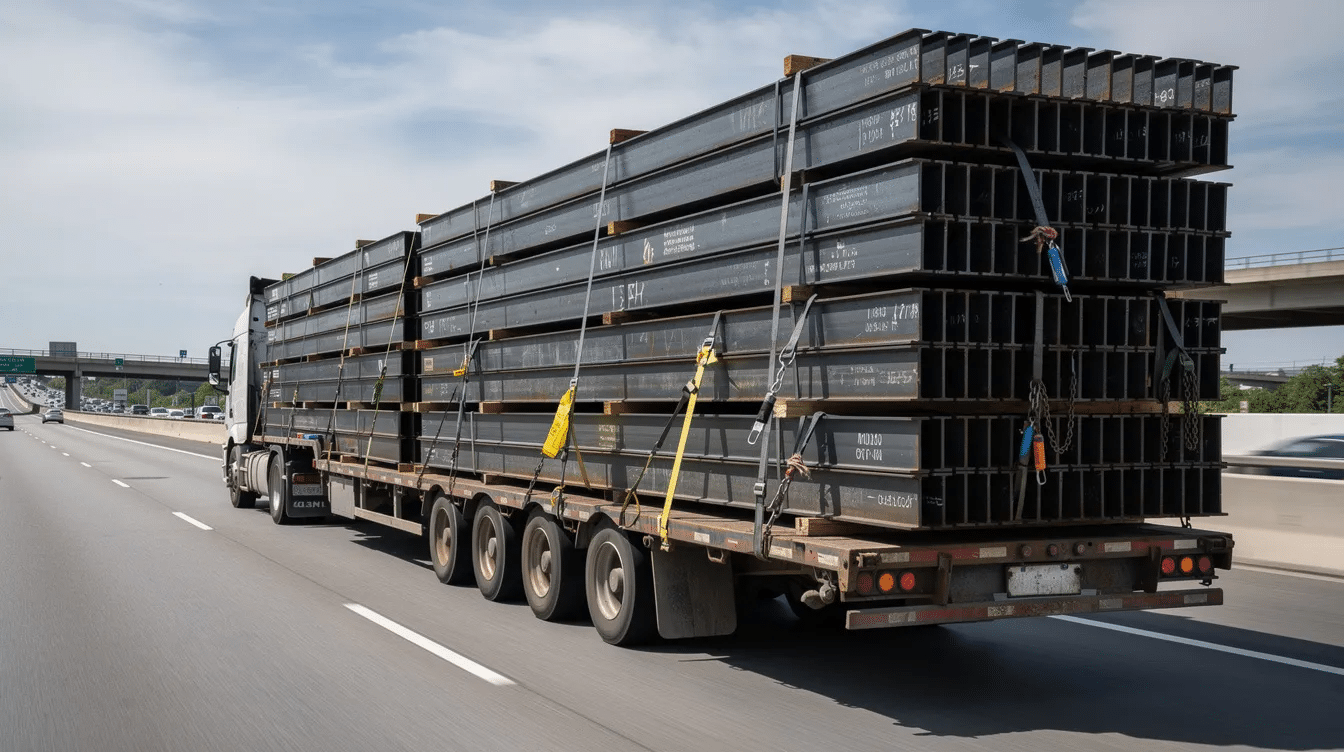

When steel fabrication delivery planning breaks down, the consequences show up fast. Cranes sit idle. Erection crews wait for members that arrived out of order or never left the shop. Laydown zones fill with steel that belongs three phases ahead while the pieces needed today are buried or missing entirely. On Ohio Valley commercial and industrial projects, where site access can be tight and schedules are compressed, poor delivery planning can cause site congestion and project shutdowns.
Steel fabrication delivery planning covers the full chain of coordination that must happen before the first truck arrives: detailing, fabrication release, coatings, delivery sequencing, site access verification, staging, and alignment with the erection sequence. It is not a single handoff. It connects every project participant, from the design team to the crane operator. Delivery must be reverse-engineered from the construction site erection schedule, not assembled around shop convenience.
Consider a warehouse project in Dayton where over-length beams cannot clear a bridge on the planned route, forcing last-minute re-routing and permit delays. Or a Cincinnati healthcare addition on an active campus where the hospital restricts deliveries to a narrow window, and a misaligned delivery sequence means the erector cannot start the steel erection phase because the columns for the first bay are buried under material for the second floor. These are not rare events. They are predictable failures of coordination.
OSHA’s steel erection standards under Subpart R (§1926.752) require that the site layout provide adequate access roads for safe delivery and movement of cranes, trucks, and material to be erected, along with pedestrian and vehicular control. OSHA also mandates that all hoisting operations in steel erection be pre-planned. AISC’s Code of Standard Practice reinforces this: fabricated structural steel should be delivered in a sequence that allows efficient, economical erection, consistent with the contract documents. Construction projects require coordinated logistics, quality control, and site installation, and steel deliveries require clear staging and access plans.
This article is written for Ohio Valley general contractors and construction managers who serve as the controlling contractor on projects involving structural steel. The framework that follows, including a field-ready checklist, covers what to confirm with the fabricator, how to translate the erection sequence into a delivery sequence, what must be ready on site, and where coordination typically fails.
What the GC Should Confirm With the Steel Fabricator Before Scheduling the First Delivery
Pre-planning starts weeks or months before the first steel package is released, not the week of delivery. Effective sequencing starts with the erector’s erection plan, and the GC must ensure steel fabricators have it before production planning begins so deliveries align with field installation needs, not shop output schedules.
The GC should require the following from the fabricator before confirming any delivery date:
- Proposed erection sequence by grid line, bay, and area, coordinated with the erector.
- Delivery sequencing plan showing the anticipated number of loads, load contents tied to piece marks, and shipping dates matched to erection zones in field priority order.
- Confirm lead times for long-rolling sections, jumbo shapes, embeds, anchor rods, base plates, and specialty items. A typical fabrication sequence begins with anchor rods and embeds; these must ship well before the main framing steel.
- Piece marking and shipping lists organized by grid line, level, and area. Clear piece marks reduce time searching on the ground and help crane crews pick efficiently.
- Transport constraints such as maximum member length, load weight, bridge clearances, and route restrictions entering Cincinnati, Dayton, Springfield, Lima, or river-crossing corridors. Steel components are often heavy and oversized, requiring careful planning for safe deployment. Oversized loads require specialized trailers and may need escorts or permits.
- Coating and treatment schedules for galvanized steel, shop paint, or fireproofing, including handling and drying requirements.
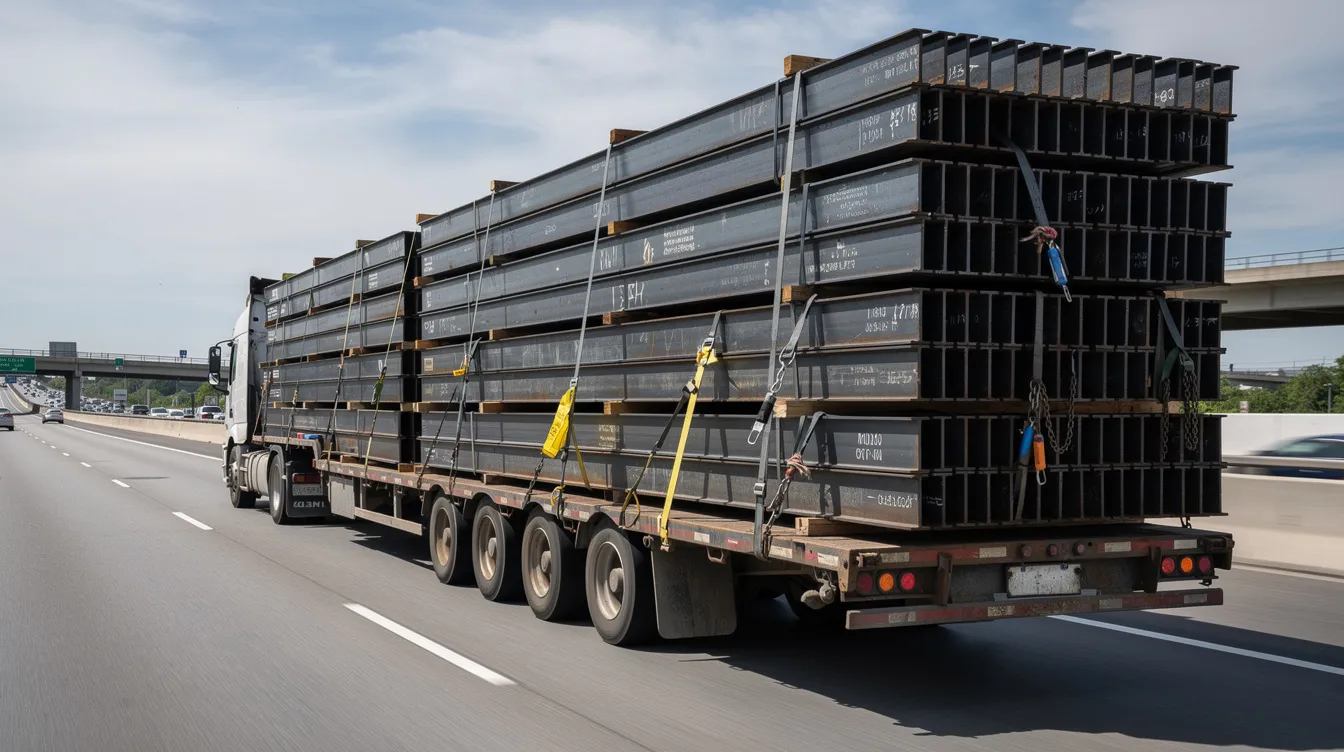
Delivery schedules should include detailed material specifications and timelines. Clear transportation requirements are vital to fabrication project planning. Incomplete release planning or poorly matched loads can quickly add cost. A single delivery date rarely covers all miscellaneous steel needs; small components should arrive with related larger members, and loose materials must clearly connect to piece marks and work areas. Small-part packages need durable labels for identification so field teams can locate connection plates, clips, and bolts without delay.
Translating the Erection Sequence Into a Steel Delivery Sequence
The erection plan, not shop convenience, should drive the delivery sequence for every steel package. Effective sequencing aligns steel delivery with erection needs by breaking the structure into zones and scheduling loads accordingly.
Break the building into erection zones by grid lines, bays, or levels. A typical mid-rise frame in the Ohio Valley follows this pattern: anchor rods and base plates first, then columns, primary beams, secondary beams and bracing, followed by decking, stair towers, equipment platforms, and rails. Deliveries must follow this sequence zone by zone.
Crane location and reach limits influence which loads arrive first. On congested urban or industrial sites, early deliveries must not block the crane swing area or obstruct access roads for later trucks. Coordinate with the erector to decide which members to pick directly from the truck versus stage in the laydown area. Direct picking supports efficient crane use and reduces idle time; crane efficiency depends on having suitable steel available at the point of erection. Load components on trucks in reverse erection order so the first piece needed is the last piece loaded and the first piece accessible.
Planning steel fabrication deliveries requires synchronizing transport logistics with installation sequences. A phased delivery approach is often more effective than delivering all materials at once. Just-in-time delivery minimizes storage requirements and on-site handling. Any change to the erection sequence must trigger deliberate changes to delivery sequencing and load planning, not informal field fixes that compound delays.
OSHA and AISC Requirements for Site Layout, Site Access, and Hoisting Pre-Planning
OSHA 1926 Subpart R (§1926.752) requires adequate access roads into and through the site for safe delivery and movement of derricks, cranes, trucks, other necessary equipment, and the material to be erected. The standard also requires means and methods for pedestrian and vehicular control. All hoisting operations in steel erection must be pre-planned to meet overhead-exposure requirements under §1926.753(d). Confirm permits before steel erection begins.
Key OSHA site layout and hoisting elements relevant to delivery include:
- Safe access for trucks and cranes with adequate turning radii
- Designated laydown areas sized for expected trailer lengths
- Controlled routes for material from the delivery point to the point of erection
- Clear access routes that prevent costly delays during erection
OSHA’s guidance ties the site-specific erection plan to pre-construction conferences and site inspections involving the erector, controlling contractor, project engineer, and fabricator. This collaborative process directly supports delivery planning. Delivery plans must consider site access and unloading logistics as integral parts of the erection plan, not afterthoughts.
AISC’s Code of Standard Practice states that when delivery and erection are contracted separately, the owner or controlling contractor must coordinate planning between those parties. Steel delivery safety practices should align with overall project management strategies.
GCs should maintain the following documents before the erection date:
- Site-specific erection plan (when used), showing crane pick paths, zones, and temporary supports
- Access map with approved truck routes, bridge clearances, and weight limits
- Crane path plan with swing radii and laydown adjacency
- Written delivery windows coordinated with traffic and noise restrictions
These requirements apply across Ohio, Kentucky, and Indiana, but GCs should verify state-specific oversize-load permitting, weight limits, and route restrictions, as they differ by jurisdiction.
What the Controlling Contractor Must Have Ready on Site Before Steel Arrives
Under OSHA, the controlling contractor coordinates work among subcontractors and ensures compliance with site layout and steel erection standards. On many Ohio Valley projects, this is the GC or CM-at-risk. Confirm site readiness before dispatching steel to a construction site to keep project timelines on track.
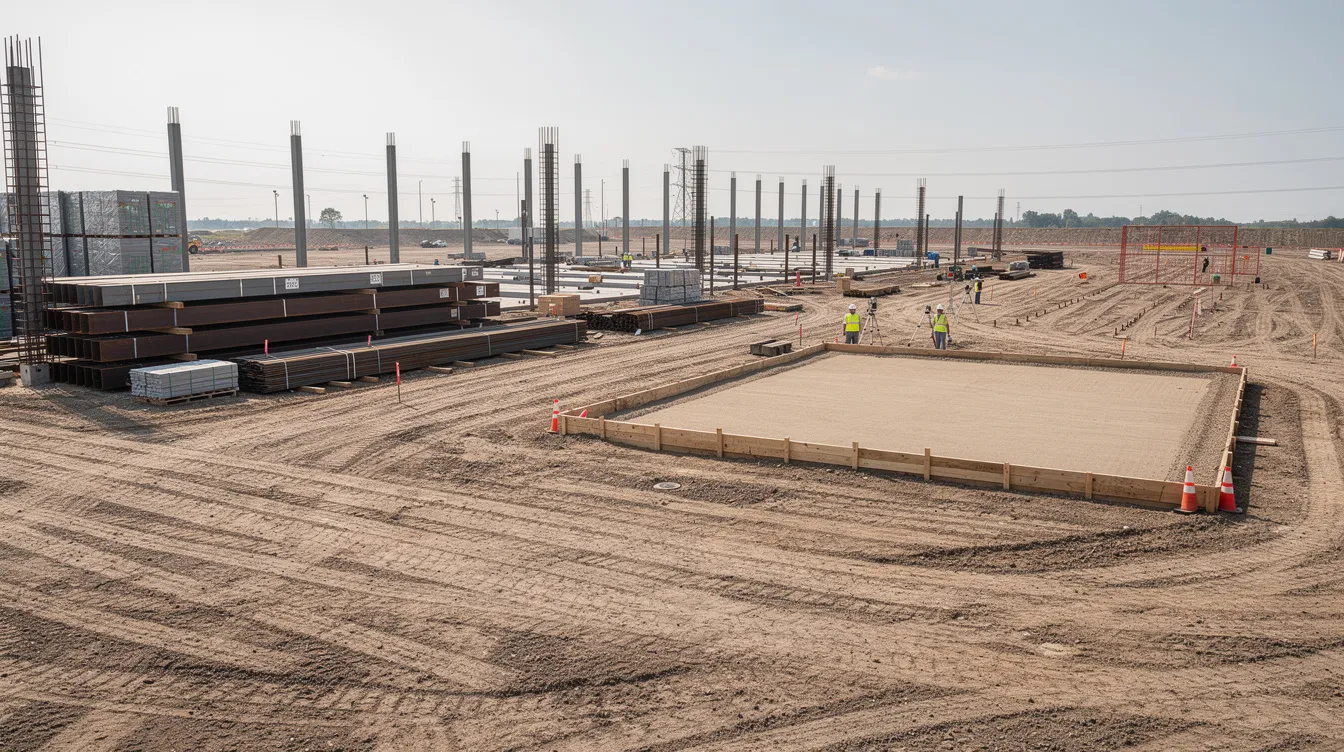
Site preparation must begin weeks before crane arrival. The controlling contractor should verify:
- Foundations and anchor bolts in the first erection area are complete, cured to at least 75% of design compressive strength, and within tolerance. Verify concrete placement for footings before scheduling delivery.
- Access roads into and through the site are graded, compacted, and can handle structural loads from loaded trailers. Address uneven terrain before trucks arrive.
- Crane pads are firm, graded, drained, and engineered for the planned crane configuration. Stable ground is essential for safe crane operation.
- Laydown zones are sized for expected trailer lengths and staged material, with no-conflict crane swing areas and protected pedestrian paths.
- Mark utility locates well in advance. Overhead power-line clearances must be confirmed.
- Document railroad, highway, or campus restrictions on truck access and parking.
Verify that staging space has not been given away to other trades’ storage, jobsite trailers, or dumpsters since the original logistics plan was drawn. Address any unresolved site-readiness constraints before releasing trucks to the site. Site congestion can block equipment and future work, and reclaiming lost laydown space mid-erection wastes time and money. Incorporating these checks into a standard pre-erection planning process strengthens both safety and schedule performance.
Coordinating GC, Fabricator, Erector, and Crane Company: Pre-Planning That Pays Off
Before the first delivery, the GC should convene a pre-construction coordination meeting (or series of meetings) with the fabricator, erector, and crane company—for example, with Mid-City Steel serving as the fabricator—to review the erection sequence and steel delivery plan together.
Agenda items should include:
- Confirming the erection sequence by area and phase
- Matching loads to crane moves and lift capacities
- Agreeing on direct-from-truck picks versus staged material
- Defining communication channels for day-of-delivery issues
- Assigning responsibility for live updates when site conditions change
OSHA requires pre-planning hoisting operations for steel erection, making crane, delivery, and rigging planning inseparable. When used, BIM coordination can support this handoff by validating crane paths, laydown space, and member clearances based on the structural steel model.
Effective communication between departments is essential to avoid delivery delays. Quality control checks are necessary before dispatching fabricated steel components from the shop. Monitoring key performance indicators helps improve fabrication delivery performance by tracking metrics such as on-time shipment rates, load accuracy, and damage reports.
Assign clear ownership of plan revisions. Coordinate staging, loading, delivery, and field sequencing with Mid-City Steel before trucks are dispatched. When site conditions change, clarify who revises the delivery sequence and how updates flow to foremen, drivers, and operators. These recurring coordination touchpoints reflect the kind of communication and leadership development that strengthens project outcomes across all trades.
Common Failure Points That Disrupt Steel Fabrication Delivery Planning
Many steel delays on Ohio Valley projects come from predictable missteps, not bad luck. Recognizing the patterns helps project managers prevent them.
Planning failures:
- Using outdated drawing revisions to release fabrication, resulting in members with wrong dimensions or connection conditions that require rework
- Assuming generic delivery sequencing without aligning to the specific crane location, site access, and erection sequence
- Releasing fabrication without confirming field milestones such as foundation completion or anchor bolt inspection
Site issues:
- Access roads too tight for 53-foot trailers or with insufficient turning radii
- Soft ground at planned crane pads due to poor drainage or uneven terrain
- Laydown space that disappears to jobsite trailers, dumpsters, or other trades’ material storage
- Site congestion that blocks equipment and future work
Missing pieces and components:
Small missing components can cause significant project delays. Even when all major columns and beams are on site, erection stops without connection plates, bolts, clips, or embeds. Small components can cause significant construction delays because a single missing clip can hold up an entire bay. Ensure every load includes a verified packing list tied to the erection zone.
Communication breakdowns:
- Late communication of schedule changes to the erector or crane company
- Incomplete information about coatings or fireproofing that affects special handling requirements
- No clear escalation path when deliveries slip
- Weather conditions can affect the transportation and unloading of heavy steel, and crews need advance notice
- Municipalities can restrict heavy vehicle movements during peak traffic hours, and failing to account for these restrictions delays the entire construction schedule
Changes in steel type, coatings, or erection methods require updated procedures and communication across every project participant. A revision to the finished product that is not communicated to field teams creates the same kind of quality failure that occurs after any material change on a construction project.
Using BIM Coordination and Digital Tools to Support Steel Delivery Sequencing
The structural steel model often sets the framework that drives coordination for all other trades. BIM coordination resolves conflicts before steel fabrication begins, allowing the GC, fabricator, and erector to align on sequence, access, and staging in a digital environment before mobilizing.
How GCs can use 3D and 4D tools for delivery planning:
- Visualize crane paths and confirm swing clearances against the building model and site layout
- Check laydown space against planned deliveries, ensuring staged material does not conflict with crane operations or truck access
- Sequence steel by zone and level, animating deliveries against the construction schedule to verify the erection sequence holds
- Identify workflow clashes such as crane access conflicts or blocked truck paths that would impact delivery
LOD 350 is necessary for effective BIM coordination of steel, capturing detail down to base plates, anchor rods, stiffeners, and connection geometry. Clash detection identifies conflicts between model elements in BIM, but coordination goes further: it catches workflow conflicts that clash detection alone misses. Effective BIM coordination requires a federated model of all trades. BIM coordination meetings help prioritize and resolve clashes before they become field problems.
Connect BIM-based planning with field superintendents’ input. A digital plan that does not reflect ground realities on a tight downtown Cincinnati site or a Dayton campus job will fail on delivery day. Investing in these coordination tools supports the training and technology adoption that improve operations and safety across the project.
Regional Logistics Considerations for Steel Delivery in the Ohio Valley
Local geography, weather, and infrastructure in Southwest and West Central Ohio, Northern Kentucky, and Southeastern Indiana create specific constraints for steel delivery planning that general contractors must address early.
Corridor and access constraints:
- I-75 and I-70 traffic patterns affect delivery timing and may require off-peak scheduling
- River-crossing bridges have weight and clearance limits that restrict over-dimensional loads
- Tight urban grids near hospitals, downtown office rehabs, and occupied buildings limit truck maneuvers and staging
Seasonal and weather impacts:
- Freeze-thaw cycles and spring rains affect ground stability for crane pads and access roads on greenfield sites
- Winter ice and snow can limit crane setup or restrict site access, requiring contingency windows in the delivery sequence
Owner and jurisdiction restrictions:
- Some industrial campuses and institutional owners enforce strict delivery windows, security protocols, and noise limits
- GCs should confirm local oversize-load permit requirements in Ohio, Kentucky, and Indiana, as rules differ for member length, delivery timing, and approved routing
Regional infrastructure and regulatory changes can affect transportation and site access on short notice. Staying informed about evolving permit requirements and bridge restrictions helps contractors avoid last-minute re-routing that disrupts the schedule.
Steel Fabrication Delivery Planning Checklist for Ohio Valley General Contractors
Use this checklist before confirming steel delivery dates. It consolidates the coordination, site readiness, and communication steps that keep steel erection on schedule.
Information to request from the fabricator:
- Erection sequence by zone, grid line, and level
- Load-by-load content list with piece marks, weights, and dimensions
- Coating or galvanized steel treatment requirements and handling notes
- Estimated arrival windows and load weights for each shipment
- Lead time status for long-rolling sections, embeds, and specialty items
- Confirmation that small components (bolts, clips, plates) are included with related larger members
Site-readiness checks:
- Foundations and anchor bolts verified complete and within tolerance in the first erection area
- Crane pads graded, compacted, and on level ground
- Truck access and turning paths cleared and confirmed for 53-foot trailers
- Utilities located and overhead lines marked
- Laydown space reserved, protected, and not reassigned to other trades
- Pedestrian and vehicle control measures in place per the site layout plan
Crane and erector coordination:
- Documented roles and communication tree (GC, fabricator, erector, crane company)
- Pre-planned hoisting operations with crane pick paths confirmed
- Agreement on direct-from-truck picks versus staged material
- Contingency plan for weather delays, access disruptions, or schedule changes
- Erection plan distributed to all field teams and project participants
Final 48-hour checks:
- Confirmation call with fabricator and erector verifying shipment status and arrival time
- Latest drawings, piece mark lists, and erection plan distributed to crews
- Traffic control, flaggers, and spotters scheduled for delivery and erection windows
- Weather forecast reviewed for impact on transportation and crane operations

Next Steps: Embedding Delivery Planning Into Your Company’s Standard Practice
Steel fabrication delivery planning is a repeatable discipline, not a one-off task reserved for complex projects. Every project with a steel package benefits from the same coordination: confirmed erection sequence, aligned delivery sequencing, verified site readiness, and clear communication among all project participants.
Turn the checklist and coordination steps in this article into a standard internal pre-erection procedure tied to superintendent training, project kickoff meetings, and production planning reviews. When field leaders know what to verify and when, the process becomes automatic, not reactive.
Strong delivery planning reflects the priorities that define effective merit-shop contractors: safety, training, workforce development, and communication applied to every phase of the project. It’s another way Ohio Valley contractors demonstrate quality and performance on complex commercial and industrial work.
Contact ABC Ohio Valley for information about training, peer groups, and member resources that help field leaders improve steel delivery and erection coordination across your project portfolio.