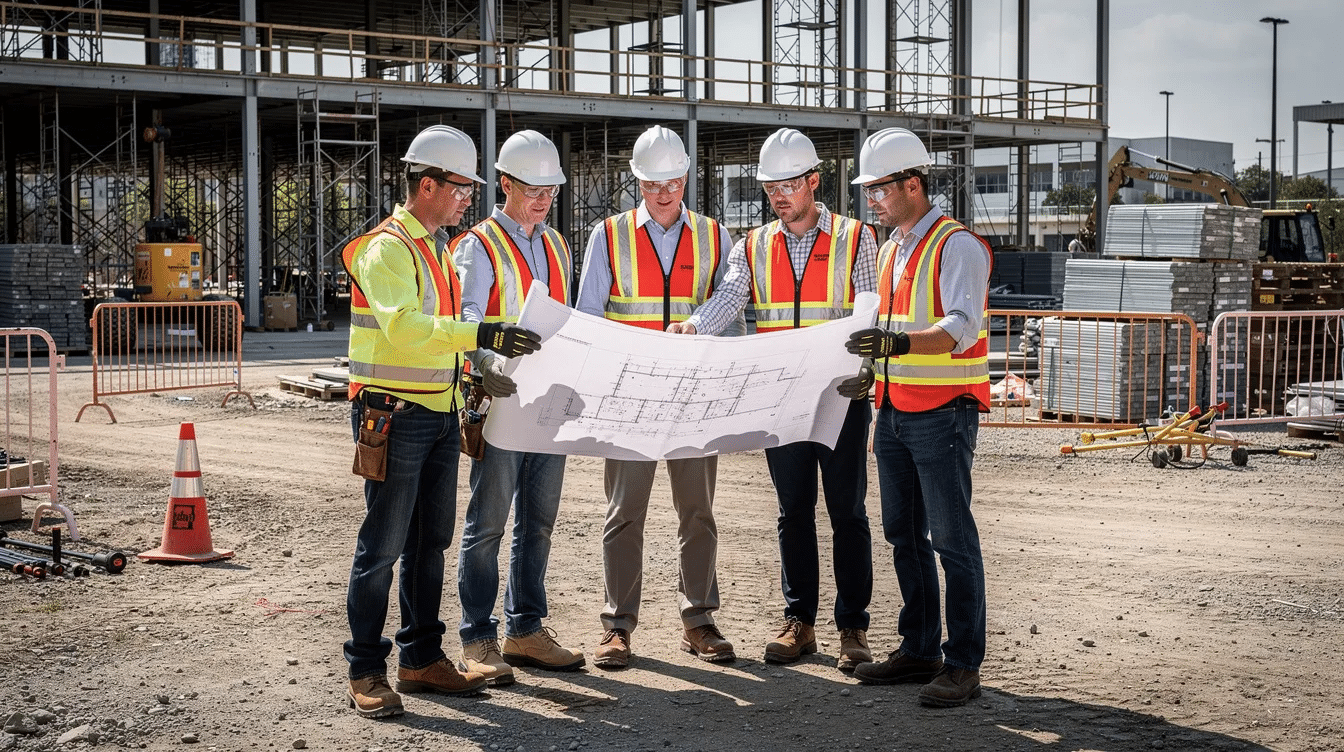
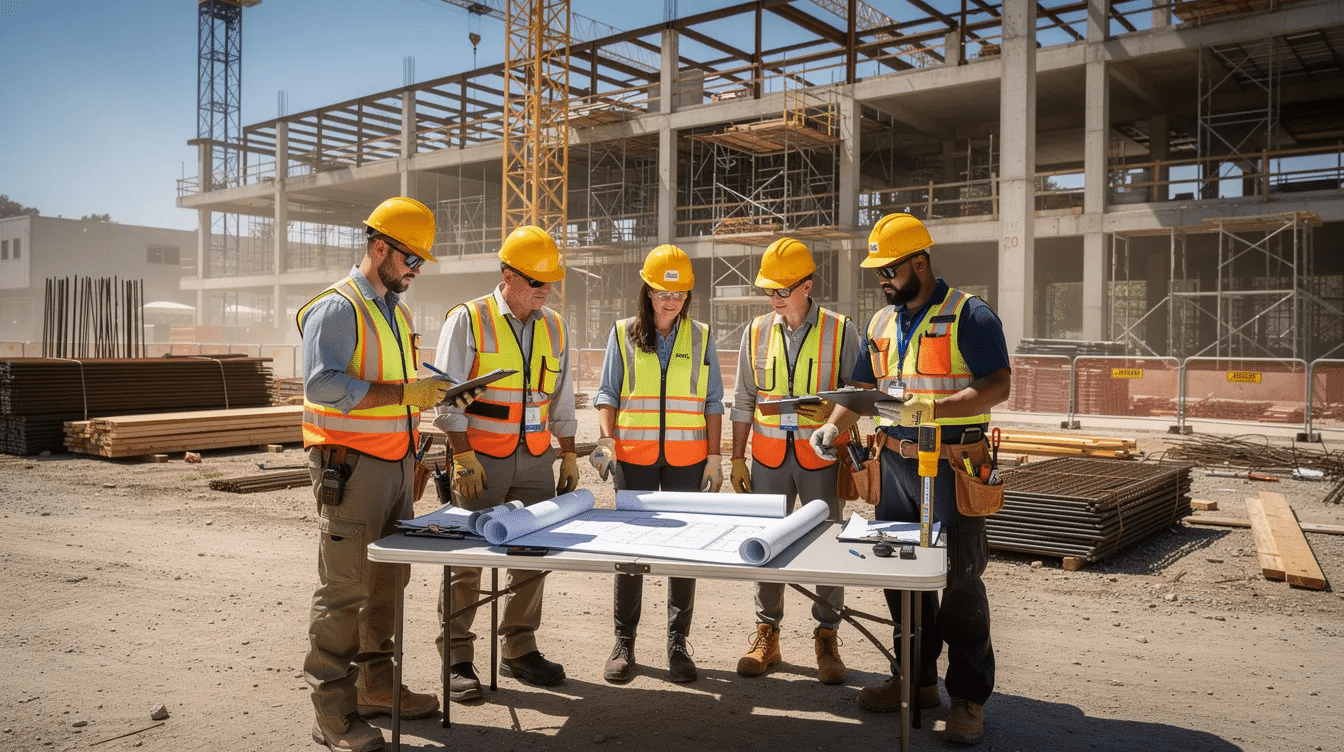
Federal construction projects valued at $35 million or more now require project labor agreements under FAR Subpart 22.5, which implements Executive Order 14063 signed on February 4, 2022. For the roughly 90% of Ohio Valley construction workers who operate outside union structures, that requirement changes how bids get priced, how crews get sourced, and which solicitations are worth pursuing. ABC Ohio Valley’s project labor agreement advocacy translates federal procurement rules into bid-room decisions for contractors across Cincinnati, Dayton, Springfield, Lima, Northern Kentucky, and Southeastern Indiana.
Finally, Federal Construction Advocacy for Federal Construction Projects Built for Merit-Shop Contractors
If your preconstruction team has opened a federal solicitation in the past two years and found a PLA clause buried in the contract terms, you already know the problem. PLAs are pre-hire agreements establishing employment terms for a specific construction project before a single worker sets foot on site, requiring contractors on a covered project to operate under union work rules and union representation. They require contractors to hire through union hiring halls, follow union work rules, and contribute to union benefit funds, and workers may also have to pay union dues under the PLA structure, regardless of whether the firm operates as an open shop.
Since January 2024, PLAs are required for labor agreements for federal construction projects with a total estimated cost of $35 million or more. Ohio Valley contractors report that 20% to 30% of large-scale construction projects in federal procurement now include PLA clauses, forcing risk decisions before estimating even begins. Merit-shop firms that have built their own apprenticeship programs, safety systems, and workforce pipelines face a choice: accept terms that can increase labor costs by 12% to 25% on affected bids, or walk away from publicly funded construction projects entirely.
ABC Ohio Valley’s advocacy approach eliminates the guesswork. The chapter monitors FAR rule changes, tracks federal agency guidance, flags solicitations across 40-plus counties, and gives members practical tools to respond. The goal is not political positioning. It is helping construction contractors compete for federal contracts on merit.
Why ABC Ohio Valley’s PLA Advocacy Works
Here is what separates chapter-level advocacy from trying to interpret federal procurement policy on your own:
- Direct policy monitoring tied to Ohio Valley bid opportunities. The chapter tracks every FAR update, agency acquisition letter, and enforcement pattern that affects federal projects in the region. When the GSA issued Acquisition Letter MV-2026-03 in June 2026, formalizing paired-proposal procedures and price preferences of up to 10% or $15 million on large-scale procurements, members received actionable briefings within days.
- Nonpartisan focus on competition, not political commentary. Government-mandated PLAs affect how firms bid, not how they vote. The chapter’s advocacy centers on free enterprise, open competition, and performance-based contracting. It separates verified policy analysis from partisan framing.
- Real-time updates on rules affecting $35-million-plus federal construction. Members need tracked guidance on executive orders, FAR changes, and related agreements for federal construction that can alter bid strategy on large procurements. Executive Order 14063 mandates the use of project labor on covered procurements over $35 million. The Eleventh Circuit denied a preliminary injunction against the mandate in April 2026, keeping the rule in force. Meanwhile, ABC’s national legal efforts have removed more than 40 PLA mandates from over $19 billion in federal projects through bid protests. Members need to know which solicitations carry enforceable PLA requirements and which have been successfully challenged.
- Implementation through existing member tools. The ABC Action App and Merit Shop Scorecards are already integrated into member workflows. Advocacy does not require a separate political operation or the organizing model used by construction unions; it runs through the same channels contractors use for safety, workforce development, and preconstruction planning and estimating accuracy.
- Removes guesswork about when and how to respond. When a PLA clause appears in a solicitation, contractors need to know whether to bid, how to price the uplift, and whether to flag the requirement for review. The chapter provides that guidance before the bid deadline passes.
Trying to navigate federal construction policy changes alone, or relying on generic national updates that do not account for Ohio Valley labor market conditions, leaves money and opportunity on the table.
How Project Labor Agreements Advocacy Works
Step 1: Monitor Federal Construction Policy Changes
ABC Ohio Valley tracks FAR updates, court rulings, agency guidance, and legislative activity affecting federally funded construction projects, including the policy lineage from Executive Order 13502 issued by President Obama. That includes developments at the U.S. Court of Federal Claims, where ABC contractors have won removal of PLA mandates from specific solicitations in January 2025 (12 solicitations) and December 2025 (a U.S. Army Corps of Engineers project valued above $35 million).
Members receive briefings calibrated to Cincinnati, Dayton, Springfield, Lima, and Northern Kentucky federal projects. When Ohio House Bill 102 advanced through committee, proposing to prevent state agencies from requiring or prohibiting project labor agreements in bid specifications for public-improvement projects, the chapter flagged it with context on how state-level action intersects federal procurement rules. Chapter monitoring also covers how labor organizations are positioned in federal PLA policy and rulemaking.
Step 2: Assess Local Market Impact
The chapter analyzes how federal PLA requirements affect infrastructure, manufacturing, healthcare, and education construction across the Ohio Valley. Semiconductor-related construction, including federally funded components associated with large fabrication facilities in Ohio, can exceed the $35 million total cost threshold and trigger PLA mandates. Federal aid highway projects, institutional work along the I-75 and I-70 corridors, and publicly funded projects at airports or military installations all fall within the rule’s reach.
Ohio school construction projects with mandated PLAs cost an average of 13% more than comparable non-PLA projects, roughly $23.12 per square foot in additional cost. In some analyses, PLAs can lead to a 30.5% increase in school construction costs. PLAs can increase construction costs by 12% to 20% across jurisdictions when controlling for prevailing wage laws and project size. These numbers shape whether a particular project is worth pursuing, how to price the value of skilled labor into a bid, or whether to flag it for advocacy review.
PLA terms are often defended as producing labor-management stability on large projects, and the chapter evaluates that claim against actual market conditions.
The chapter provides concrete guidance: which federal solicitations to pursue, which to price with PLA uplift factored in, and which to escalate for potential bid protest.
Step 3: Take Strategic Advocacy Action
Members implement verified advocacy tools through the ABC Action App and Merit Shop Scorecards. These tools track solicitations, flag PLA burdens, and gather data on cost impacts across the region.
When a solicitation lacks proper justification for a PLA mandate, or when requiring such an agreement would reduce the number of offerors so the federal government cannot receive fair and reasonable bids, the chapter escalates through established government affairs channels after testing whether the mandate actually supports economy, efficiency, and labor management stability. FAR 22.504(d) provides exceptions when PLA requirements do not advance the federal government’s interest in achieving economy and efficiency, including asserted goals such as reducing delays tied to jurisdictional disputes. ABC has used these provisions, along with bid protests at the COFC and GAO, to remove PLA mandates from billions of dollars in federal work.
Associated Builders and Contractors reports that government agencies often voluntarily withdraw PLA mandates after protests are filed, even before a ruling. That track record gives members a concrete advocacy path beyond waiting for legislative relief.
What Makes ABC Ohio Valley’s Approach Different
Most national policy summaries tell contractors that PLAs exist. They do not tell a Dayton-based mechanical subcontractor how the City of Dayton’s 2026 PLA mandate for public construction projects over $2 million interacts with federal thresholds on a particular project, or how Cleveland’s requirement for PLAs on public improvement projects estimated at $500,000 or more creates a layered compliance environment for firms working across Ohio markets.
ABC Ohio Valley’s approach differs in four concrete ways:
Regional focus on Ohio Valley federal projects. The chapter covers Southwest and West Central Ohio, Northern Kentucky, and Southeastern Indiana. Advocacy intelligence is filtered for the markets where members actually bid, not abstracted to a national level. The region faces an estimated skilled workforce shortage of 60,000 workers, which means PLA requirements that mandate union hiring hall referrals can create real crew-sourcing problems for nonunion contractors who have trained their own workforce.
Practical bid-room guidance. PLAs require contractors to hire through union hiring halls, accept union representation, accept union wage rates, contribute to union pension and health benefit funds, and follow jurisdictional work rules. PLAs typically include clauses that prohibit strikes and lockouts for the duration of the project, and they standardize wages and benefits across all contractors on a project, providing cost stability. But for merit-shop firms, these terms can mean losing control over workforce deployment, duplicate benefit systems, fringe costs that may not vest for employees on shorter-duration projects, and, in some cases, workforce complications tied to union membership on PLA-covered work. The chapter translates those realities into estimating adjustments, not abstract policy positions. Understanding how construction productivity software and scheduling tools interact with PLA work-rule constraints is part of that translation.
Track record across 40-plus counties. The chapter’s advocacy spans Ohio, Kentucky, and Indiana, accounting for tri-state differences in labor law, procurement rules, and enforcement. As of March 2023, 25 states have laws banning government-mandated PLAs. Ohio is not among them, which makes chapter-level advocacy and state legislative engagement (like Ohio HB 102) a higher priority for Ohio Valley members.
Integration with workforce development, safety, and member services. Advocacy is not a standalone political function. It connects to the chapter’s prevailing wage training, apprenticeship programs across nine trades, and safety education rather than relying on union apprenticeship programs as the default workforce channel. Contractors navigating PLA compliance on a federal project also need to comply with labor and employment standards, safety regulations, and equal employment opportunity requirements. The chapter’s services address those needs together.
Proven Results in Merit Shop Advocacy
ABC’s national legal and protest efforts provide the clearest measure of advocacy results. More than 40 PLA mandates have been removed from over $19 billion in federal projects through bid protests filed at the U.S. Court of Federal Claims. In January 2025, a COFC ruling required removal of PLA mandates from 12 solicitations. In December 2025, a separate COFC decision removed a PLA requirement from a U.S. Army Corps of Engineers solicitation valued at more than $35 million.
PLAs can reduce the number of bidders by 30%, and non-union contractors are discouraged from bidding on PLA projects. According to opponents of government-mandated PLAs, 85% of construction workers are non-union, and many mandates favor union labor; in the Ohio Valley, approximately 9 out of 10 construction workers are non-union. When PLA mandates reduce competition, taxpayer-funded construction projects cost more, and fewer local workers get the opportunity to build them.
A 2021 study found PLAs increased costs by 14.5% in Los Angeles. Research across Massachusetts, New York, and Connecticut shows cost increases of 12% to 20% on publicly funded projects with PLA requirements. PLAs can include provisions for local hiring and apprenticeship ratios, as well as local workforce development and diversity, ensuring job opportunities for underrepresented groups, particularly those businesses or workers already referenced in the local market. PLAs also help streamline project management; they can unify work rules across multiple trades, and standardized safety training under PLAs correlates with fewer job-site accidents. Advocacy helps ensure that PLAs address workforce needs and community benefits where they are used, while preventing blanket mandates from excluding the majority of the construction industry from public projects.
The chapter’s merit shop advocacy positions members to benefit from these protest victories and to contribute data that strengthens future challenges. PLAs mandate compliance with established compensation and benefit structures, ensuring accountability, but effective advocacy promotes PLAs by highlighting benefits such as labor stability and project efficiency only where justified, not as a blanket requirement for every federal contract.
Who Project Labor Agreement Advocacy Serves
ABC Ohio Valley’s PLA advocacy is built for specific segments of the construction industry in the Ohio Valley:
- Commercial and industrial contractors pursuing federal construction work. Firms bidding on infrastructure, institutional, manufacturing, or affordable housing projects that cross the $35 million threshold encounter PLA requirements directly. These contractors need to evaluate whether to bid, how to price, and when to protest.
- Subcontractors and specialty trades affected by prime contractor PLA obligations. When a prime signs a collective bargaining agreement covering a federal project, every subcontractor on that project must comply. Specialty trades in electrical, mechanical, plumbing, and sheet metal need to understand union hiring hall requirements, fringe benefit obligations, and jurisdictional work rules before committing to a bid.
- Construction executives managing preconstruction and estimating teams. Federal contractors and their estimating teams need a system to identify PLA clauses in solicitations, quantify the cost uplift, and make go/no-go decisions. Advocacy intelligence feeds directly into that process.
- Merit-shop firms seeking competitive advantage. PLAs help manage labor risk and improve predictability for complex construction projects, contributing to better cost predictability and schedule reliability. But for firms that already deliver strong safety records, trained crews, and competitive pricing through open-shop operations, PLA mandates can eliminate their competitive edge. Advocacy protects that edge. PLAs provide access to a skilled workforce through union hiring halls and apprenticeship programs, and PLAs can improve project safety and quality through standardized training and safety requirements; the question is whether those benefits justify excluding 85% to 90% of the regional workforce from competing.
Advocacy Resources and Member Engagement Levels
Basic Advocacy Monitoring
Available to all ABC Ohio Valley members through government affairs updates. This level includes federal policy briefings, market impact analysis for the Ohio Valley region, and alerts when new solicitations include PLA clauses. Members at this level receive the same intelligence the chapter uses to track FAR rule changes, court decisions, and state legislative activity.
Active Advocacy Participation
Designed for contractors actively pursuing federal work. This level includes ABC Action App training, Merit Shop Scorecard access, and solicitation review guidance. Members learn how to flag solicitations for potential protest, document the cost impacts of PLA requirements, and coordinate with legal counsel on bid challenges. Understanding project labor agreements at this level means translating policy into pricing.
Leadership Advocacy Engagement
Available for contractors with large federal project portfolios. This level includes direct government affairs consultation, priority coordination on advocacy issues, and participation in data-gathering efforts that support national legal challenges. Leadership-level engagement connects to ABC’s Construction Legal Rights Foundation, which offers attorney referrals and potential financial assistance for bid protests.
Frequently Asked Questions
Below are answers to common questions about this topic.
How quickly does federal PLA policy affect local bidding?
FAR rule changes take effect on publication dates specified in the Federal Register. Once a rule is effective, it applies immediately to new solicitations. The current PLA requirement for large-scale construction projects of $35 million or more has been in force since January 22, 2024. Ohio Valley contractors see PLA clauses appear in solicitations within weeks of agency guidance updates. The timeline from proposed rule to contract clause in a live solicitation can be as short as 60 to 90 days.
Do advocacy efforts require political involvement?
No. ABC Ohio Valley’s advocacy is nonpartisan and focused on open competition, free enterprise, and the merit shop model. The chapter tracks regulatory developments, provides policy analysis, and supports bid protests through legal channels. It does not create PAC fundraising content or candidate endorsements through its advocacy program. Government neutrality in procurement is the principle; the goal is ensuring that construction users and taxpayers benefit from the widest possible competition.
Executive Order 13502 was issued on February 6, 2009, encouraging PLAs for projects over $25 million. Executive Order 13202 prohibited PLAs on federal projects in 2001. The First Circuit ruled the Boston Harbor PLA illegal in 1990. The policy history crosses multiple administrations. Advocacy that outlasts any single executive order requires a nonpartisan foundation.
What if my firm doesn’t currently pursue federal work?
Federal policy changes can influence state and local procurement over time. The City of Dayton adopted a 2026 PLA mandate for public construction projects over $2 million. Cleveland requires PLAs on public improvement projects estimated at $500,000 or more. These local thresholds are far below the $35 million federal level, and they create PLA obligations on construction projects funded entirely by state or local dollars. Monitoring federal trends helps contractors anticipate local policy shifts before they affect bidding.
How does advocacy coordinate with legal counsel?
Policy advocacy and legal action complement each other. ABC Ohio Valley’s advocacy identifies solicitations where PLA mandates may lack justification, gathers cost and competition data, and connects members with legal resources. Bid protests at the COFC require standing as a prime contractor that intends to bid; subcontractors generally cannot file independently. The chapter’s advocacy work provides the market research and documentation that strengthens legal challenges, while legal outcomes inform future advocacy strategy.
Take Action on Project Labor Agreement Advocacy
Review your current federal bid procedures with your preconstruction team. Identify upcoming solicitations that cross the $35 million threshold. Flag any PLA clauses for evaluation before committing estimating resources.
Connect with ABC Ohio Valley’s government affairs team for current policy updates on federal construction bids, state legislative activity, and local PLA mandates affecting your markets. The Merit Shop Scorecard and ABC Action App provide immediate tools to track solicitations, document cost impacts, and engage in advocacy through verified channels.
The FAR PLA rule’s practical effect is in the bid room, not in Washington. Every solicitation your team reviews is a decision point: pursue, price, protest, or pass. ABC Ohio Valley’s advocacy ensures that decision is informed by current data, regional context, and a track record of results that has removed PLA mandates from billions of dollars in federal work.