From Reactive Responses to Proactive Jobsite Safety
For most of the construction industry’s history, safety measurement has been backward-looking. A crew member gets hurt, the incident is recorded, and managers review what went wrong. Then the cycle repeats. Proactive jobsite safety changes that sequence. Instead of waiting for an injury, contractors use better reporting, stronger field participation, and real-time jobsite information to spot risks earlier and respond faster.
The need is clear. Federal fatal-injury data show that construction and extraction occupations recorded 1,032 fatal work injuries in 2024, and falls, slips, and trips remained one of the industry’s deadliest event categories. Those numbers show why lagging indicators such as recordables, claims, and fatalities still matter, but they cannot be the only measures a company watches. OSHA defines leading indicators as proactive, preventive measures that can show whether safety and health activities are effective at preventing incidents.
For contractors across Cincinnati, Dayton, Springfield, Lima, Northern Kentucky, and Southeastern Indiana, that shift means building a safety system that can identify trouble before an incident forces a reaction. Wearables, mobile reporting, environmental monitoring, connected tools, and AI-assisted risk review can all support that effort when they fit the job and strengthen existing field discipline rather than compete with it.
ABC Ohio Valley helps merit shop contractors connect safety training, risk management, and operations through programs such as STEP, Mid-America OSHA training, Safety Peer Groups, and workforce development resources.
What Proactive Safety Technology Means on Today’s Jobsites
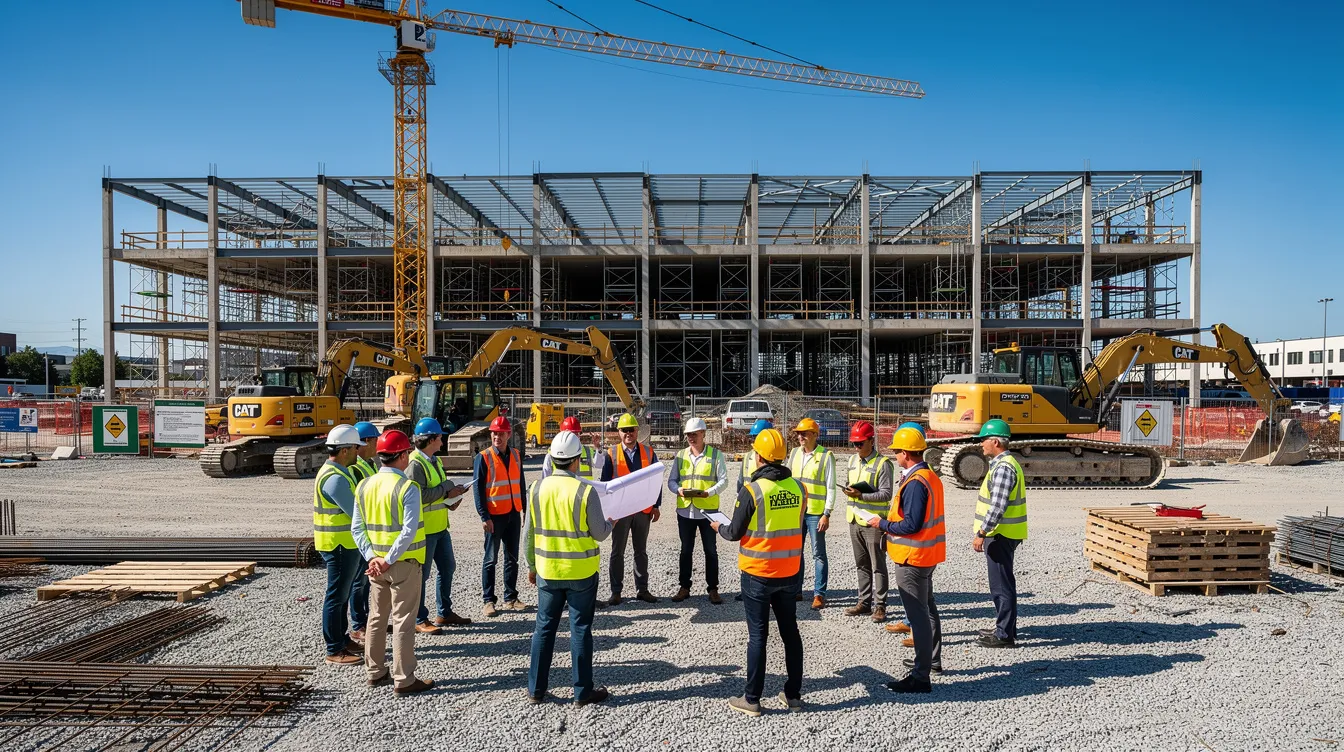
Proactive safety technology in construction refers to tools, sensors, platforms, or data systems that monitor conditions and behaviors in real time, generate earlier warnings, and support faster corrective action. The distinction from reactive systems is simple: an incident log records what happened last week; a proactive system helps field leaders address the conditions that could cause an incident tomorrow.
These tools work best inside a broader safety process. Job safety analyses, pre-task planning, routine observations, inspections, and the hierarchy of controls still do the core work of hazard management. Technology does not replace superintendents, foremen, or safety professionals. It gives them better visibility into recurring problems across projects, crews, and subcontractors.
In practice, proactive jobsite safety changes daily routines. A superintendent who once relied mainly on periodic walkthroughs may now receive faster notice when site conditions change. A safety manager who once sorted paper observation cards at the end of the month may now see the same trend within hours. That shorter feedback loop is what makes the technology useful.
Key Types of Proactive Jobsite Safety Technology
Contractors evaluating proactive jobsite safety tools will usually encounter several broad categories. The real test is not whether a platform looks advanced. It is whether the tool improves visibility, response time, and decision-making on an active jobsite.
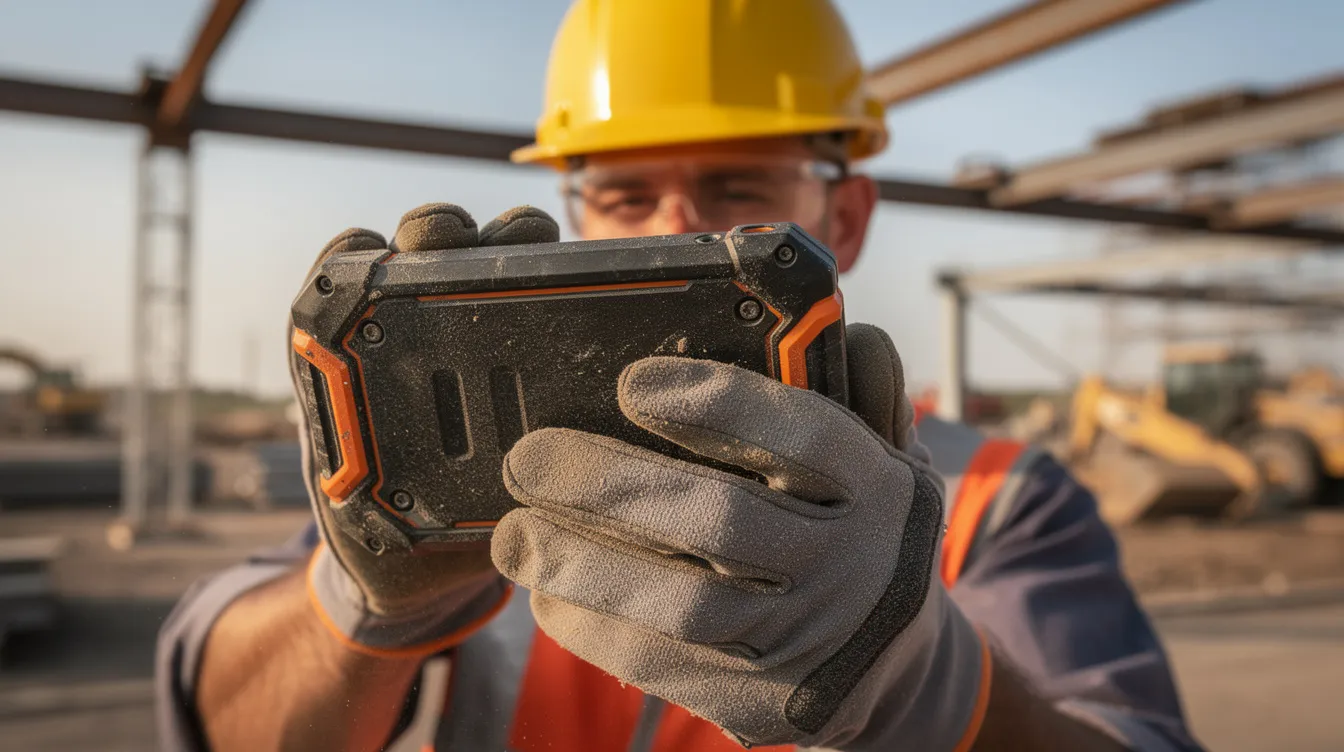
Wearables on construction jobsites can include fall-detection devices, location-aware badges, motion or posture sensors, and systems designed to support heat-stress awareness. Their value is not the hardware alone. It is the ability to identify exposure patterns, improve emergency response, or flag recurring risk areas that deserve closer review.
Mobile safety reporting apps allow workers and supervisors to submit observations, near misses, JSAs, and photos from the field without waiting on paper forms. That makes it easier to surface hazards while the work is still underway and to route the issue to someone who can act on it.
Environmental monitoring systems track conditions such as heat, air quality, noise, confined-space atmosphere, or weather-related risk. When paired with pre-task planning, they help crews confirm whether morning assumptions still match actual field conditions later in the day.
Connected equipment and tools can provide information on usage, maintenance status, and proximity conditions. That can help contractors reduce exposure to avoidable breakdowns, equipment conflicts, or work-zone hazards before they escalate.
AI-assisted risk detection can help safety teams review inspection notes, observation reports, incident records, or other jobsite data to identify recurring patterns. Used carefully, it can help prioritize attention. It should not replace human judgment, and contractors should treat vendor claims cautiously, but it can support earlier pattern recognition when the underlying data is strong.
This broader cross-category view matters for ABC Ohio Valley readers because the decision is bigger than wearables alone. Many firms will benefit more from choosing the right first problem to solve than from choosing the flashiest device.
From Data to Decisions: Using Leading Indicators to Measure Impact
Leading indicators measure the activities that happen before an injury occurs. They help contractors track whether the company is actually preventing risk instead of only documenting outcomes after the fact. OSHA recommends using both leading and lagging indicators, but leading indicators are the measures most likely to change day-to-day behavior on an active project.
Proactive safety tools can support leading indicators such as:
- Number of near misses and safety observations reported each week
- Time from hazard report to corrective-action closure
- Participation in safety training and toolbox talks
- JSAs completed before high-risk tasks begin
- Corrective actions closed within a defined timeframe
Lagging indicators such as TRIR, DART, workers’ compensation costs, and serious incident counts still matter for benchmarking, insurance conversations, and overall performance review. But if a contractor wants to know whether a new reporting app, monitoring tool, or connected device is changing field behavior right now, leading indicators usually provide the clearest answer.
A practical starting point is to choose three to five leading indicators for a pilot, rather than tracking everything at once. If near-miss reporting rises because the process is easier to use, that can signal improvement. If corrective actions close faster, that is another sign the tool may be helping. ABC Ohio Valley’s STEP program already gives contractors a structure for combining leading indicators, lagging results, and self-assessment in one system.
How STEP Supports Better Technology Decisions
ABC Ohio Valley’s STEP program was developed by contractors for contractors and uses a 20-key-component framework along with leading indicators, lagging indicators, and self-assessment requirements to evaluate safety performance. That makes STEP a practical baseline for any contractor considering proactive jobsite safety technology.
Instead of buying technology first and deciding what to measure later, contractors can use STEP to identify existing gaps. Low observation counts, inconsistent JSAs, weak follow-up on corrective actions, or uneven training participation are all issues a well-chosen tool might help improve.
That approach also helps contractors avoid a common mistake: creating a separate “tech safety system” that never fully connects to field operations. If a wearable, reporting platform, or monitoring tool supports the same behaviors and indicators already being measured through STEP, it has a much better chance of surviving past the pilot stage.
Where Ohio Valley Contractors May See the Fastest Wins
Commercial and industrial contractors in the Ohio Valley often manage multiemployer sites, compressed schedules, changing weather, and complex logistics. That makes proactive jobsite safety especially valuable when it targets a recurring field problem instead of a broad technology rollout.
Early opportunities often include:
- Fall exposure on steel, roofing, or elevated work where access zones and high-risk tasks need tighter visibility
- Equipment and pedestrian interaction in tight laydown yards or congested access routes where proximity risks are frequent
- Heat stress during Midwest summer work where environmental monitoring and crew check-in routines can improve response
- After-hours or off-shift work in occupied healthcare, education, or industrial facilities where daytime safety staff cannot observe every condition directly
The strongest first deployments usually stay narrow. One recurring risk, one project condition, and one measurable operating problem are enough to test whether the tool adds value. Contractors should also account for jobsite realities across the I-70 and I-75 corridors, including large sites or rural locations where connectivity may be inconsistent.
Designing a Focused Pilot
The goal of a proactive safety pilot is not to prove a vendor brochure right. It is to determine whether a tool improves visibility, response, or field behavior on a real project.
A strong pilot usually includes:
- One project with engaged leadership
- One clearly defined safety problem
- One or two leading indicators tied to that problem
- A defined review period
- An internal owner such as a superintendent, project manager, or safety leader
Before launch, explain the pilot clearly to craft workers, foremen, and subcontractor partners. If the tool captures new types of information, workers should understand what it monitors, why it matters, and how the information will be used. That is especially important when the goal is to report more concerns earlier, not discourage participation through confusion or mistrust.
Document both the numbers and the field feedback. A tool that produces more data but frustrates crews may not scale well. A tool that fits the workflow and helps close issues faster has a stronger long-term case.
Turning Technology Into Daily Safety Habits
Buying a tool does not guarantee adoption. The same gap that exists with prescription safety glasses compliance can show up with wearables, digital JSAs, or reporting apps: the company provides the resource, but it never becomes part of the actual work routine.
Contractors usually get better results when they:
- Ask supervisors to model use instead of treating the tool as something only crews must do
- Build safety-tech checks into JSAs and pre-task planning
- Review indicator trends in regular coordination or safety meetings
- Recognize crews when they report issues early and help solve them
Training matters here, but it should stay practical. Workers need to know both the hazard being managed and how the tool fits into the task. Adoption improves when the process is easy to use, the device works with existing PPE, and managers visibly act on what the system surfaces.
Risk Management, Privacy, and Change
Proactive jobsite safety technology can improve visibility, but it also introduces new management questions around data, privacy, and workflow change.
Privacy and trust. If workers believe location, biometric, or behavior-related data will be used mainly for discipline, adoption will suffer. Contractors should communicate clearly about what is being collected, who can see it, and how it supports coaching and hazard prevention.
Data quality and ownership. Every system needs an internal owner. Someone has to decide how often the data is reviewed, what thresholds matter, and what response is expected when a trend or alert appears. Without that discipline, alerts quickly become background noise.
Vendor evaluation. Contractors should review whether a system integrates with current processes, supports offline or low-connectivity work when needed, provides usable security documentation, and fits actual construction workflows rather than a generic software demo.
Pace of change. The best rollouts strengthen existing safety programs instead of piling on disconnected tasks. If field leaders feel they are being asked to run two safety systems at once, adoption usually fades.
Next Steps for Ohio Valley Contractors
Proactive jobsite safety works best when technology, leading indicators, and field participation support the same goal: identifying hazards earlier and responding before an incident occurs.
A practical next step is to keep the decision simple:
- Identify one recurring risk on an upcoming project, such as heat exposure, low near-miss reporting, fall exposure, or delayed corrective actions.
- Choose one category of proactive tool that fits that problem, whether that is mobile reporting, environmental monitoring, connected equipment alerts, wearables, or data review support.
- Measure a small set of leading indicators and compare them against your current safety baseline.
Contractors that want a stronger starting framework can use STEP to benchmark current performance and organize the metrics captured during a pilot. Additional chapter resources are available through ABC Ohio Valley’s news and safety content.
Companies that reduce surprises usually measure risk before a serious incident forces attention. Proactive jobsite safety is not about replacing leadership with software. It is about giving field leaders better tools to see problems sooner and act faster.