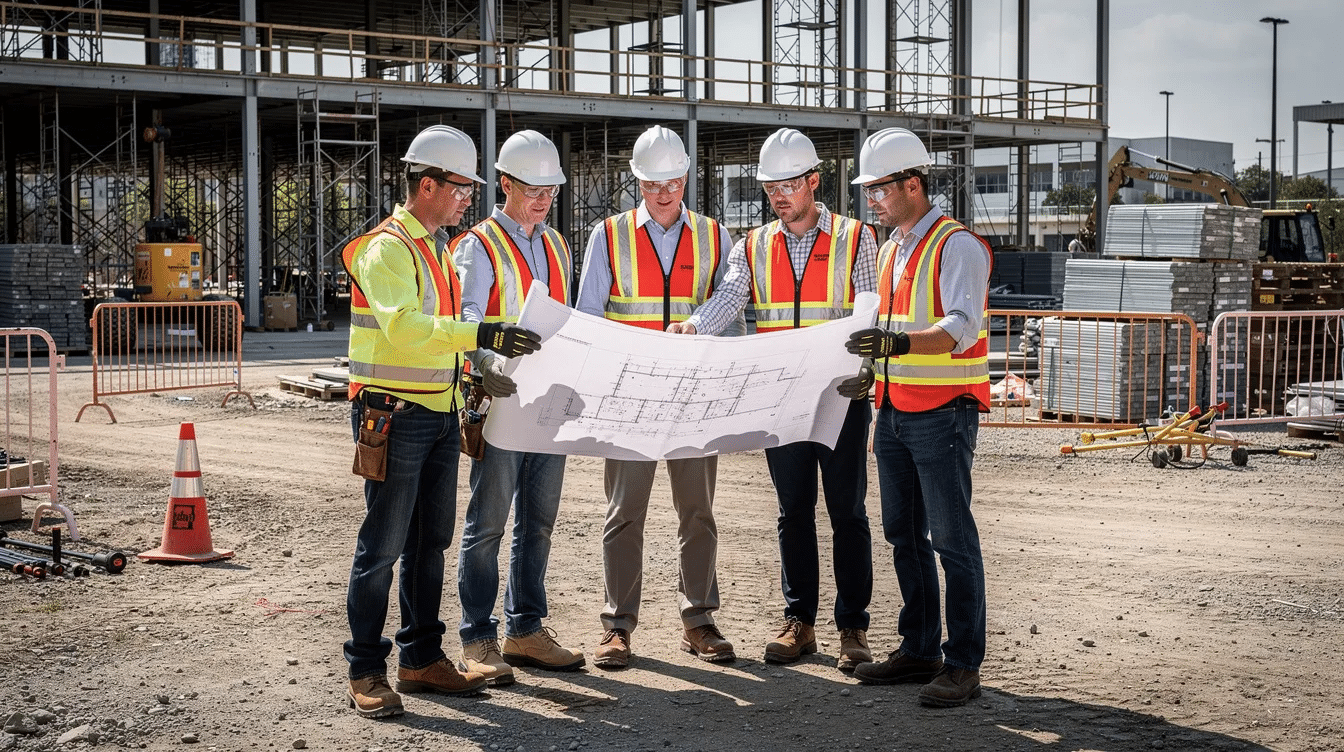
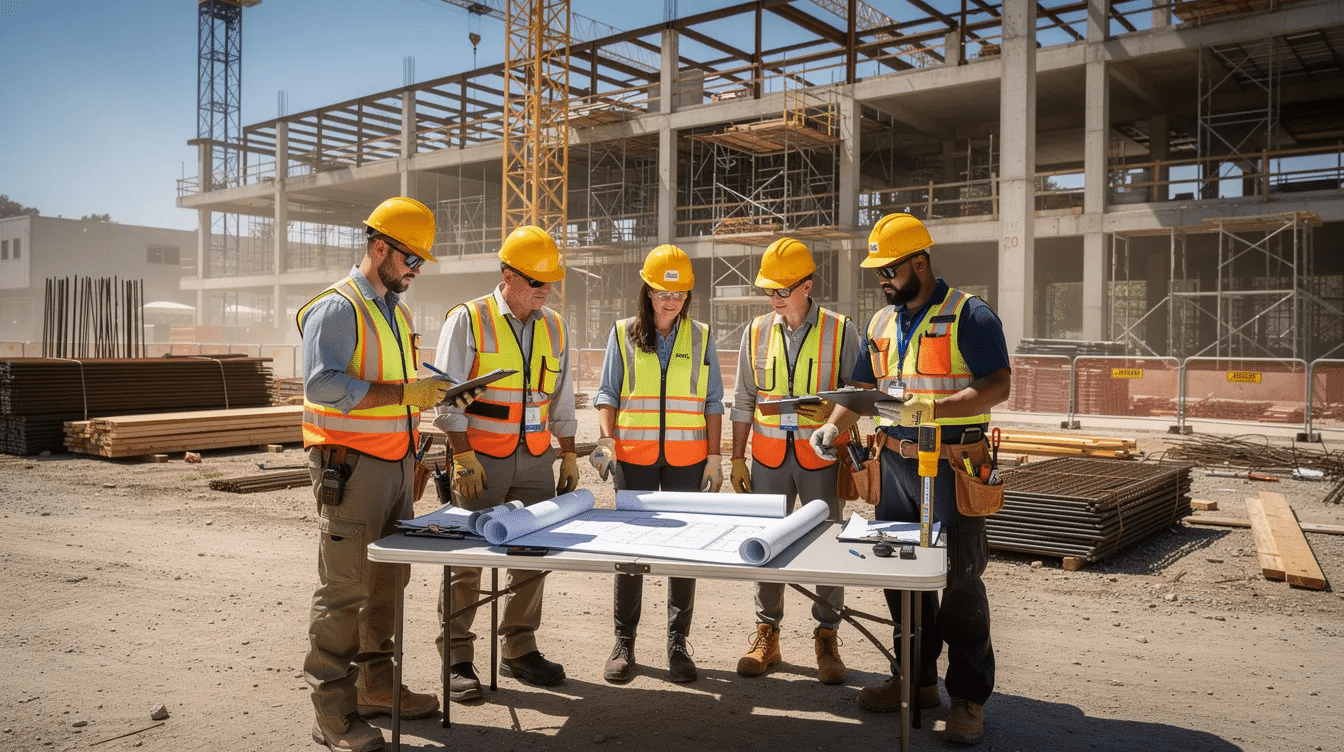
For commercial and industrial contractors across the Ohio Valley, a construction workforce pipeline is a repeatable process that moves people from early exposure to the trades into supervised training, paid field experience, and long-term skilled careers. It is not a one-time hiring push. It is the system that helps a contractor replace retirements, support growth, and reduce the risk of scrambling for labor only after work is won.
The labor market still supports that urgency. Associated Builders and Contractors said the industry must attract 349,000 new workers in 2026 just to keep labor supply and demand in balance, and the U.S. Bureau of Labor Statistics reported 7.1 million job openings nationwide in August 2026. For contractors in Cincinnati, Dayton, Springfield, Lima, Northern Kentucky, and Southeastern Indiana, that means workforce planning is still an operating issue, not just an HR issue.
Reactive hiring rarely solves a structural labor challenge. A stronger answer is to build a visible pathway from student awareness to pre-apprenticeship, apprenticeship, and advancement in the field. This article explains what that pipeline looks like in practice and how ABC Ohio Valley can help contractors build it.

What a Construction Workforce Pipeline Actually Means
A construction workforce pipeline is the sequence of steps that helps future workers enter the industry, build skills, and stay long enough to become dependable craft professionals. For contractors, the goal isn’t simply to generate applicants. It is to create a steadier supply of people who understand what the work requires and have a structured way to grow.
In practice, the pipeline usually includes five stages:
- Awareness: students and jobseekers first learn what construction careers look like through school outreach, jobsite exposure, career events, and employer engagement.
- Exploration: interested candidates get closer to the work through hands-on programs, work-based learning, or pre-apprenticeship-style experiences.
- Entry: qualified candidates move into formal employment and structured training.
- Skill building: apprentices and newer workers develop trade competency through classroom instruction, supervision, and on-the-job learning.
- Retention and advancement: workers see a future in the industry through mentoring, leadership development, and clear next roles.
This approach is more durable than waiting for a project award and then rushing to hire. It also gives smaller and mid-sized contractors a better chance to compete because they are building access to talent over time instead of relying only on last-minute recruiting.
Why the Talent Challenge Still Matters
The labor issue has not disappeared. ABC’s 2026 workforce estimate signals that the industry still needs a large inflow of new workers to keep up with demand. At the same time, BLS data shows the broader U.S. job market remains active, which means construction employers are competing for people in a tight environment, not recruiting in a vacuum.
For Ohio Valley contractors, that pressure shows up in familiar ways: harder-to-fill trade openings, thinner bench strength, more strain on field supervision, and greater risk when backlog grows faster than labor capacity. In that environment, a contractor that builds talent intentionally is better positioned than one that treats every opening as a separate emergency.
That is also why the approved source topic matters. Building talent in a tight market starts before the job posting. It depends on whether a company and a region have a clear way to move interested people into real construction careers.
What a Strong Construction Workforce Pipeline Looks Like in the Ohio Valley
For ABC Ohio Valley members, a strong pipeline is not just a recruiting campaign. It is a coordinated system that connects schools, contractors, training providers, and field leaders.
Strong pipelines usually share several traits:
- A consistent presence in career-tech programs and traditional high schools so students, families, and counselors hear about construction careers before graduation decisions are final.
- Hands-on early experiences that let students see what commercial and industrial construction work actually involves.
- A defined next step after that first exposure, whether through work-based learning, pre-apprenticeship, or direct employer engagement.
- Formal apprenticeship opportunities that combine classroom instruction with supervised jobsite experience.
- Internal mentoring and crew leadership so new workers don’t enter the field without guidance.
- A visible advancement path that shows how someone can move from apprentice to journeyperson and eventually into crew leadership or supervision.
Those elements matter because awareness alone is not enough. Contractors need a pipeline that keeps people moving forward instead of losing them between stages.
Early Exposure Matters More Than Many Contractors Assume
One of the weakest points in many labor strategies is the very beginning. Students often know little about what construction work looks like day to day, what trades are available, or how earn-while-you-learn pathways compare with a traditional four-year route.
That makes early exposure a practical workforce tool, not just community outreach. School visits, jobsite tours, classroom demonstrations, and career events help future workers make a more informed decision about the industry. They also help contractors reach candidates before other sectors define the opportunity first.
ABC Ohio Valley’s public materials describe workforce development as including efforts to find future workers through career-tech and traditional high schools, while also connecting workforce development to reduced turnover through crew leadership and mentoring. That broader view is useful because a pipeline works best when recruitment and retention are treated as connected problems, not separate ones.

Apprenticeship Is the Core of the Pipeline
For many contractors, apprenticeship is where a workforce pipeline becomes real. It gives employers a formal structure for developing skills instead of expecting new workers to learn only through ad hoc field exposure.
ABC Ohio Valley’s apprenticeship page says the chapter offers pathways across nine skilled trades and currently serves more than 300 apprentices across the region. The page also explains that the program combines classroom instruction with hands-on jobsite experience and uses NCCER curriculum delivered by certified instructors.
That matters for contractors because apprenticeship turns a labor shortage conversation into a capacity-building strategy. Instead of asking only where to find finished craft professionals, employers can ask how many future craft professionals they are helping train each year.
The chapter’s public apprenticeship information also says training options include instruction delivered at Sinclair Community College and Diamond Oaks, as well as customized contract training options. For smaller contractors especially, that kind of shared training infrastructure can make participation more realistic than trying to build an in-house school from scratch.
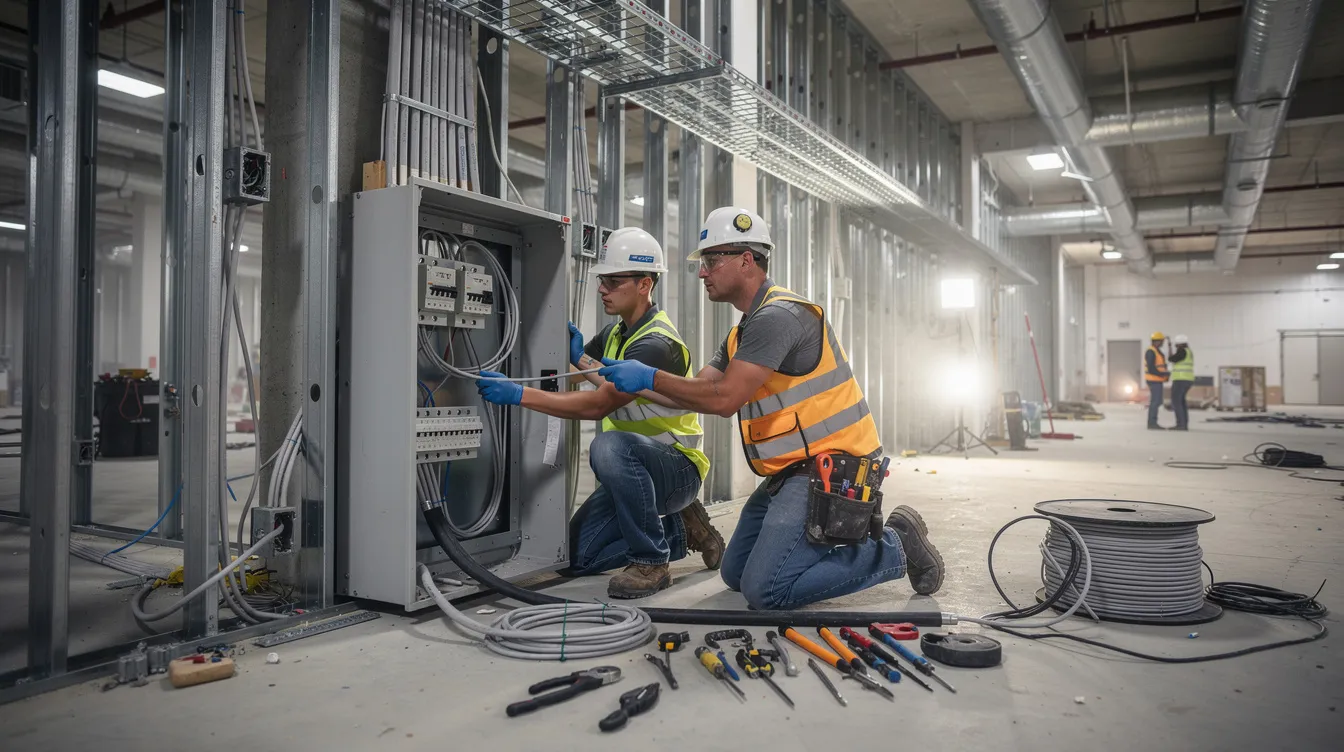
Why Contractors Need More Than Recruitment
A pipeline fails when contractors focus only on intake. Bringing people in matters, but keeping them progressing matters just as much.
New workers need a field environment that clarifies expectations. They need supervision, useful feedback, and a reason to believe that staying in the industry will lead somewhere. Without that, even a strong awareness and apprenticeship effort can leak talent.
This is where internal systems matter:
- Mentoring: newer workers should know who is responsible for helping them learn.
- Crew leadership: foremen and superintendents shape whether a new worker experiences construction as organized and professional or confusing and unstable.
- Skill progression: workers stay more engaged when they can see what advancement looks like.
- Ongoing training: companies need a way to keep people improving after they first join.
ABC Ohio Valley’s public description of its support model reflects that broader approach. The chapter frames its six pillars around workforce development, training, safety, communication, marketing, and advocacy, and specifically connects workforce development to finding future workers and reducing turnover through leadership and mentoring. That is a useful reminder that the pipeline does not end when someone is hired.
How an Ohio Valley Contractor Can Strengthen a Construction Workforce Pipeline
Contractors do not need to solve the labor market alone to make progress. But they do need a deliberate plan. A practical sequence looks like this:
- Identify the trades where your gaps are most likely to hurt delivery. Focus first on the roles that repeatedly slow projects or limit growth.
- Map your current entry points. Note whether your company already has relationships with schools, career-tech programs, work-based learning partners, or apprenticeship channels.
- Decide what happens after first contact. Awareness without a next step creates interest but not a workforce pipeline.
- Assign internal ownership. Someone should own workforce development follow-through, with support from field leadership.
- Use apprenticeship as a scaling tool. If you need recurring labor capacity, formal training pathways usually work better than one-off hiring pushes.
- Treat retention as part of workforce planning. A company that trains well but loses people quickly is still leaking capacity.
- Review progress regularly. Track whether outreach is creating applicants, whether applicants are converting into training, and whether trained workers are staying and advancing.
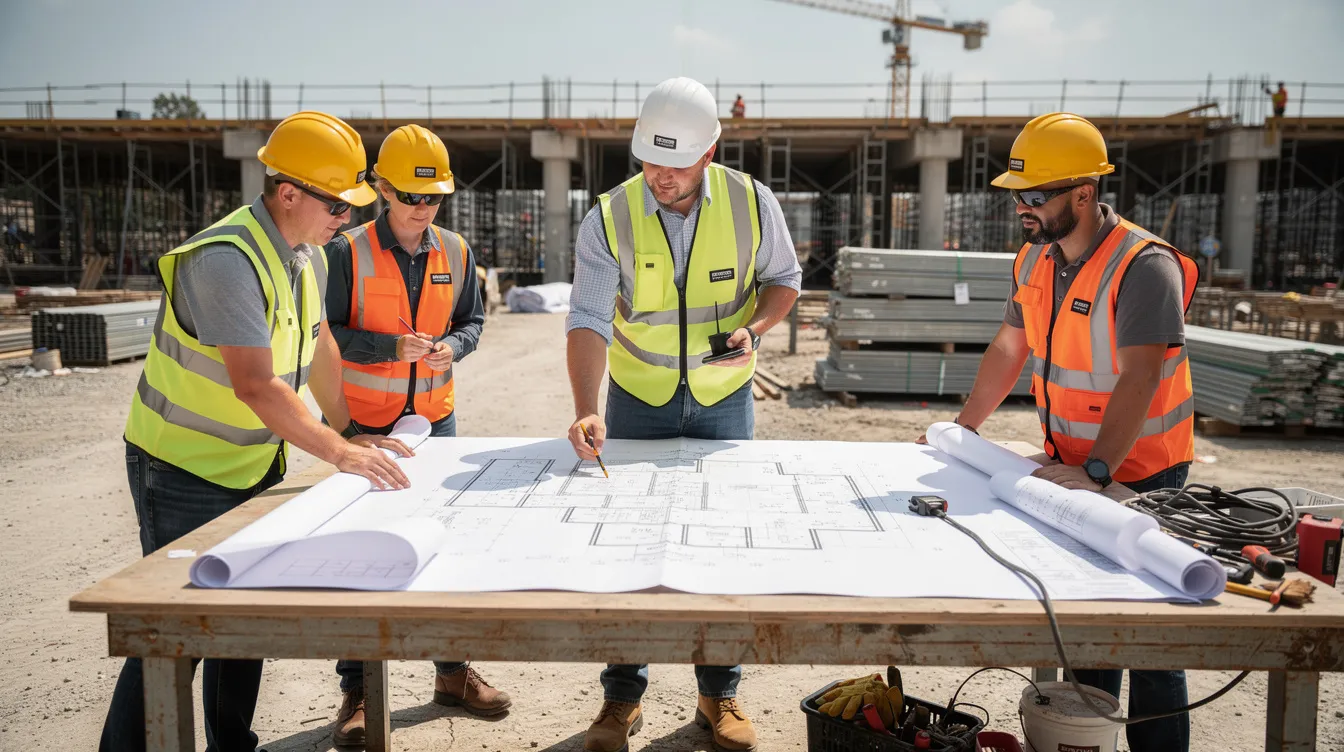
The goal is not to create a complicated new bureaucracy. It is to make sure your labor strategy has a repeatable path from interest to skill.
How ABC Ohio Valley Fits Into the Pipeline
ABC Ohio Valley’s public materials position the chapter as more than a networking group. The chapter presents itself as a regional platform for workforce development, training, safety, communication, marketing, and advocacy, with apprenticeship and targeted training as part of that support.
For contractors, that can mean practical help in several parts of the pipeline:
- Apprenticeship opportunities across nine skilled trades.
- Connections to workforce development efforts aimed at career-tech and traditional high schools.
- Training resources that help companies build skill and support retention.
- Safety education that reinforces professional jobsite expectations for newer workers and experienced crews alike.
That shared structure is especially valuable for firms that want to strengthen talent development without building every part of the system on their own.
Next Steps for Ohio Valley Contractors
If your company is still treating labor as a project-by-project scramble, now is the time to change the model. A stronger construction workforce pipeline starts with a simple question: where does a future worker first encounter your company or your trade, and what happens next?
For some contractors, the immediate next step is to review ABC Ohio Valley’s apprenticeship pathways and determine which trades align with current staffing needs. For others, it may be more important to strengthen school relationships, engage in youth outreach, or improve the mentoring and leadership experience that keeps newer workers in the field.
ABC Ohio Valley’s broader workforce development and training support can help connect those pieces. In a tight labor market, the companies that build talent intentionally are usually better positioned to protect schedules, support growth, and compete for the next wave of work.