Across Cincinnati, Dayton, Springfield, Lima, Northern Kentucky, and Southeastern Indiana, merit-shop contractors are managing one of the tightest skilled-trades labor markets in a generation. Data center investment is absorbing electricians, pipefitters, HVAC technicians, and other critical trades faster than the pipeline can replace them. For contractors trying to scale, foreman training in construction is no longer a nice-to-have leadership exercise – it is the operational lever that determines whether crews can grow without breaking down in safety, quality, or schedule performance.
According to a Construction Executive analysis published Aug. 3, national nonresidential construction spending rose 0.1% in June to a seasonally adjusted annualized $1.277 trillion. While private nonresidential spending overall fell nearly 5% year over year, data center construction increased 7% in June and 46% year over year. Strip out data centers, and private nonresidential spending actually declined 0.6% in June.
That concentration of demand is reshaping the labor pool across the Ohio Valley and the I-75 and I-70 corridors.
Executive Summary: Why This Matters for Merit-Shop Contractors
The business impact is direct. ABC Ohio Valley estimates an approximate 60,000-worker shortage across its 40-plus-county tri-state service area. At the same time, roughly 62% of construction foremen in the region are promoted into the role without completing a formal foreman training program. That gap shows up in rework costs, safety incidents, schedule delays, and first-year turnover.
This article is written for owners, executives, safety leaders, and workforce professionals who need to grow crews without weakening supervision. The objective is practical: understand which trades and crew structures are under the most strain, what a construction foreman certification program delivers, and how to act now using ABC Ohio Valley’s apprenticeship, training, and leadership resources.
Foreman Training Program: Why Supervision Is the Pressure Point
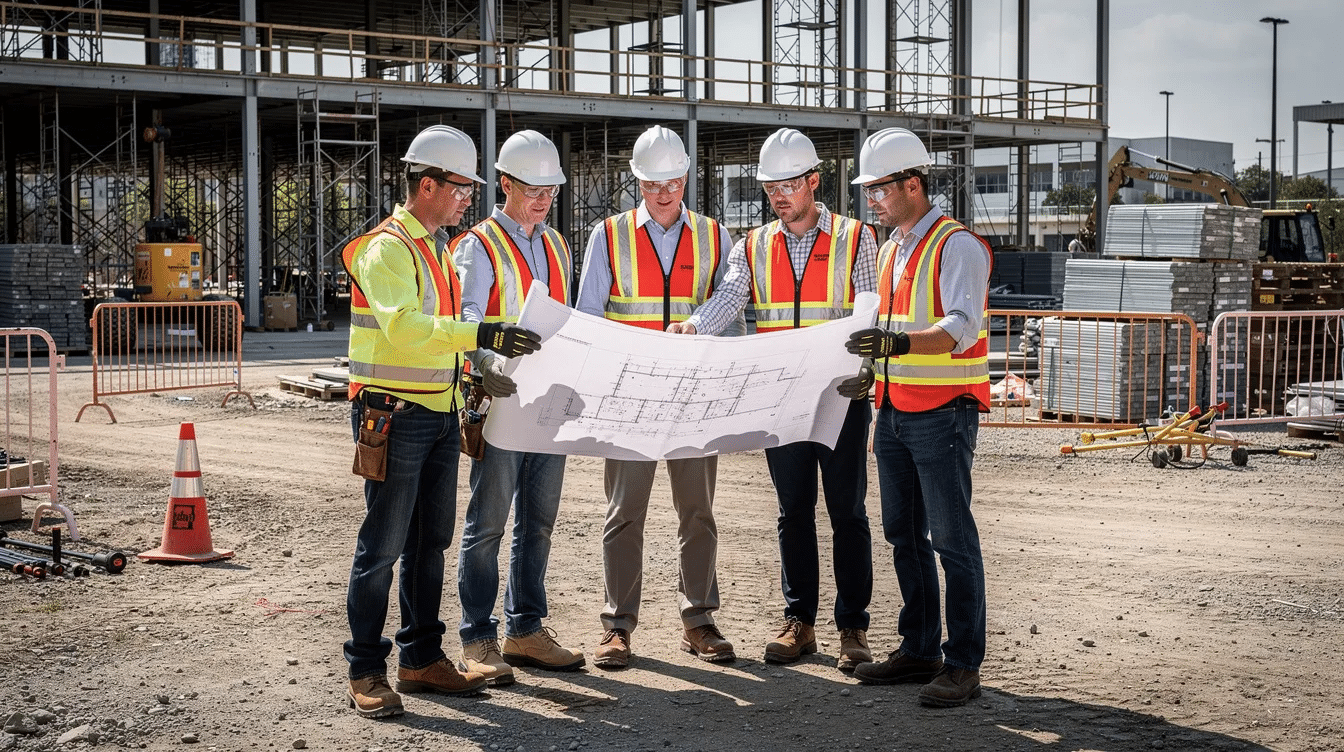
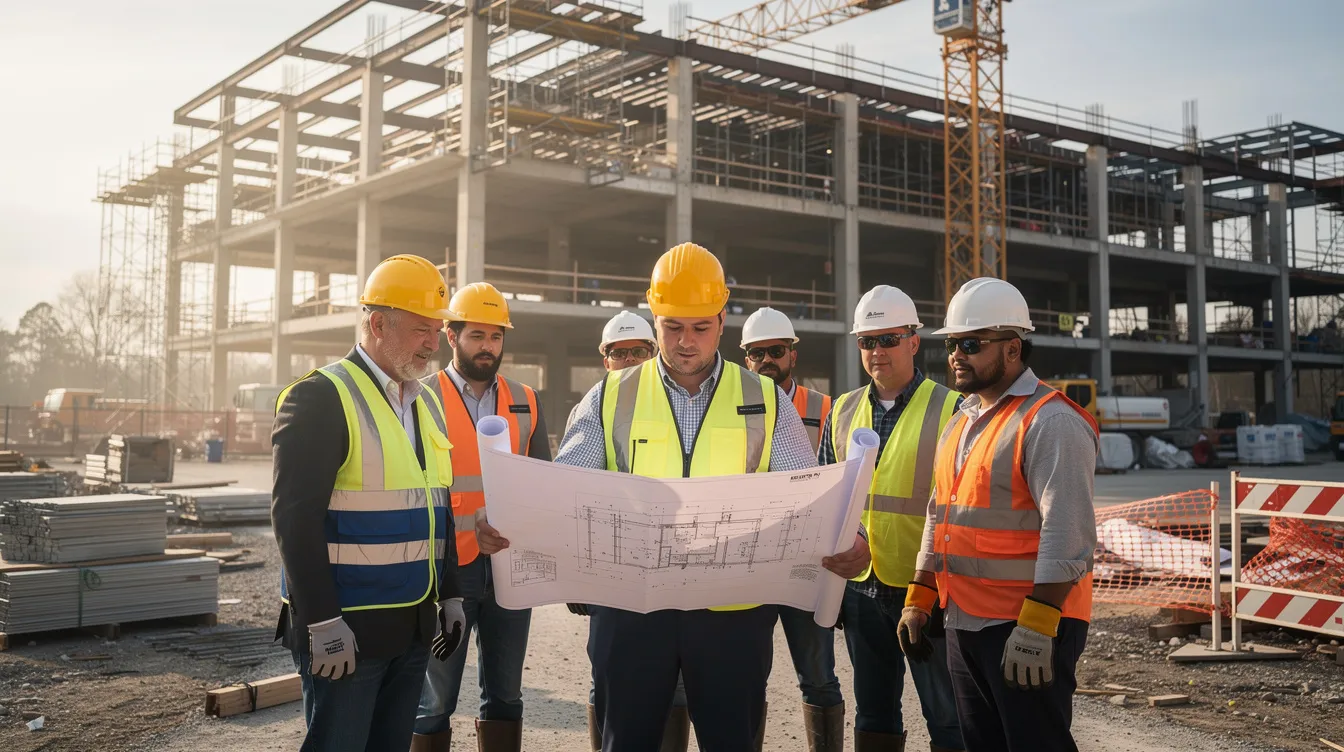
Foremen are frontline leaders who turn project plans into actual work. They oversee crews of eight to 12 workers, run daily safety huddles, manage materials and scheduling, enforce quality requirements, and mentor apprentices. A well-trained foreman helps avoid safety problems, delays, and communication failures. An untrained one multiplies them.
Training programs for construction foremen bridge the gap between skilled professionals and managing teams. When labor is tight, the supervision burden increases. Fewer experienced hands on site means more coaching, more correction, and higher stakes for every decision a foreman makes. Construction foremen training includes leadership, safety regulations, and technical skills – all areas where a knowledge gap translates directly into lost productivity and margin.
Framing a foreman training program as a strategic investment rather than an overhead line item is essential. Contractors who approach construction leadership in the Ohio Valley as a development priority build organizations that retain talent and deliver projects on time.
How Data Center Hiring Is Reshaping Ohio Valley Trades
The trades most affected by data center apprenticeship demand overlap directly with the trades every commercial and industrial contractor needs:
- Electrical
- HVAC
- Pipefitting
- Plumbing
- Sheet metal
- Sprinkler fitting
In Ohio, testimony before the Joint Data Center Committee reported that data center employment grew roughly 70.5% from 2016 to 2023, outpacing the national average. AWS alone has invested approximately $39.9 billion in data center construction and operations since 2015. Average construction wages for data center roles in Ohio reach approximately $58 per hour, climbing to $90 per hour with overtime.
The I-75 corridor from Cincinnati through Dayton and the I-70 corridor through Springfield and Lima are the regional hotspots. Contractors bidding commercial, healthcare, and industrial work in those markets are now competing for the same labor pool that large data center general contractors are drawing from.
Which Trades and Crew Structures Feel the Biggest Strain
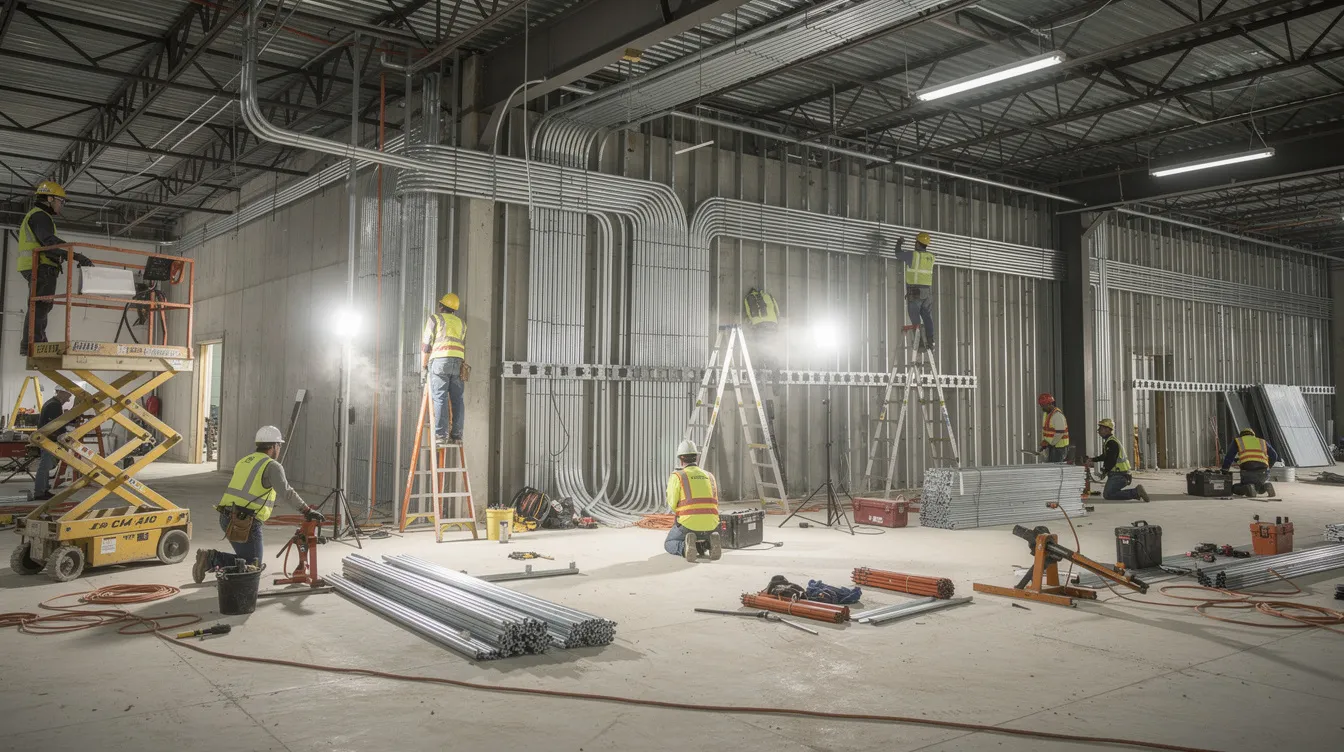
HVAC technicians, electricians, sheet metal workers, sprinkler fitters, and roofers face the steepest pull. Data center projects offer sustained, high-hour work at premium rates, which draws journeypersons away from smaller firms. When experienced hands leave, employers promote apprentices or less-seasoned workers into foreman roles earlier than planned – often without adequate training.
The journeyperson pull rate matters because it compounds. Losing one journeyperson doesn’t just reduce crew capacity; it reduces the mentorship and supervision that remaining apprentices depend on. Effective communication is essential as foremen translate project requirements into day-to-day tasks, and that translation breaks down when foremen lack experience or support.
Consider the regional impact: on a $50 million healthcare project in Dayton, an untrained foreman contributed to a three-week MEP rough-in delay that cost $150,000 in overtime and liquidated damages. On a separate Cincinnati project, a trained foreman recovered 10 days through huddle-driven re-sequencing, saving $80,000. Well-trained foremen optimize daily workflow and minimize downtime – and those differences show up in margin and reputation.
When supervision spans widen because labor is scarce, multi-trade crews suffer. Coordination between electrical, mechanical, and plumbing scopes requires a foreman who can plan, communicate, and adjust in real time.
Construction Foreman Certification Program: Curriculum and Outcomes
NCCER offers a national certification for construction foremen through its Construction Leadership Series. The Construction Foreman Certification Program requires 15 contact hours spread across five core courses. Participants earn 1.5 CEUs upon completing the foreman program. Training curricula for foremen target areas like planning, scheduling, and productivity, with direct application to the construction site.
The five courses are:
| Course | Focus Area |
|---|---|
| Leadership and Supervision | Ethics, coaching, managing performance |
| Communication | Crew communication, documentation, stakeholder coordination |
| Productivity | Planning, scheduling, materials logistics, making work productive |
| Quality | First-time quality, quality culture, defining standards |
| Safety, Health, and Environment | Hazard recognition, emergency preparedness, compliance |
Foreman training includes courses on construction law and compliance. Delivery options include self-paced online courses at approximately $590 per participant or a facilitated format with a Master Trainer at approximately $995. An assessment-only option and an English Skills module for non-native speakers are also available.
Eligibility for the NCCER construction foreman certification requires passing the assessment and demonstrating at least two years of journey-level craft experience. Courses and the assessment may be taken before the experience requirement is met; certification is withheld until both are complete.
Post-training, contractors should track measurable KPIs: first-90-day crew turnover, OSHA Total Recordable Incident Rate, rework costs as a percentage of contract value, and schedule deviation. A 90-day follow-up and mentorship metrics help confirm whether the training is producing results on the job site.
Foreman Training Construction: Practical Modules to Include
An effective certification program covers specific communication challenges and technical competencies. The modules contractors should prioritize include:
Leadership and communication. Courses cover leadership principles and strategies for foremen, including conflict resolution, delegation, and team motivation. Leadership skills help motivate workers and resolve conflicts. Communication skills in foreman training build better crew loyalty and lower turnover. Effective communication techniques are critical for a foreman’s success, and cover specific communication challenges foremen face daily – from translating blueprints into crew assignments to documenting change orders.
Planning, scheduling, and blueprint reading. Blueprint reading is essential for foreman task coordination. Foremen who can read drawings, sequence tasks, and manage scheduling reduce bottlenecks and keep crews productive. These modules also address managing tools and materials logistics.
Safety ownership and OSHA compliance. Risk management is a key element in foreman training programs. Modules should cover hazard recognition, job hazard analyses, OSHA standards, and emergency preparedness. Effective communication methods critical to safety include toolbox talks, pre-task planning, and incident reporting.
Apprenticeship mentorship and coaching. Foremen are responsible for developing the next generation of craft professionals. Modules that teach coaching techniques, structured feedback, and on-the-job training processes critical to apprentice progression help protect the pipeline from the bottom up.

How Better Foremen Protect Safety, Productivity, and Retention
Construction foreman training emphasizes proper job hazard analyses and jobsite inspections. Foremen ensure OSHA compliance and reduce project shutdowns through proper training. Safety training for foremen often incorporates OSHA compliance and hazard identification, and foremen must comply with OSHA standards for safety at every stage of a project.
Regular safety meetings significantly reduce workplace accidents. The Construction Foreman Certification includes safety education and training that goes beyond compliance checklists. Safety best practices are essential for risk reduction on job sites, and foremen are trained to identify and mitigate job site hazards before they escalate.
On the quality side, foremen catch mistakes early to prevent costly rework and maintain structural integrity. Quality management ensures work is done right the first time. Foremen must understand and communicate quality requirements clearly to every crew member, and effective communication about quality standards is critical for foremen leading multi-trade scopes. A quality culture reduces rework and increases project efficiency. Quality management training is essential for successful construction projects – particularly in mission-critical environments like data centers where tolerances are tighter.
Foremen learn to document delays and manage disputes to mitigate risks. Foremen must communicate clearly with workers and stakeholders, and foremen are trained in record-keeping for necessary documents including daily reports, inspection logs, and change-order records.
The metrics that matter most for contractors:
- First-90-day turnover: firms with formal leadership programs report under 5%, compared to 11-30% at firms without.
- OSHA TRIR: trained foremen who run consistent safety huddles and proper inspections drive incident rates down.
- Rework cost: a foreman who enforces first-time quality reduces rework as a percentage of contract value.
One ABC Ohio Valley member firm in the Cincinnati market reported that after enrolling three field supervisors in a structured foreman development program, the company cut its first-90-day crew turnover in half within two project cycles – improving employee retention and reducing onboarding costs.
Protecting Apprenticeship Pipelines While Competing for Talent
When data center contractors recruit aggressively, apprenticeship conversion and retention become urgent priorities. Contractors should take specific actions:
- Stagger scheduling so apprentices accumulate required on-the-job hours without gaps. Pulling apprentices off training rotations to fill field shortages creates long-term pipeline damage.
- Sponsor apprentices proactively. Employer engagement in the enrollment process – covering tuition, tools, and mentorship – signals career investment and builds loyalty.
- Assign trained foremen as mentors. Apprentices who receive consistent coaching and structured feedback are more likely to complete their programs and stay with sponsoring firms.
Contractors should align workforce planning to 12-to-24-month apprenticeship cycles and treat construction workforce development as a bidding input, not an afterthought.
ABC Ohio Valley Resources to Deploy Right Now
ABC Ohio Valley operates programs that directly support foreman development, apprenticeship, and leadership capability:
- TOOLS Program: K-12 and community outreach to build the next generation trades pipeline.
- OVCEF (Ohio Valley Construction Education Foundation): continuing education and credentialing for craft professionals moving into supervision.
- Registered Apprenticeship: nine trades – carpentry, craft labor, electrical, HVAC, pipefitting, plumbing, roofing, sheet metal, and sprinkler fitter – with classroom and on-the-job training in partnership with Diamond Oaks and Sinclair Community College.
- Next Gen Leaders: under-40 networking and leadership development designed to accelerate the supervisor-to-executive pipeline.
- Mid-America OSHA and Safety Peer Groups: safety education and compliance training that strengthens foremen’s capability on the construction site.
Contractors should review construction leadership in the Ohio Valley for a deeper framework on building leadership at every level. Verify current program availability, enrollment windows, and costs with ABC Ohio Valley staff before committing participants.
Action Plan: What Ohio Valley Contractors Should Do Next
- Audit foreman spans. If any foreman is supervising more than 12 workers or covering multiple trades without support, that role is a training priority.
- Identify training candidates now. Journeypersons with two or more years of craft experience and demonstrated leadership aptitude should be enrolled in the NCCER construction foreman certification or an equivalent program.
- Align bidding and workforce plans to apprenticeship cycles. A 12-to-24-month planning horizon lets contractors recruit, train, and retain rather than scramble to fill seats.
- Set one measurable pilot. Pick a target – reduce first-90-day turnover from your current rate by 25% within six months – and hold the foreman development program accountable to that result.
Sources, Verification, and Internal Linking Checklist
- Primary source: Construction Executive, Aug. 3 analysis
- All time-sensitive program details – apprenticeship schedules, OVCEF offerings, NCCER cohort availability, and enrollment contacts – should be verified with ABC Ohio Valley staff before publication.
- Internal links confirmed: data center apprenticeship demand, construction workforce development, next generation trades pipeline, construction leadership in the Ohio Valley.
- Cross-check live WordPress inventory to confirm no duplicate primary keyword or overlapping angle.
Next Step
The contractors who train foremen now will be the ones who scale without losing control of safety, schedule, or talent. Explore apprenticeship pathways and workforce development resources through ABC Ohio Valley. Contact us to discuss enrollment, sponsorship, and leadership training options for your team.