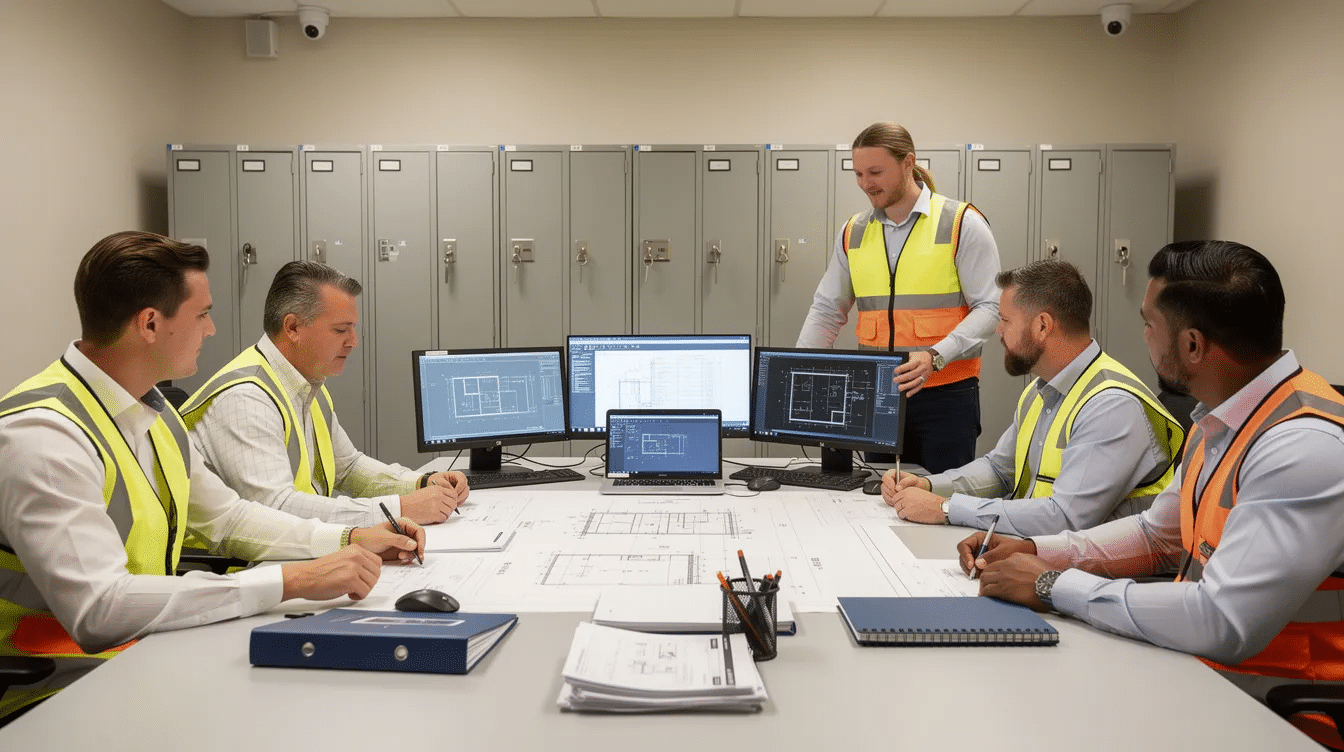

Federal contractor cybersecurity is no longer a future concern for firms pursuing Department of Defense work. It is an active compliance issue tied to how contractors and subcontractors protect sensitive project information and document that protection when a solicitation or contract requires it. For Ohio Valley construction leaders, the practical question is no longer whether CMMC matters. It is how to prepare before a bid, subcontract, or customer review makes the gap obvious.
Fast answer: What Ohio Valley construction leaders should do about CMMC now
The Department of Defense’s Cybersecurity Maturity Model Certification program verifies that contractors and subcontractors handling federal contract information (FCI) or controlled unclassified information (CUI) have implemented required cybersecurity measures. For firms in Southwest and West Central Ohio, Northern Kentucky, and Southeastern Indiana that perform or pursue defense-related work, that makes cybersecurity a business-readiness issue as much as an IT issue.
Commercial and industrial contractors in the Ohio Valley should assume this reaches beyond large national primes. Specialty trades, subcontractors, suppliers, and project partners can all be pulled into scope through contract clauses and customer requirements.
Associated Builders and Contractors recently launched a Cybersecurity Maturity Model Certification roadmap for contractors. This article translates that roadmap into practical next steps for regional firms.
Start here:
- Confirm whether your company stores, processes, or transmits federal contract information or controlled unclassified information on any current or prospective project.
- Assign a point person for cybersecurity readiness, whether that is an operations leader, IT manager, controller, or compliance lead.
- Review ABC’s CMMC roadmap resources and use the path that matches your current level of readiness.

What ABC’s new cybersecurity roadmap is and why it matters to construction contractors
On Oct. 27, 2026, ABC National announced its Cybersecurity Maturity Model Certification Roadmap for Contractors. The resource is intended to help Department of Defense contractors and subcontractors in the defense industrial base that handle FCI or CUI prepare for CMMC Phase 1 requirements.
The roadmap is organized into two practical paths:
- Getting Started is aimed at firms that need basic awareness, initial risk identification, and foundational policies.
- Finish the Job is for companies that have already begun implementing controls and need to validate readiness before a customer review, readiness review, or formal assessment.
ABC says the roadmap includes tools such as quick-start guidance, checklists, videos, webinars, and reports for members and nonmembers. For contractors without in-house cybersecurity staff, that matters. It gives leadership teams a structured starting point without treating compliance as a vague future project.
This is especially relevant for merit shop contractors in the Ohio Valley because federal work in and around the Dayton, Cincinnati, Springfield, Lima, Northern Kentucky, and Southeastern Indiana corridors often involves layered project teams, digital plan sharing, cloud-based document storage, and subcontract flow-down obligations. In that environment, CMMC readiness can affect whether a qualified contractor stays eligible for defense-related opportunities.
CMMC, FCI, and CUI in plain English: What you are actually protecting
The Cybersecurity Maturity Model Certification program is the Department of Defense framework for verifying that contractors safeguard certain categories of sensitive information on nonfederal systems.
Federal contract information (FCI) is generally nonpublic information provided by or generated for the government under a contract to develop or deliver a product or service. In a construction context, that can include nonpublic scopes, schedules, reports, or contract performance information.
Controlled unclassified information (CUI) is a more sensitive category of information that federal law, regulation, or governmentwide policy requires safeguarding or dissemination controls for. Depending on the project, that could include certain technical documents, facility-related information, or other sensitive nonclassified data identified by the government.
Two practical points matter for contractors:
- Not every federal project involves CUI, but many firms touch at least some nonpublic federal contract information.
- Cybersecurity expectations depend on the information involved and what the solicitation, contract, or subcontract specifically requires.
CMMC 2.0 uses three levels:
- Level 1 applies to contractors handling FCI and includes 17 basic safeguarding requirements.
- Level 2 applies where protection of CUI is required and aligns with the 110 security requirements in NIST SP 800-171.
- Level 3 is reserved for the highest-priority programs involving more advanced protection requirements.
For construction leaders, the important takeaway is simple: this is not just a back-office technology topic. If your company handles covered information on a defense-related contract, cybersecurity controls can become part of your contract readiness and customer qualification process.
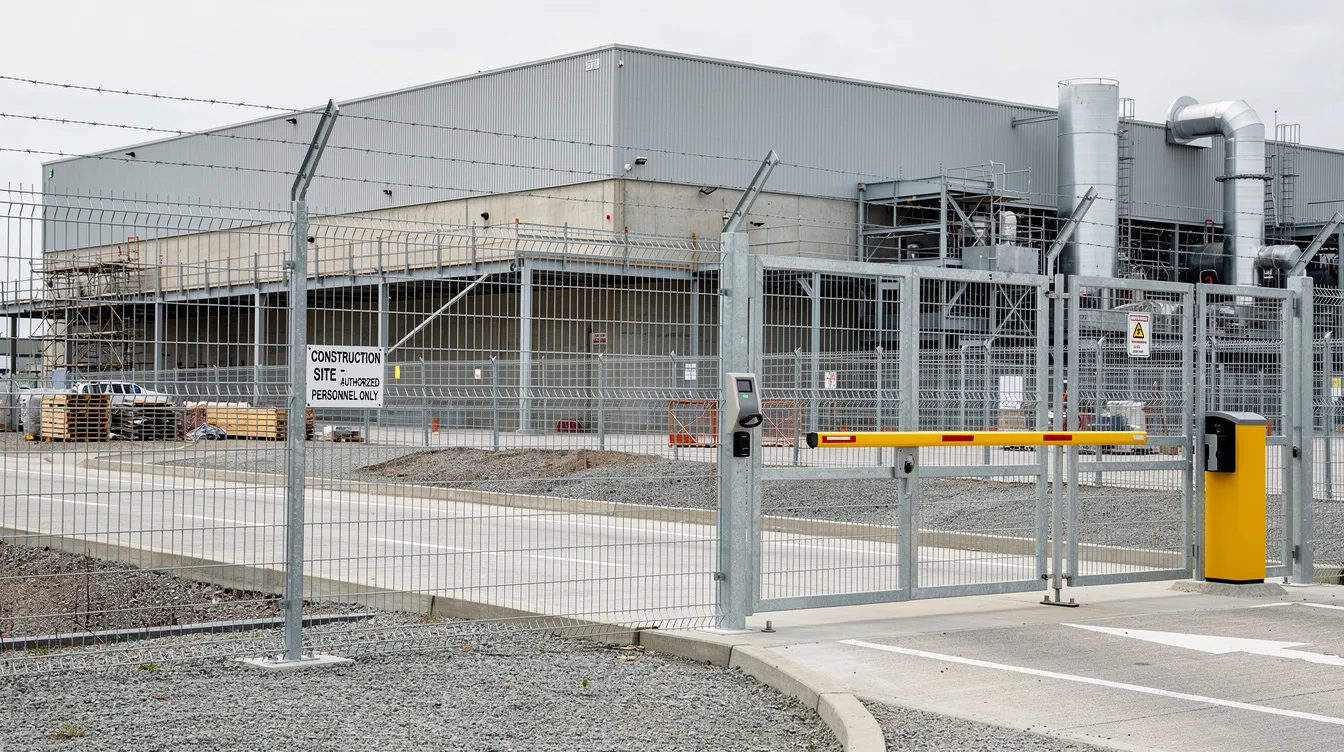
How the CMMC rule changes federal contractor cybersecurity in construction
The CMMC program marks a shift from informal assurances to verifiable cybersecurity requirements tied to Department of Defense procurement. The underlying CMMC program rule took effect on Dec. 16, 2024, but contractors should not assume every contract moved to the same requirement on the same day. In practice, CMMC requirements are being phased into applicable solicitations and contracts over time.
That distinction matters. A company may not need the same level of documentation, assessment status, or evidence package for every opportunity. The controlling question is what the specific solicitation, contract, subcontract, or customer requirement says.
What has changed for contractors is the direction of travel:
- DoD has aligned the program more closely with established standards such as NIST SP 800-171.
- When a solicitation requires a specific CMMC level, contractors should expect that requirement to affect award eligibility, as specified in the contract process.
- Prime contractors and higher-tier subcontractors are increasingly treating cybersecurity readiness as part of prequalification and supply-chain risk management.
Government Accountability Office reporting has also noted implementation risks, including whether the department and the market will have enough qualified assessment capacity as the program expands. That is another reason not to wait for a single must-win opportunity before starting internal preparation.
For Ohio Valley firms, the safest approach is to treat CMMC like other threshold business requirements: not as a last-minute form, but as a capability you may need to demonstrate when the right project appears.
Which Ohio Valley construction firms should pay attention to CMMC
Owners and executives of general contractors, specialty contractors, and subcontractors across the Ohio Valley should pay attention if their firms perform defense work directly, support a defense-related prime, or provide services on projects that share nonpublic federal data.
Examples of potentially affected regional firms include:
- Contractors building or renovating military facilities near Wright-Patterson Air Force Base.
- Firms working on Army Corps of Engineers projects along the Ohio and Kentucky river corridors.
- Specialty trades supporting defense-related manufacturing, logistics, or research facilities in the Cincinnati, Dayton, Springfield, or Lima markets.
- Subcontractors performing electrical, HVAC, plumbing, roofing, or sheet metal work on projects where federal information is shared through digital platforms.
This matters because cybersecurity expectations can flow down. A small specialty firm may never think of itself as a defense contractor, yet a prime or customer may still ask it to explain how it protects nonpublic project information.
Common internal roles that should understand the issue include:
- Estimating and business development teams reviewing federal opportunities.
- Project managers handling digital submittals, drawings, RFIs, and shared files.
- Operations, safety, HR, and executive leaders responsible for policies, training, devices, and access control.
For many merit shop contractors, the immediate issue is not advanced cyber engineering. It is basic visibility: knowing what information you handle, where it lives, who can access it, and what a customer or contract may require before award.
Inside ABC’s two-path roadmap: “Getting Started” versus “Finish the Job”
ABC’s roadmap is useful because it recognizes that contractors don’t all start from the same place.
Getting Started fits firms that need to:
- Understand whether they handle FCI or CUI.
- Identify where covered information is stored or shared.
- Establish foundational security practices and written rules.
- Build executive awareness before a customer requirement forces the issue.
Finish the Job fits firms that already have some controls in place and need to:
- Close gaps between current practice and contract requirements.
- Document evidence that controls are operating as intended.
- Prepare for the appropriate review, affirmation, self-assessment, or third-party assessment required in a given situation.
- Improve repeatability so compliance does not depend on one person’s memory.
For Ohio Valley contractors, the right path depends on three things: the type of federal information involved, the company’s current level of cybersecurity maturity, and how close the firm is to a real contract requirement. The roadmap helps leadership teams organize that work into a sequence instead of reacting only when a prime contractor asks hard questions.
Step-by-step readiness plan: How to use the roadmap in your construction business
This is where the roadmap becomes operational. Construction leaders do not need to become cybersecurity experts to move the company forward. They do need an orderly readiness process.
- Determine your data exposure. Review current and target work to identify whether your company handles FCI, CUI, or neither. Check solicitations, subcontracts, customer portals, and information-sharing practices.
- Map where sensitive information lives. Identify every system that stores, processes, or transmits covered information, including email, file shares, cloud platforms, laptops, tablets, phones, and project management tools used in the field.
- Benchmark current practices. Compare what you do now with the level your work likely requires. For some firms, that starts with the 17 basic Level 1 safeguards. For others, it may mean measuring against the 110 NIST SP 800-171 requirements associated with Level 2.
- Prioritize obvious gaps. Focus first on high-impact basics such as access control, password practices, multi-factor authentication where appropriate, device management, secure file-sharing habits, and account removal when employees or vendors no longer need access.
- Document policies and procedures. Put your rules in writing. A company that informally does the right thing may still struggle if it cannot show how responsibilities, approvals, incident response, and information handling are supposed to work.
- Train your people. Construction firms often rely on distributed teams, mobile devices, and busy project leaders. That makes awareness training important, especially for phishing, password hygiene, device use, and document-sharing practices.
- Review vendor and subcontractor exposure. Identify which outside parties can access your systems or covered information, and decide how to control those relationships.
- Assign ownership and track progress. A designated lead or small cross-functional team should own the roadmap, report to leadership, and keep the process moving.
As you work through these steps, save evidence. If a customer, assessor, or higher-tier contractor asks what you have done, informal verbal assurances will carry less weight than written policies, training records, system settings, and documented decisions.
Short checklist: What to do about CMMC this week
Use this quick list with your leadership team:
- Identify any current or planned projects that involve FCI or CUI.
- Review active solicitations, subcontracts, and customer requirements for CMMC-related clauses or cybersecurity obligations.
- Decide whether your company is in the “Getting Started” or “Finish the Job” stage.
- Assign an internal owner for federal contractor cybersecurity readiness.
- Schedule a leadership review of ABC’s roadmap resources.
- Create a 90-day action plan for gap review, policy cleanup, and staff awareness.
- Check whether your primes, vendors, and lower-tier partners create additional information-handling risk.

How CMMC readiness fits day-to-day construction operations
CMMC readiness should support project execution, not sit apart from it. In many companies, the practical work happens in familiar places: who can open a drawing set, how files are shared with field teams, how laptops and phones are secured, how subcontractor access is handled, and how information is removed or restricted when a project ends.
That is why federal contractor cybersecurity construction is best approached as an operations-and-risk issue, not only a technical one. Estimating, project management, accounting, IT, and executive leadership all influence whether covered information is handled securely and consistently.
For firms already improving digital workflows, the goal is not to create unnecessary friction. The goal is to ensure the systems you rely on for speed and collaboration can also support the security expectations attached to defense-related work.
Maintaining readiness as rules and contract requirements evolve
CMMC is not a one-time box to check. Contractors need a way to maintain readiness as contract language, standards, and customer expectations evolve.
Practical ways to stay current include:
- Monitor Department of Defense and acquisition updates affecting contractor cybersecurity requirements.
- Revisit internal practices before major bids, renewals, or new customer reviews.
- Update policies, training, and system access when staffing, vendors, or platforms change.
- Extend review beyond your own office to lower-tier information handling where contract flow-downs may apply.
- Use ABC advocacy and federal-work updates to keep leadership aware of broader regulatory developments.
The exact compliance path will differ by contract and data type. But the general business lesson is the same: firms that build repeatable habits now will be in a stronger position than firms that wait until a customer requires proof immediately.
How ABC Ohio Valley can support your CMMC planning
ABC Ohio Valley can help regional merit shop contractors connect national ABC resources to local business decisions. That includes helping members think through workforce awareness, leadership ownership, operational discipline, and broader readiness for federal opportunities across the chapter’s tri-state footprint.
For Ohio Valley contractors, the next step is practical. Review whether your firm handles FCI or CUI, identify which ABC roadmap path fits your current position, and assign ownership before a must-win opportunity forces a rushed response.
If your company is pursuing or supporting federal work, contact ABC Ohio Valley to learn about relevant education, peer connections, and member resources that can help you move from awareness to action.