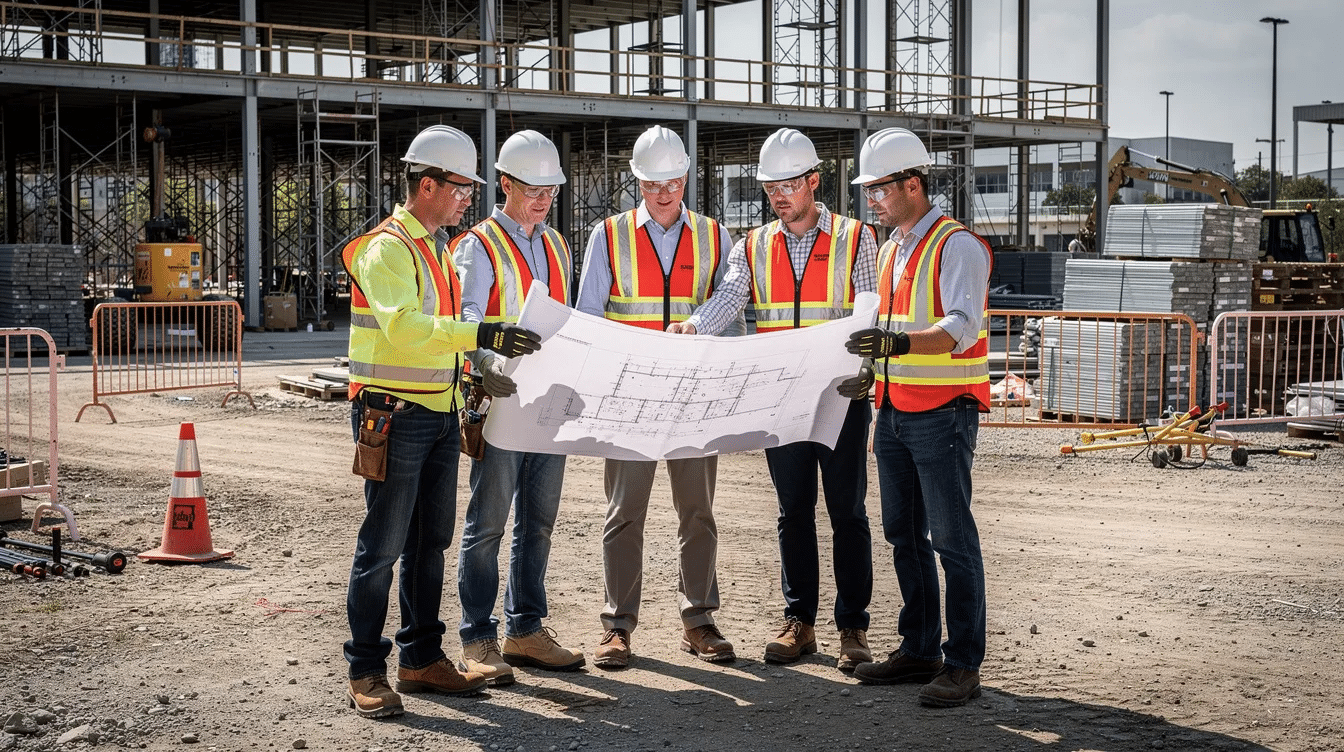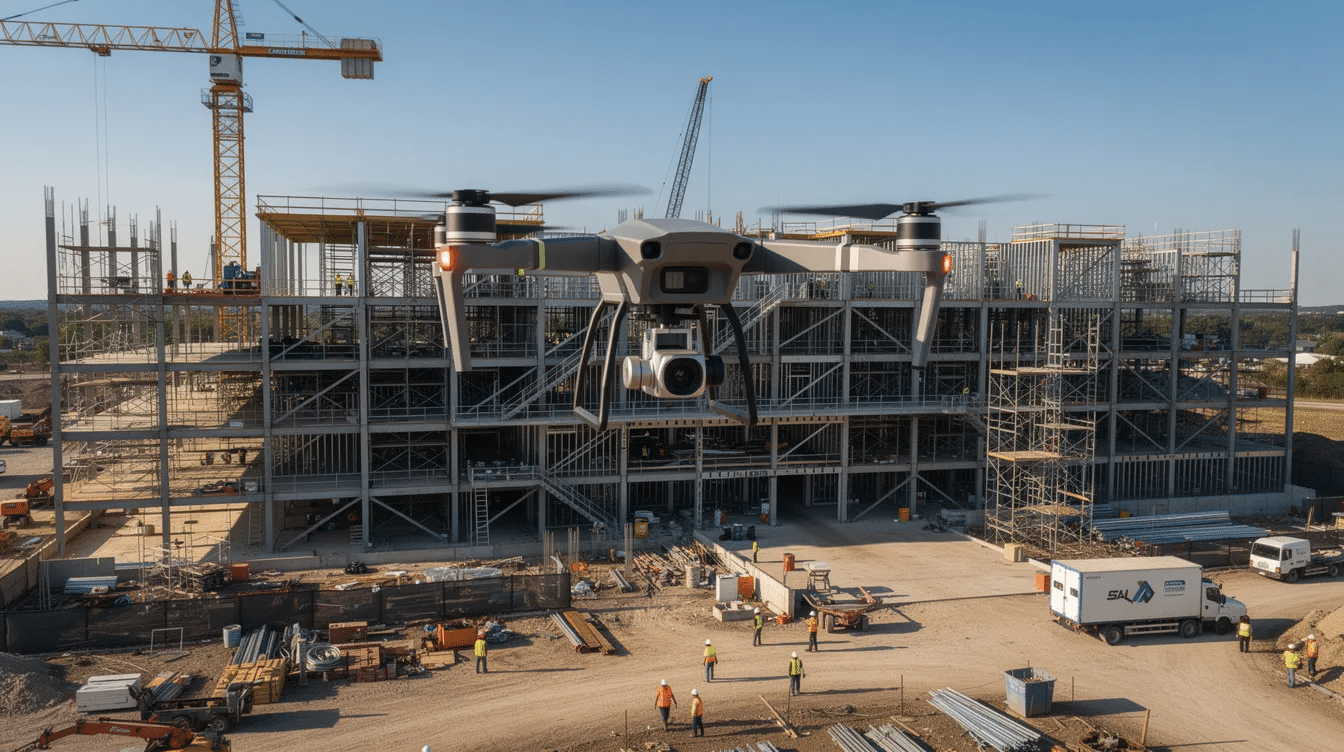

Outsourcing drone surveying or progress monitoring is common on commercial jobs, but it does not outsource the business risk. For many Ohio Valley contractors, the immediate issue is not how to fly a drone. It is how to vet a vendor before aerial work begins, especially when FAA drone rulemaking can affect whether that vendor can keep operating on the project.
That matters because FAA drone rulemaking, waiver pathways, airspace authorizations, and federal scrutiny of certain drone manufacturers can all affect whether a vendor can keep operating on your project. Construction Executive has also reported that drone use is now widespread in construction and that contractor fleets remain highly concentrated among a small number of manufacturers. For firms in Cincinnati, Dayton, Springfield, Lima, Northern Kentucky, and Southeastern Indiana, that turns outsourced drone work into a procurement and contract issue, not just a field-tech decision.
This article is a practical checklist for reviewing outside drone vendors. It is not a guide to buying your own fleet, and it is not legal advice. The goal is simpler: help contractors ask better questions before signing a services agreement for aerial surveying, roof inspection, or progress documentation.
Why outsourced drone work still creates contractor risk
The FAA regulates the pilot and the flight operation, but contractors and owners still carry project risk when a vendor cannot perform as promised. A delay in airspace approval, a hardware substitution, a lapse in pilot credentials, or a dispute over data ownership can affect schedule, documentation, and claims strategy.
- Owner requirements may be stricter than the federal baseline.
- Airspace access or waiver status can change during a long project.
- Federal policy debates over drone equipment sourcing can create continuity problems for some vendors.
- If the contract does not address data rights, retention, or re-export, the answer may not favor the contractor.
That is why you should review outsourced drone services like any other specialized project vendor: credentials first, continuity second, data rights third, and notice obligations throughout.
Start with the federal baseline: Part 107, registration, and Remote ID
Most construction drone work falls under FAA Part 107, which governs commercial operation of small unmanned aircraft under 55 pounds. That is the baseline contractors should expect a vendor to understand and document.
At minimum, ask whether each assigned pilot holds a current remote pilot certificate, whether each aircraft is properly registered, and whether the vendor can explain how it complies with operating limits such as visual line of sight, altitude restrictions, and airspace authorization requirements. If a vendor cannot answer those questions clearly, stop there.
Remote ID should also be part of the initial review. FAA rules require Remote ID compliance for drones that must be registered, including business drones. Vendors may meet that requirement through a standard Remote ID drone or a broadcast module. Contractors do not need to manage the technical setup themselves, but they should require written confirmation that the aircraft used on the project are compliant.
If the vendor proposes work outside ordinary Part 107 limits, such as certain advanced operations, ask what FAA approval supports that work and whether the approval remains valid for the project period. The FAA now handles waiver requests through the Aviation Safety Hub, and Section 927 of the 2024 FAA reauthorization created an additional waiver pathway for certain unmanned aircraft operations. For procurement purposes, the key question is practical: what approval does the vendor already hold, and what happens if it expires, is denied, or no longer fits the site conditions?
What to ask a drone vendor before award
Move the diligence process out of the field and into procurement. Require written responses, not verbal assurances, to questions like these:
- Which specific pilots may work on our projects, and do they each hold a current FAA remote pilot certificate?
- Which aircraft do you intend to use, and are they currently registered and marked as required?
- How do you confirm Remote ID compliance for each aircraft?
- Do you use employees, subcontracted pilots, or both?
- Who checks controlled airspace status and obtains required authorizations before each flight?
- Do you hold any waivers or other FAA approvals relevant to our scope?
- What records will you provide if a dispute later turns on flight compliance, timing, or location?
These are procurement questions, not operating instructions. The contractor is not taking over flight responsibility. The contractor is documenting whether the vendor is prepared to perform the contracted service without creating avoidable project risk.
Equipment disclosure matters more than many contractors think
The vendor’s aircraft, sensors, and software stack can become a schedule issue if the vendor has to substitute equipment mid-project. That risk is higher when drone fleets are concentrated among a limited set of manufacturers and federal restrictions on acquisition or use are still being debated in some contexts.
Construction Executive has reported that most contractors using drones rely on DJI equipment. That concentration does not automatically create a problem on every project, but it does mean contractors should ask whether a vendor’s service model depends on a narrow set of platforms and what backup options exist if owner requirements, client preferences, procurement rules, or supply-chain limits force a change.
Require disclosure of:
- Make and model of primary and backup aircraft
- Sensor types, such as RGB, thermal, or LiDAR
- Core processing or hosting platforms used to turn flights into deliverables
- Conditions under which the vendor may substitute aircraft, sensors, or software
Then ask the follow-up that matters most: if you switch hardware or software, how will you preserve output quality, file compatibility, and schedule continuity?
Do not let changing restrictions become your schedule problem by default
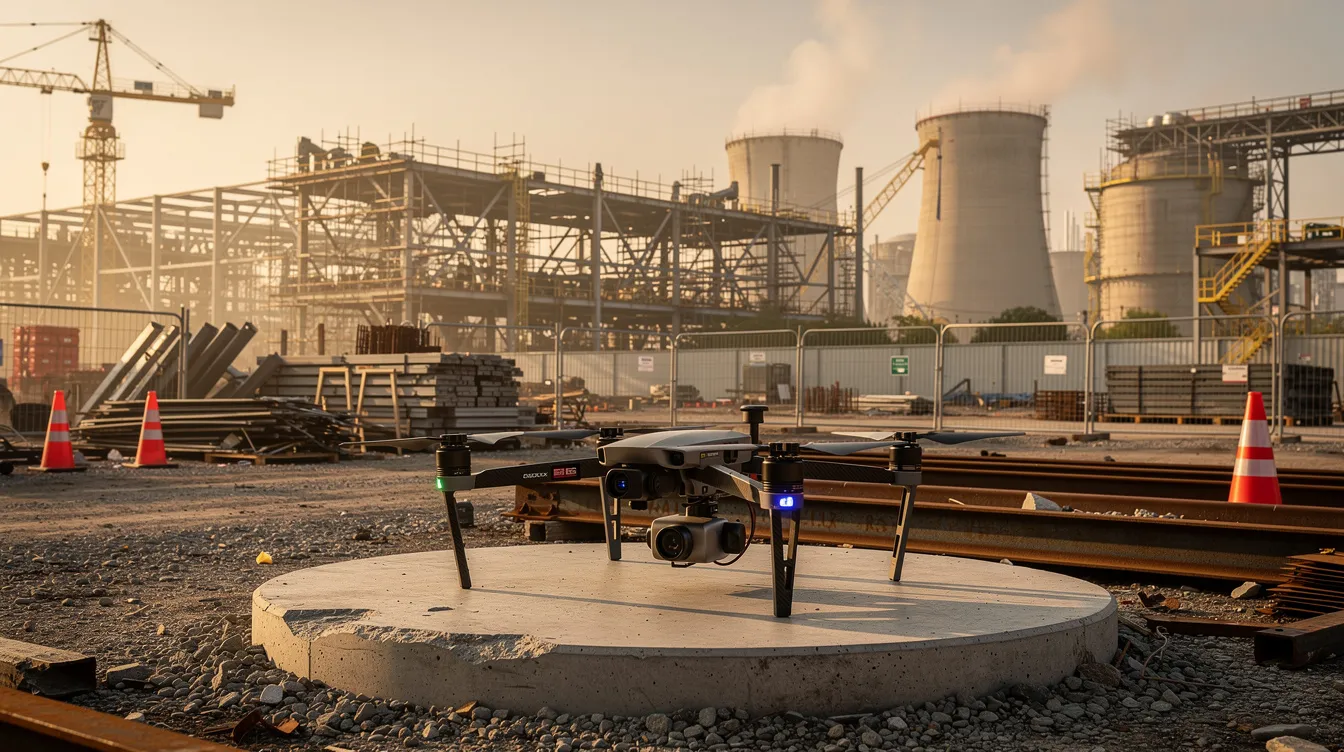
FAA policy has been active in this area, and contractors should distinguish carefully between current rules, proposed rules, and owner-imposed restrictions. For example, the FAA’s 2026 proposal concerning unmanned aircraft flight restrictions near certain critical infrastructure facilities is a proposal, not a blanket final rule for all construction sites. But even proposals can influence owner expectations and vendor planning long before they are finalized.
Your contract should require the vendor to monitor the rules and authorizations that affect its operations on your site. That includes controlled airspace status, applicable notices, waiver conditions, and any project-specific owner restrictions the vendor must satisfy.
Ask the vendor:
- Who monitors FAA changes and site-specific restrictions during the life of the project?
- How quickly will you notify us if a regulatory issue affects planned flights or deliverables?
- What is your process if authorization is denied or a previously workable flight plan no longer works?
- At what point do you owe us a revised schedule, substitute approach, or change request?
This is one of the most important contract sections in the whole review. If the agreement is silent, the contractor can end up absorbing delays caused by a vendor’s regulatory blind spot.
Continuity planning belongs in the contract
A qualified drone vendor should be able to explain how service continues if a pilot becomes unavailable, an aircraft is grounded, a software platform changes, or a customer bars a particular manufacturer from the site.
That does not mean every vendor needs multiple redundant fleets. It does mean the contractor should understand the continuity plan before relying on recurring aerial documentation for payment support, owner updates, schedule tracking, or quality verification.
Require answers to questions such as:
- What backup aircraft and backup pilot capacity do you maintain?
- What downtime triggers notice to the contractor?
- How will you recover missed flights or gaps in recurring progress documentation?
- What happens if your normal hardware cannot be used on a federal or owner-restricted project?
For sensitive work such as healthcare, industrial, utility, or transportation projects, more specific continuity language is justified because missed imagery can affect owner reporting, stakeholder communications, and claims records.
Drone data often functions like a project record, so treat it that way
Raw imagery, orthomosaics, point clouds, volume calculations, and annotated reports may later support pay applications, schedule analysis, quality verification, closeout, or dispute resolution. In practice, that means drone data often functions like a project record even if the contract never says so.
That is exactly why the contract should say more, not less.
Clarify these points before work starts:
- Who owns the raw data and processed deliverables?
- What license rights does the contractor receive to use, share, archive, or reanalyze the data?
- Can the contractor obtain complete copies of both raw and processed files during the job and after closeout?
- In what formats will the vendor deliver exports?
- How long will the vendor retain the data and backups?
- What happens if you need a re-export years later for a claim, warranty issue, or owner request?
Also ask whether the vendor uses third-party cloud tools or AI-enabled processing tools and, if so, how those tools affect confidentiality, access control, and reuse of project information.

Notice, incident reporting, and scope change should be written down
Even a strong vendor will face weather delays, staffing conflicts, equipment issues, and occasional incidents. The contract should state what happens next rather than leaving those points to email improvisation.
Include written expectations for:
- Advance notice of canceled or delayed flights
- Prompt notice of any issue that affects recurring documentation or scheduled deliverables
- Immediate reporting of incidents on or near the jobsite
- A documented process for expanding scope, such as moving from basic imagery to thermal review or survey-grade deliverables
If an event is serious enough to trigger FAA reporting obligations, the contractor should not learn about it weeks later from someone outside the project team. Require prompt notice and basic cooperation language up front.
Coordinate drone work with site safety and owner rules
Outsourced drone activity still has to fit the site. Launch and landing zones, crew notification, communications during flights, and work-area conflicts all need coordination with the project team.
That does not require turning this article into a flight manual. It does support a basic contract expectation that the vendor will integrate with the site’s safety and access procedures.
Require the vendor to address:
- Participation in site orientation or pre-task coordination as needed
- Compliance with project PPE and access rules
- Launch and landing protocols that avoid active work zones, pedestrian routes, and crane conflicts
- Coordination with any owner-imposed restrictions on photography, data handling, or flight location
For Ohio Valley contractors working across Ohio, Kentucky, and Indiana, remember that the FAA governs the airspace side, but owner policies, site-security rules, and contract requirements can still vary from project to project.
A practical vendor-review checklist contractors can use now
Before signing your next drone services agreement, copy these points into an internal review form or RFP appendix:
Authority and compliance
- Current pilot credentials for assigned personnel
- FAA registration status for each aircraft
- Remote ID compliance confirmation
- Any relevant waivers or special FAA approvals
Airspace and restrictions
- Responsibility for checking airspace and obtaining needed authorizations
- Process for tracking rule or restriction changes during the project
- Written notice obligations if a change affects schedule or scope
Equipment and continuity
- Primary and backup aircraft, sensors, and software platforms
- Substitution rules and approval requirements
- Recovery plan for grounded aircraft, unavailable pilots, or restricted hardware
Data rights and retention
- Ownership of raw and processed project data
- Export formats and delivery schedule
- Retention period, backup practices, and re-export process
- Third-party processing, hosting, or AI-tool disclosures
Notice and incidents
- Advance notice for missed or delayed flights
- Incident-reporting requirements
- Scope-change procedure for added services or new deliverables
Site coordination
- Orientation, PPE, access, and communications expectations
- Launch and landing coordination
- Compliance with owner-specific site restrictions
The next step is straightforward: pull one current or pending drone-services agreement and compare it against this checklist before the next flight is scheduled. For contractors that want broader education on technology governance, safety coordination, or construction risk management, ABC Ohio Valley can help connect members to training and chapter resources.