If you have data center work in your pipeline, this article is for you. It explains what has been proposed at the federal level, how it stacks on top of Ohio’s existing incentive pause, and how merit shop contractors across Cincinnati, Dayton, Northern Kentucky, and Southeast Indiana should manage the exposure starting now.
Key Takeaways
At a September 2026 energy affordability summit in Columbus, U.S. Senator Bernie Moreno said he expects to introduce federal legislation that would impose a 100% federal tax on any state or local data center tax incentive, effectively canceling subsidies. This proposal is not law. It is a legislative proposal by a sitting senator, and this article takes no position on it. Here is what matters for your firm:
- Ohio has awarded roughly $2.3 billion in data center incentives to at least 18 companies, and the 2025 cost came in about $1.4 billion above projections. In May 2026, Governor DeWine paused new incentives while the state studies the program.
- Brookings research finds data centers create relatively few permanent jobs, on the order of 100 to 200 per facility, but the construction phase is where substantial employment and construction backlog live. Incentive policy therefore hits data center builders first.
- Three scenarios shape contractor exposure over the next 12 to 24 months: the state pause holds with no federal change, a federal 100% tax passes and incentive-dependent projects re-scope or stall, or operators build without subsidies because compute capacity is the priority.
- Concrete steps include reviewing contract incentive contingencies, confirming payment security, accelerating notice-to-proceed, prequalifying for energy infrastructure work, and diversifying across the Midwest construction market beyond data centers.
- The incentive era is being renegotiated in public. The contractors who model the downside now will still be standing when policy settles.
1. What Has Been Proposed at the Federal Level?
At a September 2026 energy affordability summit in Columbus, U.S. Senator Bernie Moreno addressed data center subsidies directly. He told attendees he expects to introduce federal legislation under which any state or local tax incentive granted to a data center would be subject to a 100% federal tax, designed to recapture the subsidy’s full value. He also urged companies and states to stop taking and giving subsidies voluntarily.
In this context, “tax incentive” would include sales and use tax exemptions, property tax abatements, income tax credits, transaction privilege tax exemptions, and similar data center tax benefits granted by states and localities. Data center subsidies are financial incentives offered by state and local governments to attract investment, and this proposal would neutralize them at the federal level.
This is a legislative proposal, not enacted law. No bill text has been published. This article takes no position on whether such subsidies or the proposal represent good or bad policy. What matters for ABC Ohio Valley members is the practical effect: if adopted, a 100% federal tax on subsidies would change the economics of data center construction spending nationwide and force every contractor with data center work to reassess financial assumptions.
2. Ohio’s Existing Data Center Sales Tax Exemption and Incentive Landscape
Ohio was an early and aggressive user of data center tax incentives, and that history matters to every ABC Ohio Valley member with hyperscale data centers or colocation work on the books.
Earlier Ohio administrations granted long-term sales and use tax exemptions and tax abatements to major hyperscale operators including Google, Meta and Amazon, with some agreements running up to 40 years. These deals provided a 100% sales tax exemption on computer equipment, server equipment, cooling systems, backup generators, and construction inputs. To qualify, companies needed a minimum investment of $100 million in capital investment over three years and $1.5 million in annual payroll.
According to June 2026 reporting, Ohio has awarded roughly $2.3 billion in data center incentives to at least 18 companies. The scale of revenue loss became impossible to ignore when Signal Ohio reported that Ohio’s data center tax exemption cost $1.6 billion in 2025, with annual losses rising roughly $1.4 billion above the state’s initial $136 million projection for that year. Ohio’s annual losses reached $1.6 billion in 2025 due to data center tax exemptions, a figure that dwarfed every prior estimate.
This spike in costs and growing data center tax expenditures triggered heightened scrutiny of sales tax exemptions and property tax exemptions in the state legislature, with media coverage intensifying through mid-2026.
3. Ohio’s 2026 Pause: How the State Incentive Environment Already Changed
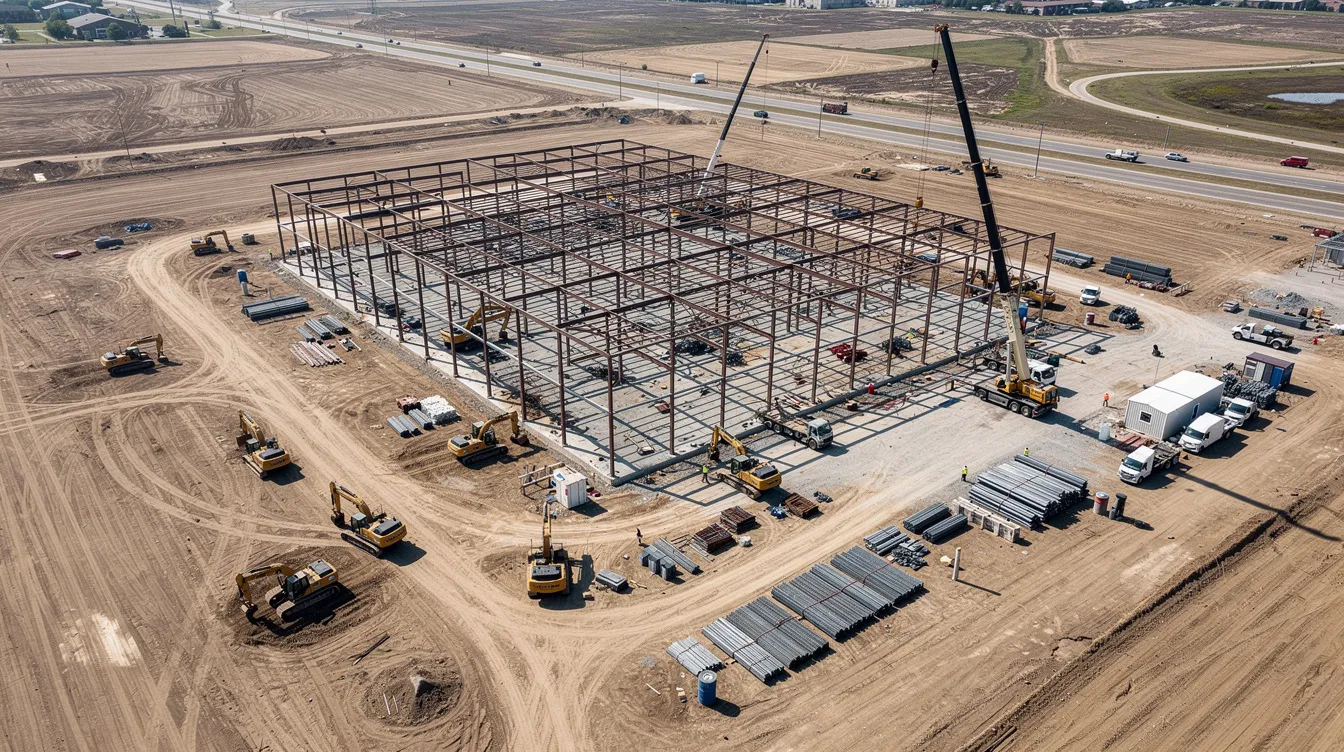
In May 2026, Governor Mike DeWine announced what is widely described as Ohio’s data center tax incentive freeze, directing the Ohio Tax Credit Authority to pause new data center incentive requests. Existing agreements continue unchanged. The pause primarily affects new data centers or expanding facilities seeking fresh sales tax breaks, use tax exemption certificates, or new tax abatements.
This state-level action intersects with emerging Ohio data center regulations under discussion in the Joint Data Center Committee, which may propose reporting requirements, caps, and performance-based clawbacks. The pause is already shaping the data center construction playbook for site selectors, owners and data center builders weighing the Ohio Valley region against competing locations.
For contractors, the practical distinction is clear: near-term projects tied to legacy incentive deals at existing data centers are likely to proceed, while new greenfield data center development that depends on fresh tax exemptions may be slowed, re-scoped, or shifted to other states where many still offer generous programs.
4. Why Policymakers Are Re-Examining Data Center Subsidies Now
The public and policymaker turn against data center subsidies has multiple drivers, and Ohio is far from alone. The U.S. has at least 38 states offering dedicated data center incentives, and governments may experience lost tax revenue when those programs outrun projections. Subsidies can lead to competition among states for data center investments, a dynamic that has ratcheted costs upward across the country.
Revenue loss is substantial beyond Ohio. Georgia’s data center tax exemptions are projected to cost $2.5 billion in FY 2026. Texas projects $9 billion in cumulative losses from data center tax breaks by 2030, with $1.3 billion in losses for FY 2026 alone. Virginia’s data center tax breaks cost $1.94 billion in FY 2025, with its DCRSUT exemption available until June 30, 2035. Virginia requires businesses to meet investment and job-creation requirements for its tax exemption, and they must submit an eligibility application to Commerce. They must create at least five qualified positions within three years, and a minimum investment of $250 million extends the benefit period to 20 years. North Carolina’s tax breaks are projected to cost $1.5 billion to $2.3 billion. Even the Maryland Department of Assessments and Taxation reports that Maryland loses $22 million annually from data center tax breaks. South Carolina, West Virginia, Washington and other states face similar scrutiny.
Brookings research finds that built data centers tend to generate roughly 100 to 200 permanent local jobs, with employment concentrated in data processing and telecommunications rather than broad-based hiring. High data center capital costs often limit permanent job creation, though data center subsidies can drive significant economic growth and job creation during construction. Subsidies commonly include sales tax exemptions and property tax abatements, and may come with conditions such as job creation requirements, average annual compensation thresholds, or targets tied to the state’s average wage to ensure public benefits exceed costs.
Meanwhile, data center growth can strain local infrastructure and resources. Data centers require substantial electricity and water for cooling. High energy consumption from data centers can exacerbate local carbon emissions. Data center community opposition has intensified around noise from cooling systems, emissions from backup generators, and visible land-use impacts, fueling calls for subsidized data centers to contribute to infrastructure and environmental costs.
5. Grid, Tariffs and Ohio Regulatory Signals Contractors Should Watch
Energy policy is now inseparable from data center policy, and thus from large-scale construction demand. Utilities may need to expand infrastructure to support new data centers, and regulators are responding.
The PUCO-approved AEP Ohio data center tariff, effective July 2025, requires large data center loads exceeding 25,000 kilowatts to pay for most of their contracted capacity. Data centers must pay at least 85% of contracted capacity regardless of actual usage, with contracts spanning roughly 12 years, including a ramp period of up to four years. This shift puts cost responsibility on big users rather than general ratepayers. Under the tariff, binding contracts total about 17,861 MW of committed load, filtered down from over 30,000 MW of earlier speculative interest.
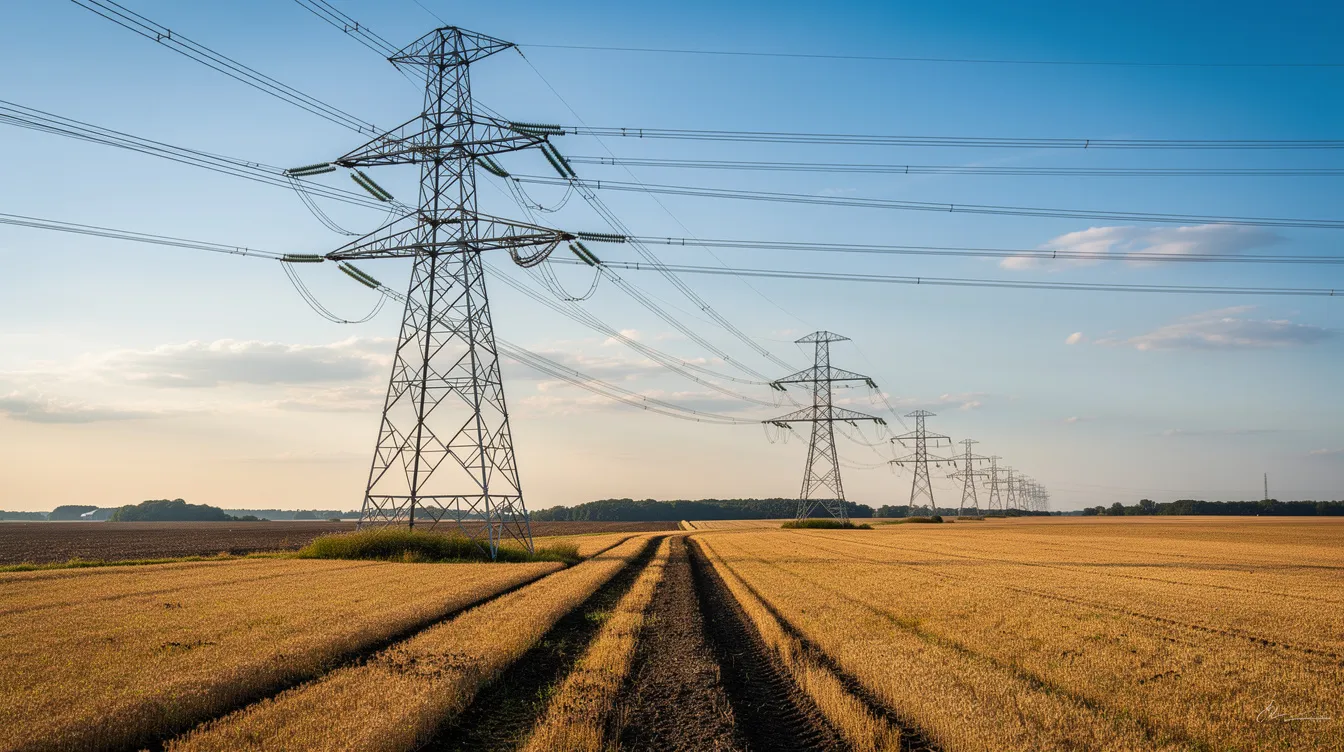
These tariffs influence site selection and project economics. Power infrastructure buildout for qualifying equipment and tangible personal property tied to data center operations could expand opportunities for contractors in transmission, substations, pipelines, and grid interconnection civil work. Contractors should track PUCO dockets, utility integrated resource plans, and any Joint Data Center Committee outputs that address large-load tariffs, permitting rules and green building standards applied to data center development.
6. Construction vs. Operations in Data Center Projects: Where the Jobs and Revenue Really Sit
The distinction between construction-phase employment and permanent operations staffing is where incentive policy becomes personal for ABC Ohio Valley firms.
A typical qualified data center or hyperscale facility may employ only 100 to 200 permanent staff once operational. Ongoing data processing jobs are modest in number. But multi-year build-outs can employ hundreds to thousands of craft workers during peak phases. Data centers are increasingly tied to regional technology investments, and they can create self-reinforcing clusters that boost local economies during sustained construction cycles.
For merit shop firms, the key exposure is to the front-end capital build, not long-run operations. Any change in tax incentives hits contractors’ order books and construction backlog first. Data center construction spending typically unfolds in stages: core shell, fit-out, and successive halls. Incentive-driven site decisions determine whether later phases get green-lit. This connects directly to workforce development and apprenticeship planning. A shifting market can affect how members size training pipelines relative to other commercial and industrial work. No workforce gap exists if you plan for multiple project types rather than betting everything on one sector.
7. Scenario Analysis: If the State Pause Holds but No Federal Change Passes
This is the baseline scenario for the next 12 to 24 months. Ohio’s data center tax incentive freeze remains, no federal 100% tax is enacted, and incentives in neighboring states evolve unevenly.
- Awarded work: Data center projects in Ohio tied to existing sales tax exemptions and tax abatements proceed largely as planned, though owners may re-phase around grid and community concerns.
- Bids in progress: Contractors should risk-adjust any bid that assumes new Ohio incentives. Clarify whether your pricing depends on the owner securing exemptions or software and equipment tax exemption certificates. Annual reports and fiscal notes from state agencies will signal how long the pause lasts.
- Speculative pipeline: Some planned new data centers may shift to Illinois, Virginia, or other states retaining more generous tax incentives, reducing local data center construction spending. Track Joint Data Center Committee outputs and any state-level legislative proposals for caps or restructured programs tied to a five-year period or similar sunset.
8. Scenario Analysis: If a 100% Federal Tax on Data Center Incentives Becomes Law
This is a modeling exercise, not a prediction. If Congress enacted legislation that taxed away 100% of the value of any state or local data center tax incentive, the benefit of every subsidy program nationwide would be canceled.
- Awarded work: Projects already under construction likely continue but with tighter owner scrutiny on change orders. Late-stage preconstruction packages might pause pending financial re-approval. Salvage value provisions and stored-materials clauses become critical.
- Bids in progress: Assume little or no value from local tax incentives in your models. Owners will seek cost reductions or value engineering to offset lost sales tax breaks. Contractors should prepare for scope revisions and tighter contingency budgets.
- Speculative pipeline: Large-scale data center campuses may be shelved or shifted toward regions with lower base energy costs, fewer environmental impacts from local taxes or permitting, or alternative policy tools. Data centers investing in Ohio may slow, increasing your reliance on the broader Midwest construction market beyond data centers.
9. Scenario Analysis: If Operators Build Without Incentives Because Compute Is Critical
This is the demand-driven scenario. Artificial intelligence and cloud capacity needs are so acute that major operators proceed with data center projects even without traditional subsidies. National projections suggest hyperscale data center construction spending could reach hundreds of billions annually.
- Awarded work: Projects could accelerate if owners prioritize time-to-market over maximizing tax savings. Fast-track delivery and pre-fabrication benefit experienced data center builders with strong safety records.
- Bids in progress: Emphasize schedule certainty, safety performance, and integrated delivery capabilities over marginal cost savings tied to tax abatements or property tax relief. Companies will qualify contractors on execution, not on subsidy expertise.
- Speculative pipeline: Steady flow of colocation and edge facilities alongside hyperscale, but projects remain exposed to data center community opposition and evolving Ohio data center regulations. In this scenario, local electricity sales at competitive rates, available land, and permitting timelines matter more than incentives.

10. Practical Risk Management Steps for ABC Ohio Valley Contractors
Regardless of which policy path emerges, ABC Ohio Valley members can manage exposure through disciplined contract, financial, and market practices.
- Review every data center contract for incentive contingencies, termination for convenience, suspension, demobilization, and stored-materials provisions. Pay particular attention to how changes in tax incentives affect your firm’s obligations to the owner.
- Confirm payment security on private hyperscale work. Require parent guarantees, letters of credit, or other collateral. Verify lien rights and notice requirements in each state where you operate, whether Ohio, Kentucky through its Department of Revenue, or Indiana, where the Indiana Economic Development Corporation handles certain data center incentive approvals. Property taxes and local taxes vary depending on where a project is located.
- Convert backlog to notice to proceed faster. Work with owners and construction managers to formalize NTP on awarded work as quickly as feasible, reducing the time window in which a policy change could stall mobilization.
- Prequalify for energy infrastructure. The Columbus summit prioritized pipelines, transmission lines, substations, and grid-supporting civil work. These segments grow regardless of incentive outcomes because electricity demand from certified data centers and other industrial facilities is rising.
- Scenario-plan internally tied to your mid-year construction economic forecast. Model all three scenarios and regularly review data center-related construction backlog versus other commercial and industrial revenue.
11. Strategic Positioning: Diversifying Beyond a Single Project Type
ABC Ohio Valley’s merit shop philosophy emphasizes resilience through competitiveness, not reliance on any one form of subsidy-driven work.
Avoid letting data center projects dominate your book. Cultivate work in healthcare, manufacturing, logistics, public infrastructure, and energy, both within the Ohio Valley and across the broader Midwest construction market beyond data centers. Build internal expertise that transfers from data centers, such as mission-critical MEP systems, high-reliability electrical work, and advanced scheduling, into hospitals, advanced manufacturing plants, and utility projects where qualifying investments are rising.
Formalize a data center construction playbook inside your firm. Document lessons learned on safety, sequencing, QA/QC and commissioning so that institutional knowledge is retained even if new data center volume fluctuates. Economic development in our region does not depend on a single project type, and your firm shouldn’t either.
The incentive era for data centers is being renegotiated in public. The contractors who model the downside, protect their balance sheets, and broaden their markets now will still be standing and ready when policy settles.

Frequently Asked Questions
How quickly could a federal 100% tax on data center subsidies affect existing projects?
Any federal change requires full congressional action and a statutory effective date. Nothing changes until a law passes and takes effect. Most federal tax changes are not retroactive to contracts already performed, but they can affect the economics of work not yet started. Contractors should watch proposed effective dates closely and consult tax advisors on project-specific exposure if legislation is introduced with retroactive or mid-year application dates.
Do Ohio’s existing data center tax agreements get canceled by the state pause?
No. Ohio’s May 2026 pause applies only to new incentives. It does not unwind existing sales and use tax exemptions or long-term abatements already granted. Contractors on legacy sites should still review project documents to confirm whether incentive performance conditions, such as job counts or investment thresholds, could affect the owner’s tax status. Absent a change in state law or contract breach, existing data center projects are generally expected to keep their agreed-upon benefits.
What should smaller subcontractors do if they are heavily exposed to one hyperscale client?
Start with a client concentration analysis. Calculate the percentage of annual revenue and construction backlog tied to each major hyperscale or colocation customer. Pursue additional prequalification with regional GCs, utility owners, and industrial clients to broaden your customer base over the next 12 to 24 months. Use ABC Ohio Valley networking, safety programs, and workforce development resources to position for non-data-center work in commercial, manufacturing, and infrastructure segments.
How does community opposition around noise and emissions practically affect construction plans?
Heightened data center community opposition can translate into tighter local permitting requirements, restricted working hours, and additional noise or emission mitigation measures. Budget for enhanced sound barriers, alternative construction sequencing, and more robust community-relations plans when bidding near residential areas. Early engagement with local officials and residents, often coordinated by the owner, reduces late-stage delays that blow schedules and cost estimates.
Where can contractors find reliable information about data center tax exemptions and annual cost reports?
Check your state Department of Taxation or department of revenue website for annual reports on tax exemptions, including data center tax categories and sales and use tax expenditure reports. Monitor PUCO, local port authorities, and economic development agencies for updates on tariffs, abatements, and incentive programs. ABC Ohio Valley’s policy briefings synthesize these sources with a focus on construction impacts so members can act on intelligence rather than speculation.