


Key Takeaways
- Construction quality assurance is most useful when it does more than define standards. On Ohio Valley commercial and industrial projects, it also needs a clear path for moving test results from the lab to the person who can release or hold the next phase of work.
- Testing delays often become project costs after the lab work is complete. The friction usually sits in reporting, review, and field notification, especially when no one explicitly owns the handoff.
- Even a low-cost test can trigger far higher downstream costs if crews, equipment, or follow-on trades wait for a result that exists but has not reached the right decision-maker.
- A simple ownership workflow for every test helps reduce confusion: who orders it, who tracks turnaround, who reviews the result, and who has authority to release or hold work.
- This article gives Ohio Valley merit-shop contractors a practical checklist they can plug into existing QA/QC, scheduling, and construction financial management systems.
Why Testing Delays Become Real Project Costs
Construction quality assurance usually brings to mind standards, inspections, and documentation. On active job sites, though, one of the most expensive failures is simpler: a test result is available, but the superintendent, project manager, or reviewer who needs to act on it does not get it in time.
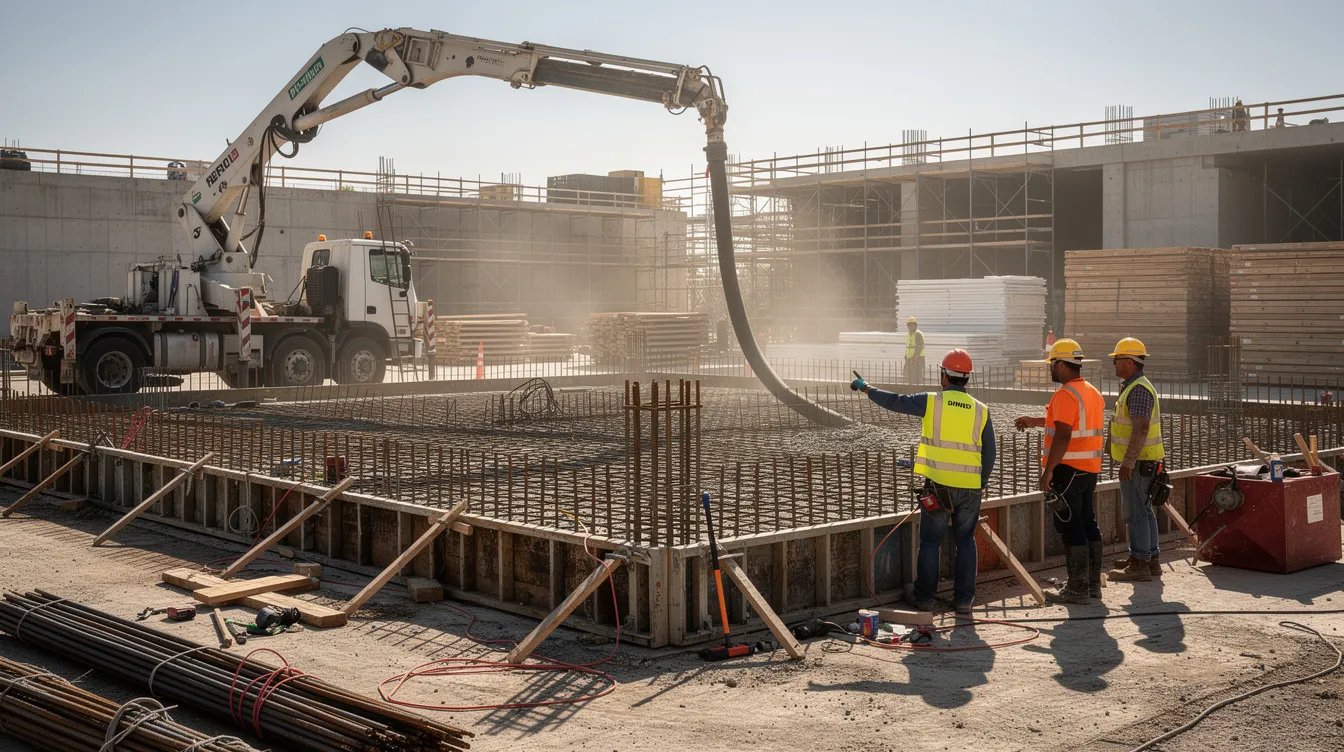
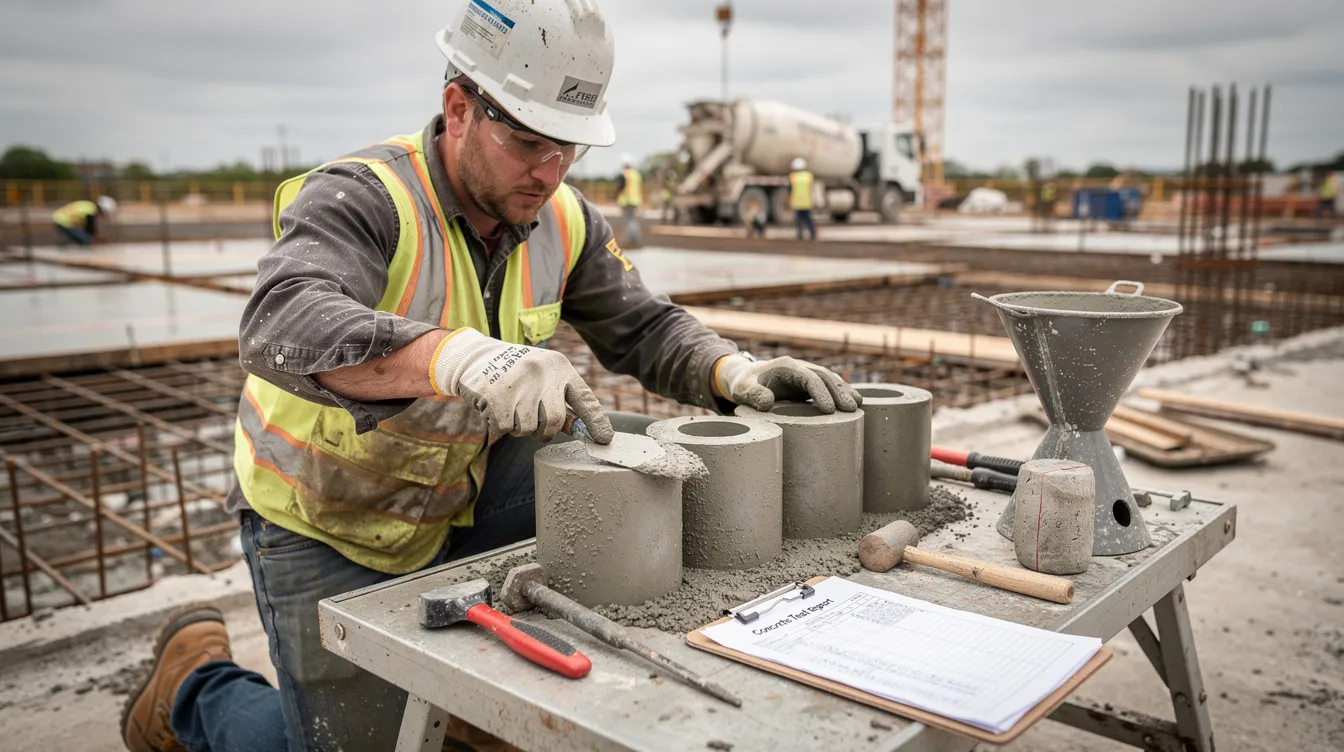
Consider a concrete strength test on a commercial slab in Dayton. The lab breaks the cylinder on Monday morning. The result clears internal review by Tuesday afternoon. But the superintendent does not see the report until Wednesday because it sat in a shared inbox no one checks before the day starts. A scheduled pour slips. The pump, crew, and finishers stand down. Supervision costs stretch, and follow-on work gets pushed.
The lab invoice for that test may be modest. The downstream cost of idle labor, equipment, and resequenced work can be much larger.
Construction Executive recently reported that materials testing can sit on the critical path more often than project teams expect, and that the delay often happens after the test, in the gap between a result existing and a result reaching the person who needs to act on it.
This article addresses that problem for contractors in Cincinnati, Dayton, Springfield, Lima, Northern Kentucky, and Southeastern Indiana. The point is not to blame laboratories. It is to make testing control part of a stronger field-to-office QA workflow.
Where Testing Delays Actually Happen in a Construction Project
Most projects move through a predictable testing sequence: test request, field sampling, lab processing, result reporting, internal review, and field release. The weak point is usually not the existence of these steps. It is the handoff between them.
On Ohio Valley jobsites, common friction points include:
- Unclear responsibility for ordering tests. If the specifications say the contractor must arrange testing but no person is named, the request may not happen when the work is ready.
- Incomplete chain-of-custody documentation. Missing sample IDs, unclear pickup details, or batched paperwork can slow processing before the lab work even starts.
- Scattered email reports. A report sent to one inbox may never reach the PM, QA/QC lead, or engineer who must review it.
- Missing notifications to field leaders. A result can sit in an inbox over a weekend while the superintendent plans the next shift, unaware whether work has been released.
The lesson for construction quality assurance is straightforward: testing only protects schedule and quality when result flow is planned with the same discipline as the work itself.
Consider a post-tensioned deck in Cincinnati. The slab cannot be stressed until compressive-strength results are reviewed and the required parties approve release. One missed email can idle the stressing crew, delay access for other trades, and create a schedule problem that looks larger than the original testing task.
Checklists, forms, and software help, but they don’t replace a defined result-handoff process assigned before work begins.
Cost Buckets Ohio Valley Contractors Actually Feel From Testing Delays
When testing delays become schedule delays, the impact usually shows up in a few familiar categories.
Idle crews and equipment. Labor waits for a pass or hold decision. Daily-rental equipment sits unused. General conditions can extend even when the original test itself was routine.
Compressed follow-on trades and resequenced work. Mechanical, electrical, and specialty contractors may have to reorganize around incomplete areas when slab, backfill, or other hold-point work is not released on time.
Stop-start productivity loss. Repeated mobilization and remobilization reduce crew efficiency and make production less predictable.
Ripple effects on financial management. A delayed release decision can lead to lost float, stressed cash flow, and harder schedule recovery. This is where testing workflow stops being a lab issue and becomes an operations and margin issue.
Weakened dispute position. Poor records of when tests were requested, performed, reported, reviewed, and acted on can undermine a contractor’s position if responsibility for delay is questioned later.
Construction Quality Assurance for Testing: What Needs to Be Defined Up Front
To keep this article distinct from broader QA theory, the practical question is narrower: what does construction quality assurance need to define before testing starts?
| Component | Why it matters |
|---|---|
| Acceptance criteria | Teams need clear pass, hold, or re-test standards drawn from the contract documents and applicable codes before the first sample is taken. |
| Inspection and Test Plans | ITPs should identify hold points, frequencies, responsible parties, and expected turnaround so testing is tied to the actual work sequence. |
| Role definitions | Every test needs named ownership for requesting, tracking, reviewing, and releasing. “The contractor” is not specific enough on a live job. |
| Traceable records | Time-stamped logs should connect the sample, the result, the reviewer, and the field decision. |
ABC Ohio Valley has already framed construction quality assurance as a system of standards, inspections, and documentation that starts before fieldwork. This testing-focused article builds on that idea by adding one more discipline: result handling has to be explicit, not assumed.
If teams want a useful analogy, OSHA’s process-safety guidance emphasizes the value of a quality assurance system and documented inspections and tests in its own narrow context. That is not a general construction QA rule by itself, but the management lesson is still relevant: systems and documentation matter most at the handoff point.
Preconstruction Planning for Testing Hold Points
Many testing problems show up in the field but begin in preconstruction.
Preconstruction planning and estimating accuracy should identify required tests, likely turnaround expectations, and schedule-critical release points before mobilization. That includes concrete strength, bearing verification, soil compaction, asphalt, steel, or any other specification-driven hold point that can affect downstream work.
Ohio Valley contractors should also tie testing hold points into the CPM schedule and weekly look-ahead plans, rather than tracking them in a disconnected side document. If the superintendent and project manager review the schedule every week, testing-related release dates should live there too.
Preconstruction meetings with owners, designers, and testing agencies should explicitly cover three questions:
- How will results be transmitted?
- Who reviews them first?
- Who has authority to release or hold work?
Without clear answers, teams tend to discover the workflow only when a critical result is late, unclear, or unread.
This also connects naturally to construction forecasting. When release-point testing is visible in regular project reviews, schedule risk becomes easier to spot early, instead of after crews are already waiting.
A Better Testing-Control Workflow for Ohio Valley Jobsites
The most useful tool in this article is a simple ownership model. For every required test, assign four roles before fieldwork starts.
Four ownership roles for every test
- Request owner. Usually the project engineer, project manager, or QA/QC lead who schedules the test and confirms sampling details.
- Turnaround tracker. The person who monitors expected report timing and follows up when results are late.
- Result owner. The qualified reviewer who compares the report to acceptance criteria and determines whether the result supports release, hold, or re-test.
- Release authority. The party with authority under the project process to allow the next activity to proceed or keep the hold point in place.
Build a testing log that answers one decision
The testing log does not need to be elaborate. It needs to answer one question quickly: can the next step proceed?
Capture these fields for every test:
- Test type and specification reference
- Location or placement area
- Date requested and date sampled
- Testing firm or laboratory name
- Expected turnaround
- Date reported
- Disposition: pass, hold, fail, or re-test
- Release decision and name of release authority
For critical-path tests, add an escalation rule. If the expected report does not arrive by the agreed time, someone contacts the lab or testing firm, someone alerts field leadership, and someone updates the schedule impact. That alone can prevent silence from becoming a lost shift.
When selecting or managing testing partners, contractors should weigh reporting speed, digital delivery, responsiveness, and clarity of contact points alongside price. The cheapest test is not necessarily the least expensive workflow.
Digital tools can automate notifications, but the process should work on paper first. Technology helps most after ownership is already clear.

Defining Roles and Responsibilities in Testing-Related QA/QC
Clear responsibility matters most on multi-employer jobsites where several subcontractors, consultants, and reviewers are involved.
General contractors and construction managers should coordinate the testing plan, maintain the master workflow, and make sure each test category has named ownership.
Superintendents should confirm readiness for testing, protect hold-point work until release, and make sure field plans reflect actual release status rather than assumptions.
QA/QC managers or project engineers should review reports against project criteria and document any required corrective action, re-test, or escalation.
Specialty contractors, suppliers, and third-party testing agencies should be integrated into the same communication path with named contacts and expected reporting procedures.
For many Ohio Valley contractors, this is also a workforce and training issue. Well-trained field leaders are less likely to miss tests, skip documentation, or let release decisions drift between inboxes.
Documentation, Communication, and Dispute Protection
Strong documentation helps a project twice: first by speeding decisions during the work, and later by preserving a reliable record if someone questions what happened.
Contractors should maintain time-stamped records of the request, sample collection, lab receipt if available, reported result, internal review, and field release decision. Whether the system is digital or paper-based matters less than whether one team can retrieve the record quickly.
For critical tests, same-day notification to the superintendent, project manager, and reviewer is a reasonable operating standard. Waiting for a batch report may work for low-risk items, but it can be costly when a structural or schedule-critical hold point is involved.
Documentation also creates a better basis for post-project review. If one office, one superintendent, or one testing partner repeatedly creates bottlenecks, the record should make that visible.
Contractors that are already improving construction data management can fold testing logs into the same broader decision system rather than creating yet another disconnected tracker.
Practical Checklist: Preventing Testing Delays From Becoming Schedule Delays
Use this checklist on the next commercial or industrial project.
Before the project starts
- Confirm required test types, frequencies, and acceptance criteria from the contract documents and applicable codes
- Assign request owner, turnaround tracker, result owner, and release authority for each test category
- Embed hold points into the CPM schedule and look-ahead planning
- Align the testing workflow with preconstruction planning
- Set reporting expectations and escalation paths with the testing firm before work begins
During construction
- Keep the testing log current
- Show critical-path tests and expected result dates on the look-ahead
- Review and act on results promptly
- Document hold, release, nonconformance, and re-test decisions clearly
After each major phase
- Review whether any tests caused avoidable schedule slippage
- Identify the root cause: request delay, reporting delay, review delay, or communication delay
- Update the workflow where gaps appeared
- Compare actual response times against expected turnaround
One clear next step
Pick one active or upcoming Ohio Valley project and map the full test-to-release path for its critical tests. Name the four owners, build the log, and decide how late results will be escalated before the first major hold point arrives.
How ABC Ohio Valley Supports Construction Quality Assurance
ABC Ohio Valley serves merit-shop contractors across the region with training, workforce development, safety programming, and peer connections that support stronger field execution. For contractors trying to tighten QA/QC discipline, that matters because process quality depends on people quality.
Education, leadership development, and member networking can all help firms standardize project-management habits such as documentation discipline, role clarity, and communication between field and office teams. Those habits are often what separate a routine test from a costly delay.
Contractors ready to formalize a standard test-to-release procedure across their business can use chapter resources and member learning opportunities as a starting point.
Frequently Asked Questions
Below are answers to common questions about this topic.
How is construction materials testing different from overall construction quality assurance?
Materials testing verifies whether specific materials or installed work meet project requirements. Construction quality assurance is broader. It covers the planning, standards, documentation, and decision process that determine how those test results are ordered, reviewed, communicated, and acted on during the project.
What can smaller contractors do if they do not have a dedicated QA/QC manager?
They can still assign named ownership. A project manager, project engineer, or superintendent may need to cover multiple roles, but they should document and communicate those responsibilities. A simple spreadsheet log is often enough to start.
How should contractors set realistic turnaround expectations with testing laboratories?
Discuss expected timing before contract award or purchase order, document the communication path, and define what happens if a result is late or unclear. The goal is not to demand impossible speed. It is to prevent uncertainty about who follows up and who gets notified.
Can technology alone solve testing-related construction delays?
No. Notifications and dashboards help, but software cannot fix unclear ownership or missing release authority. The process needs to be clear first. Technology should support that process, not substitute for it.
How often should testing workflows be reviewed and updated?
At minimum, after major project phases and at project closeout. Contractors should look for repeated bottlenecks in request timing, report flow, review speed, and release communication, then update procedures before the next job repeats the same problem.


