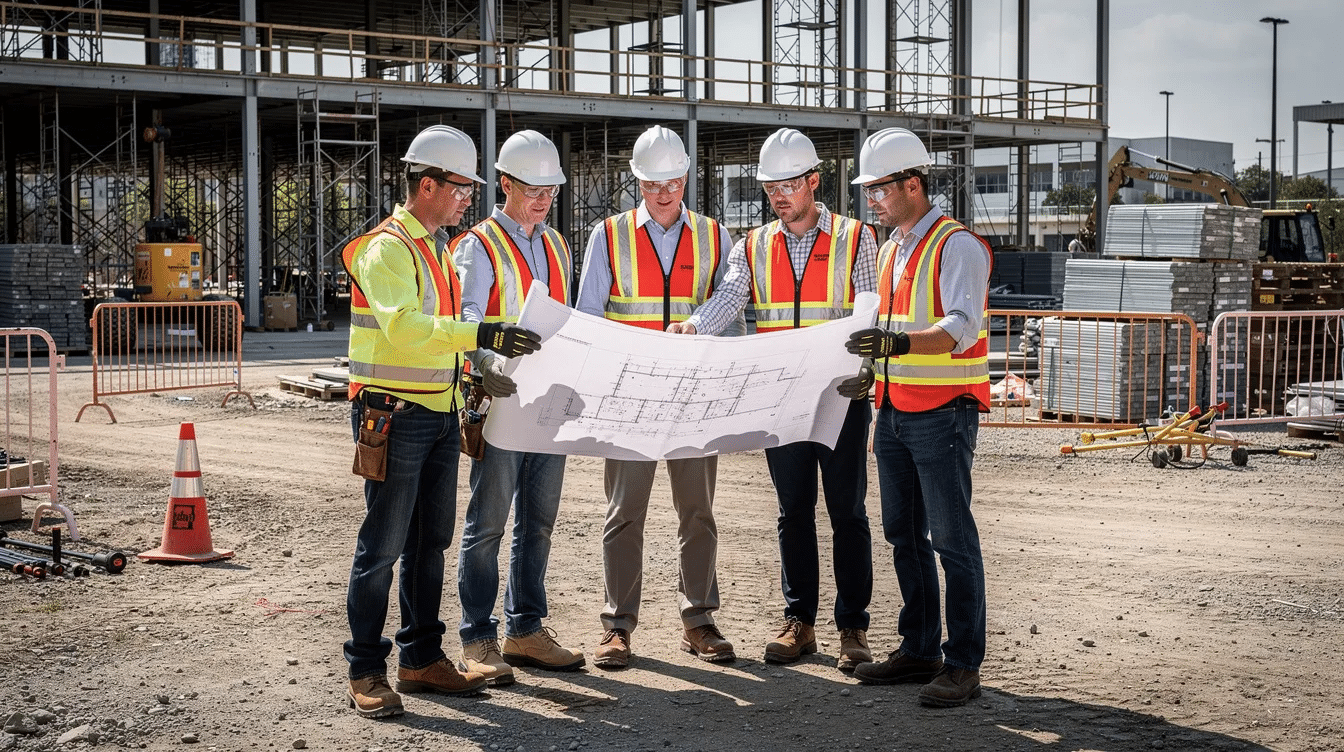
Effective construction management delivers projects on time and within budget. In the Ohio Valley, where nonresidential employment is climbing even as margins compress, the superintendent determines whether that happens.
Key Takeaways
- Superintendent leadership is a direct driver of schedule control, coordination, crew retention, quality, safety execution, and profitability on commercial and industrial projects across Southwest and West Central Ohio, Northern Kentucky, and Southeastern Indiana.
- Construction management best practices in this article mean specific jobsite habits: preconstruction involvement, look-ahead schedules, daily huddles, material readiness, trade coordination, and clear communication that superintendents own hour by hour.
- ABC Ohio Valley provides practical resources for superintendent and foreman development through registered apprenticeship, leadership training, Next Gen programming, and peer learning.
- The next construction cycle will reward contractors who build a leadership pipeline from apprentice to crew lead to superintendent. This article lays out the steps to strengthen that pipeline this quarter.
Why Superintendent Performance Will Decide the Next Construction Cycle
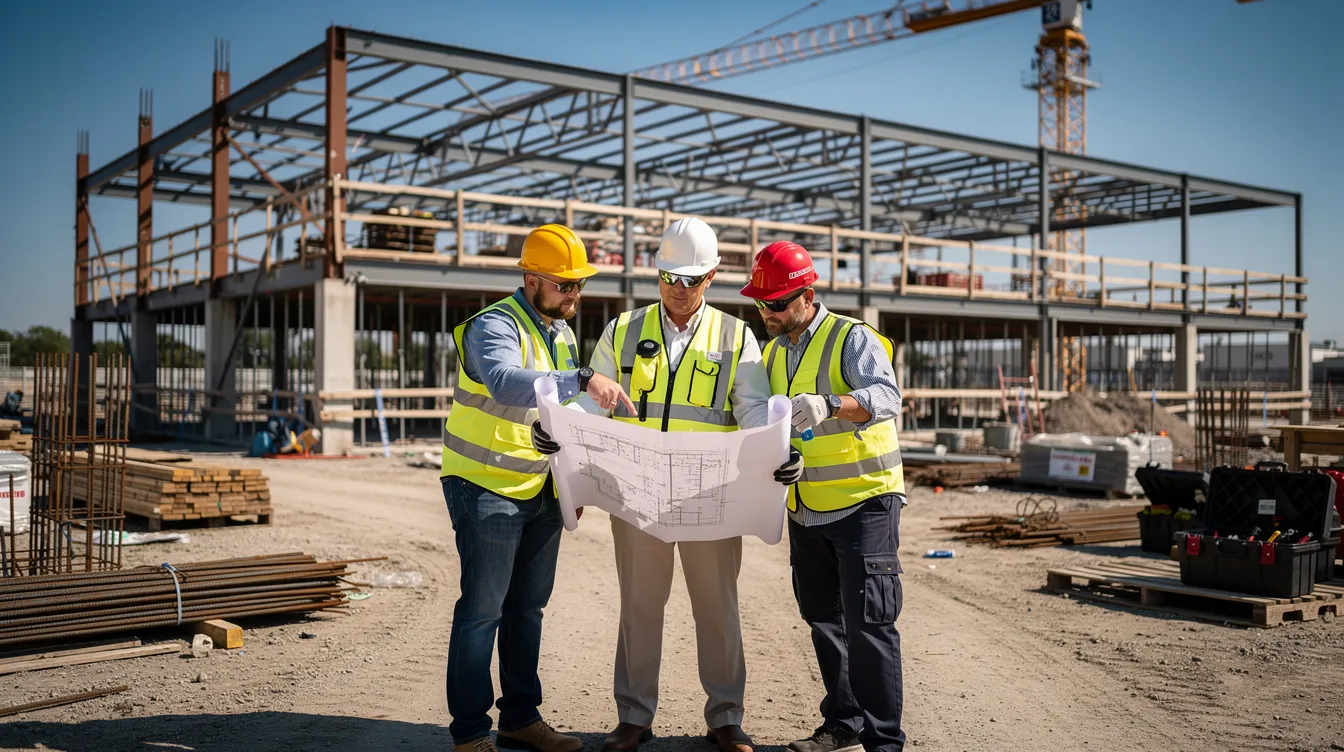
As of 2026, nonresidential construction in the I-70 and I-75 corridors is running on thinner margins than most contractors have seen in a decade. Input costs for steel, iron, and petroleum-linked materials are up roughly 7 percent year-over-year. Budget control involves early cost estimation to reduce unexpected overruns, but even the best preconstruction estimate erodes when field execution falters.
A high-performing superintendent protects a project’s budget and schedule by preventing the problems that consume margin: change orders from coordination misses, rework from unclear field direction, overtime from cascading delays, and crews lost to frustration. Companies with strong safety programs save an average of $4 for every $1 spent on those programs, and the superintendent is the person who makes safety execution real or theoretical in the field. Every saved rework cycle, every avoided trade conflict, and every retained foreman flows directly to the bottom line.
Weak jobsite leadership produces the opposite. When a superintendent cannot coordinate crews, sequence trades, or communicate constraints to the project manager, the costs compound: trade stacking conflicts, punch-list drag at turnover, damaged client relationships, and employees who leave for better-run projects. On healthcare, manufacturing, and institutional work common in Cincinnati, Dayton, Springfield, and Lima, owners notice the difference. Contractors who deliver better projects with predictable turnovers earn the next contract. The rest compete on price alone.
What Superintendents Actually Control on a Jobsite
The superintendent is the primary field leader responsible for turning drawings, schedules, and contracts into coordinated daily work on commercial and industrial construction sites. Unlike the project manager, who handles budgets, contract risk, and client-level relationships, the superintendent manages production pacing, trade sequencing, and field execution.
Specific areas of control include:
- Sequencing and look-ahead planning. Deciding which trades work where, when, and in what order across a three-week horizon.
- Trade stacking and site logistics. Managing crane usage, material staging, deliveries, laydown areas, and access routes.
- Quality control. Defining acceptance criteria in the field, running inspections, and tracking punch-list items.
- Safety implementation. Field leaders play a critical role in balancing safety and deadlines; enhanced safety standards lower incident rates and prevent project shutdowns.
- RFIs and field changes. Initiating and resolving requests for information, coordinating field modifications.
- Daily communication. Providing direction to foremen, updating the project manager, and interfacing with owners’ representatives and inspectors.
On a downtown Dayton renovation, a superintendent sequences crane picks and deliveries around timed traffic restrictions and pedestrian safety zones. On a Lima industrial retrofit, the same person must stagger mechanical, electrical, and plumbing trades so that structural and architectural work is complete before sensitive systems go in. These are not abstract planning exercises. They are the daily decisions that determine whether a project runs or stumbles.
Construction management best practices live or die at the superintendent level because that is where plans, people, materials, and equipment meet.
Why the Ohio Valley’s Next Construction Cycle Raises the Stakes
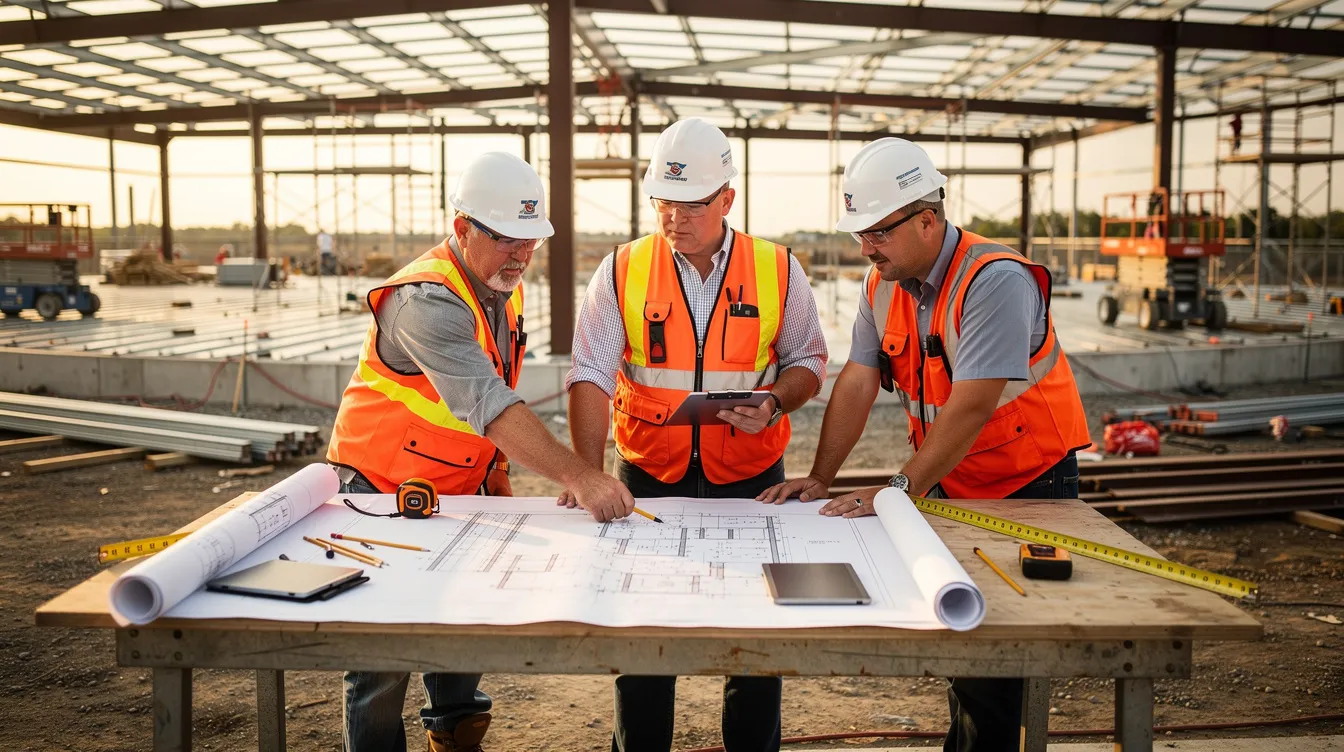
Nonresidential construction employment in the Ohio Valley is rising at about 2 percent year-over-year, and backlog is especially strong among contractors with annual revenue above $100 million. At the same time, the region faces a labor gap estimated at roughly 60,000 skilled construction workers across a 40-plus-county footprint, driven by retirements, industrial expansion, and infrastructure demand.
That combination means leaner crews handling heavier trade stacking on projects from Cincinnati to Northern Kentucky to Springfield. Owners on high-profile Ohio Valley projects are demanding faster completions and cleaner turnovers. These conditions increase pressure on superintendents to coordinate more work in less time, often with younger teams and more subcontractors per project.
The contractors who can demonstrate operational discipline in the field will have a competitive advantage in bidding and client retention. Contractors who cannot will absorb the costs of rework, overtime, and turnover while watching their best employees leave for organizations that run better jobsites.
Construction Management Best Practices Every Superintendent Should Own
This is the practical core. Each practice below connects to a measurable outcome: days saved, fewer punch-list items, improved labor productivity, or margin protection.
Preconstruction Involvement. Superintendents who participate in constructability reviews, site logistics planning, and schedule development before mobilization catch problems that cost six figures to fix later. Risk assessments should be conducted before breaking ground to identify potential bottlenecks. Establishing a clear and documented project scope prevents scope creep, which is one of the most common sources of budget erosion on commercial projects. Thorough pre-project planning helps prevent budget overruns throughout a project’s life.
Daily and Weekly Planning Discipline. Three-week look-ahead schedules, covering the current week plus the next two, help superintendents anticipate resource needs, permit timing, and subcontractor commitments. Research on daily huddles found that crews using them showed measurable improvement in direct work percentages, with productive early-morning time roughly doubling compared to non-huddle projects. The Last Planner System improves workflow predictability through cooperative commitments among trades. Tracking critical path activities minimizes costly project delays. These are not optional add-ons; they are the most effective ways to protect schedule certainty.
Communication and Documentation. Timely RFIs, clear daily reports, and photo documentation of critical work prevent surprises. Centralized communication channels eliminate data silos among project stakeholders, and stakeholder collaboration through centralized communication helps unify project execution. Maintaining proactive communication minimizes costly delays. A superintendent who can communicate constraints to the project manager and foremen in the same morning meeting will keep a project on track where a less disciplined person would let problems compound.
Material and Equipment Readiness. Proactive supply chain and change-order management prevent costly delays. Verifying delivery timing, planning staging and storage, and using just-in-time strategies where feasible reduce double handling and site congestion on tight Ohio Valley jobsites. Scheduling and maintaining equipment ahead of critical picks avoids the kind of one-day crane delay that cascades into a week of lost production.
Trade Coordination. Clear sequencing, field walks, coordination meetings, and preinstallation conferences keep trades from blocking one another. Conflict resolution between subcontractors must be proactive, not reactive. When a superintendent can effectively coordinate crews across three or four active trades on the same floor, productivity holds. When coordination breaks down, every trade slows.
People Leadership. Setting expectations with foremen and crew leads, giving real-time feedback, recognizing good performance, and addressing productivity or behavior issues promptly creates the kind of jobsite where employees want to stay. Employee retention on a superintendent’s projects is a leading indicator of that person’s leadership quality.
Quality Execution. Strict quality assurance through regular inspections ensures compliance with standards and reduces rework. Effective safety training can decrease accident rates by 25 percent. Construction safety programs reduce workplace injuries by 40 percent. Quality and safety are not separate from production; they protect it.
The Leadership Gap Between Foreman and Superintendent
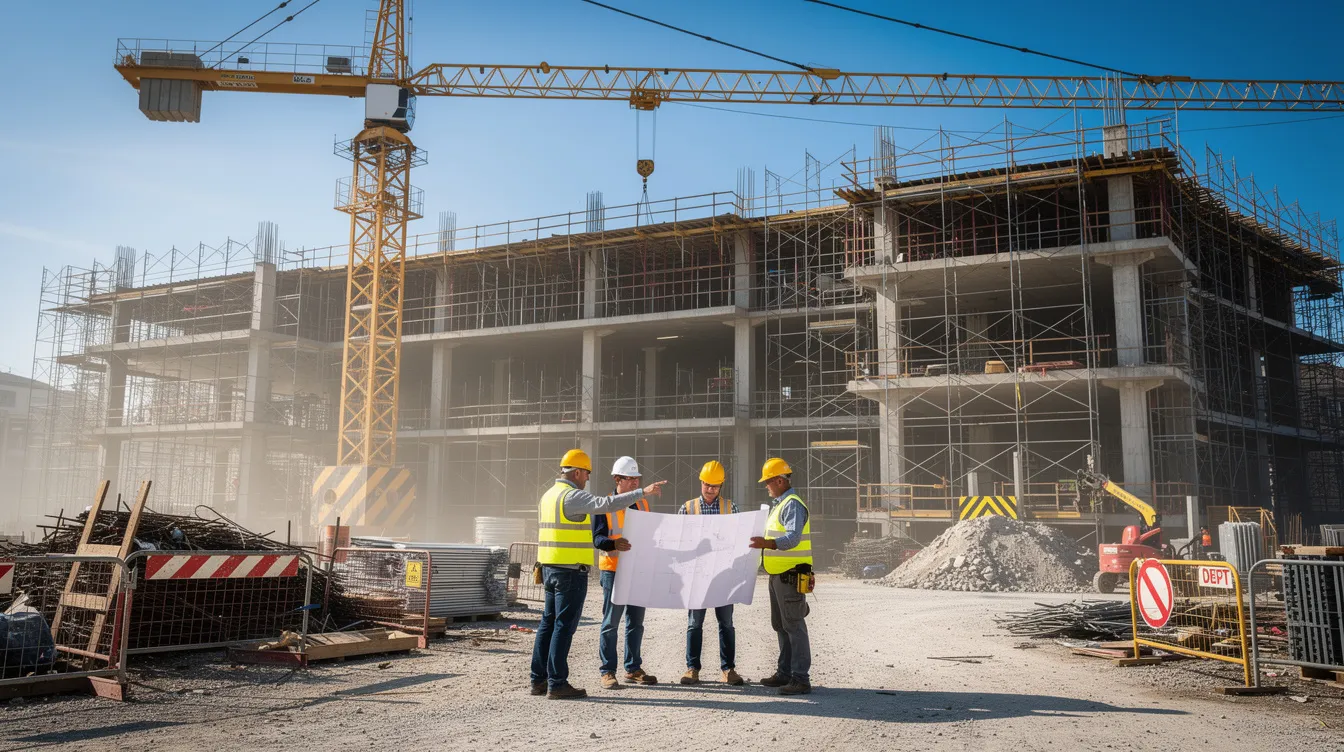
Many Ohio Valley contractors have strong craftworkers who become excellent foremen but struggle with the leap to running full projects as superintendents. The core shift is this: foremen lead a crew and a scope, while superintendents lead the entire jobsite, multiple trades, and client-facing coordination while still protecting productivity and safety.
Common failure points when a person steps up too fast include trying to self-perform rather than delegate, weak prioritization across competing trade demands, poor meeting management, inconsistent documentation, and discomfort in difficult conversations with owners or general contractors. These are problem-solving and communication gaps, not technical ones.
The Leadership Pipeline model identifies six leadership transition phases, and the move from crew-level to multi-trade oversight is one of the steepest. Superintendent development is different from generic management training because it must blend technical construction knowledge, schedule logic, contract awareness, and situational leadership designed specifically for jobsite realities. NCCER’s construction foreman certification program develops leadership and communication skills for foremen making this transition, building the planning and people skills that separate a good tradesperson from an effective field leader.
Field Leadership Development: From Apprentice to Superintendent
A merit-shop contractor in the Ohio Valley can grow a worker from entry-level craft to superintendent over a series of projects and years if the company treats the pipeline with the same discipline it applies to scheduling.
Registered apprenticeship and pre-apprenticeship programs, like those supported by OVCEF and ABC Ohio Valley’s nine-trade offerings, lay the technical foundation for future leaders. At the journeyperson level, offering opportunities to lead small tasks, mentor new hires, or assist foremen in coordination begins to develop the planning logic and communication habits that separate a skilled tradesperson from a future field leader.
At the foreman level, individuals learn production tracking, basic cost awareness, and daily interface with the superintendent. This is the point where leadership development accelerates. NCCER’s Foreman Certification Program enhances leadership and planning skills through structured curriculum. For mechanical contractors, the MCAA’s Foundations of Field Leadership course provides another pathway: the FFL course lasts 8 weeks with weekly 90-minute lectures, and participants must attend at least 6 live lectures to graduate. Forty-two mechanical field leaders contributed to the FFL curriculum design, and participants receive an MCAA Foundations of Field Leadership diploma upon completion. The course is also available online for companies with field leaders spread across multiple job sites in the region.
The transition to superintendent requires layering in formal leadership skills: communication, delegation, conflict resolution, schedule reading, and basic project financials. ABC Ohio Valley’s Next Gen Leaders and Rising Stars recognition serves as a practical part of that pipeline. Four out of six Dayton Business Journal 2026 Rising Stars honorees came from ABC Ohio Valley member firms, which is evidence that the merit-shop pipeline is producing recognized next-generation leaders in the construction industry across the country.
How ABC Ohio Valley Helps Strengthen Superintendents and Field Leaders
ABC Ohio Valley’s workforce development and apprenticeship programs create the entry-level talent pool from which new field leaders emerge. The chapter’s leadership training, peer groups, and Next Gen programming help emerging foremen and superintendents build skills in communication, planning, and accountability.
Superintendent development connects directly to succession and continuity. When companies invest in professional growth for field leaders, they build bench strength that protects operations when a senior superintendent retires or moves to a new role. Industry-leading organizations treat this investment as strategic, not reactive.
ABC Ohio Valley’s programs are designed and delivered with the realities of Ohio, Kentucky, and Indiana jobsites, codes, and market cycles in mind. Resources covering construction leadership, technology adoption, safety, and workforce strategies give superintendents access to the knowledge they need to manage modern projects effectively.
Practical Steps to Improve Superintendent Performance This Quarter
First, run a superintendent capability assessment. Focus on planning discipline, communication habits, coordination skills, crew leadership, and documentation quality. Use field audits, peer reviews, or simple scorecards to create a baseline.
Second, pilot daily huddles and standardized three-week look-ahead schedules on one or two active projects in Cincinnati, Dayton, or Northern Kentucky. Building muscle memory around structured planning takes 60 to 90 days of consistent practice.
Third, pair newer superintendents with seasoned field leaders. Whether through internal mentoring or ABC Ohio Valley peer groups, sharing practical tools, checklists, and real job examples accelerates development faster than any classroom alone.
Fourth, send emerging field leaders to targeted leadership training. Strong foremen, assistant superintendents, and crew leads who show vision and initiative should access programs like ABC Ohio Valley’s leadership workshops, Next Gen programming, or external offerings such as NCCER’s Foreman Certification, which develops leadership skills alongside planning and operations competencies.
Fifth, clarify expectations in writing: decision rights, reporting cadence, coordination responsibilities, and accountability for schedule, quality, and crew retention. Every superintendent should know the specific performance expectations attached to the role.
Sixth, review one recent project that struggled and one that excelled. Identify which construction management best practices were present or missing at the superintendent level. Implement the lessons learned as standard practices across your organization.
What Owners and Executives Should Expect from Their Superintendents
Executives should look for observable outcomes and behaviors, not just tenure or technical knowledge. Core outcomes include projects that finish closer to baseline schedule, fewer field-driven change orders, consistent trade coordination, strong relationships with owners’ reps and inspectors, and crews that choose to stay on the superintendent’s projects.
Observable behaviors include well-run coordination meetings, clear daily direction to foremen, accurate daily logs, timely issue escalation, and visible presence in critical work areas. Assessments tied to schedule milestones, rework rates, and crew turnover give leaders the data to distinguish between superintendents who are coasting and those who are performing at full potential.
Executives should also review superintendent workload. Administrative overload, too many concurrent projects, and inadequate technology tools cause burnout and weaken oversight. Aligning superintendent expectations with merit-shop culture supports open competition, performance-based advancement, and a stronger leadership bench. Firms like Chamberlin Roofing and other specialty contractors across the country have demonstrated that investing in field leadership at every level produces measurable returns in productivity and client satisfaction.
Technology as a Force Multiplier for Field Leaders
Adopting digital management tools improves project visibility and coordination. Real-time data reporting ensures all stakeholders access up-to-date information. Using real-time progress tracking tools optimizes project efficiency. Building Information Modeling (BIM) facilitates clash detection and reduces rework rates on complex commercial and industrial projects.
These tools support but do not replace core superintendent skills: judgment, effective communication, coordination, and coaching. Artificial intelligence and advanced analytics are relevant to the construction industry’s future, but the focus here is on leadership and management, not software selection. Contractors should choose tools that match their superintendents’ comfort level and provide short, practical training in the context of real projects along the I-70 and I-75 corridors. Technology helps superintendents see constraints sooner and communicate with teams more clearly; it does not substitute for the person making decisions in the field.
Call to Action: Building a Stronger Superintendent Bench with ABC Ohio Valley
Better field leadership delivers better projects, stronger margins, safer jobsites, and higher crew retention. These are not aspirational goals. They are the direct result of investing in superintendent development, implementing construction management best practices, and building a leadership pipeline that turns today’s apprentices into tomorrow’s field leaders.
Contact ABC Ohio Valley staff to discuss leadership development options, enroll promising foremen in upcoming leadership training, or engage with Next Gen and peer-learning forums. Review the chapter’s leadership content as a starting point for internal planning. The contractors who strengthen their superintendent bench now will lead the next decade of commercial and industrial growth across Southwest and West Central Ohio, Northern Kentucky, and Southeastern Indiana.
FAQ: Superintendent Development and Construction Management Best Practices
How is superintendent development different from general leadership training?
Superintendent development blends leadership, communication, schedule logic, constructability, and contract awareness in a jobsite context. Generic leadership training is often theoretical and office-focused. Programs like NCCER’s Foreman Certification and the MCAA’s FFL course, where 42 mechanical field leaders contributed to the curriculum, are built around the daily challenges field leaders face on active construction sites.
When should a contractor start preparing a foreman to become a superintendent?
Preparation should begin several years before promotion. Give foremen exposure to planning meetings, subcontractor coordination, RFIs, and owner interactions on projects in markets like Dayton or Cincinnati. Early development creates stronger candidates who can lead with confidence when the opportunity arrives.
What metrics can we use to measure superintendent performance?
Track adherence to schedule milestones, rework rates, change orders driven by field issues, crew turnover on the superintendent’s projects, safety performance, inspection rejection rates, and client satisfaction scores. These indicators are more relevant than tenure or trade background alone.
Do smaller contractors in the Ohio Valley really need formal leadership programs?
Even companies with only a few superintendents benefit from structured development. ABC Ohio Valley’s leadership training, peer groups, and Next Gen programming make this practical without building a full in-house academy. The investment pays for itself in reduced rework, lower turnover, and stronger bid strategies.
How can a superintendent balance production pressure with mentoring younger field leaders?
Integrate mentoring into daily work. Invite emerging leaders into planning huddles, explain decisions on the fly, and delegate small coordination tasks. This approach strengthens both current projects and the future leadership bench without pulling the superintendent off the critical path.