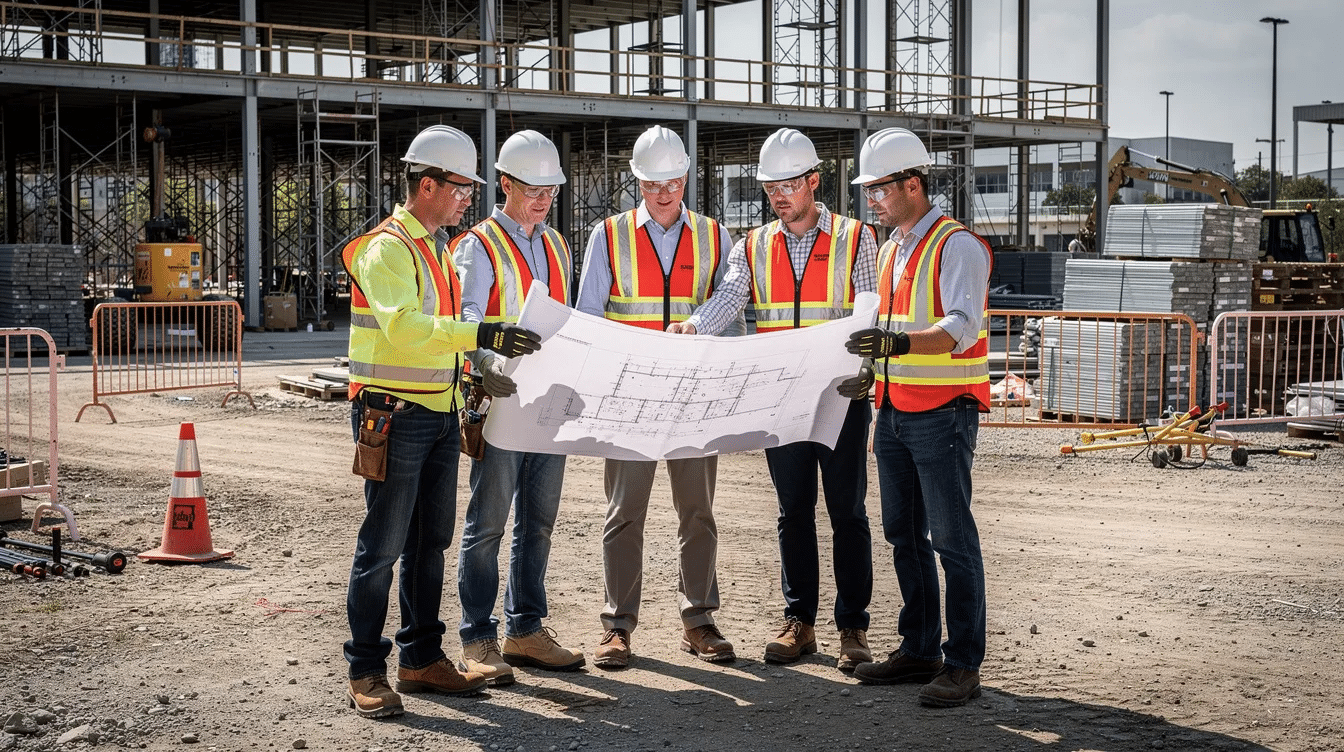
Construction contract administration is easiest to understand in the field, not the conference room. For superintendents, foremen, and project managers across Cincinnati, Dayton, Springfield, Lima, Northern Kentucky, and Southeastern Indiana, it usually comes down to one practical question: what just happened, and how should the team route it before work continues?
That matters because many contract problems start the same way. A crew gets verbal direction. A drawing conflict is noticed but not elevated fast enough. Access changes, sequencing slips, or work moves ahead on assumption. By the time the office catches up, the project record is already weaker than it should be.
This article focuses on a simple field tool for construction contract administration: decide whether the issue is a clarification, a change, or a delay, then document and escalate it correctly.
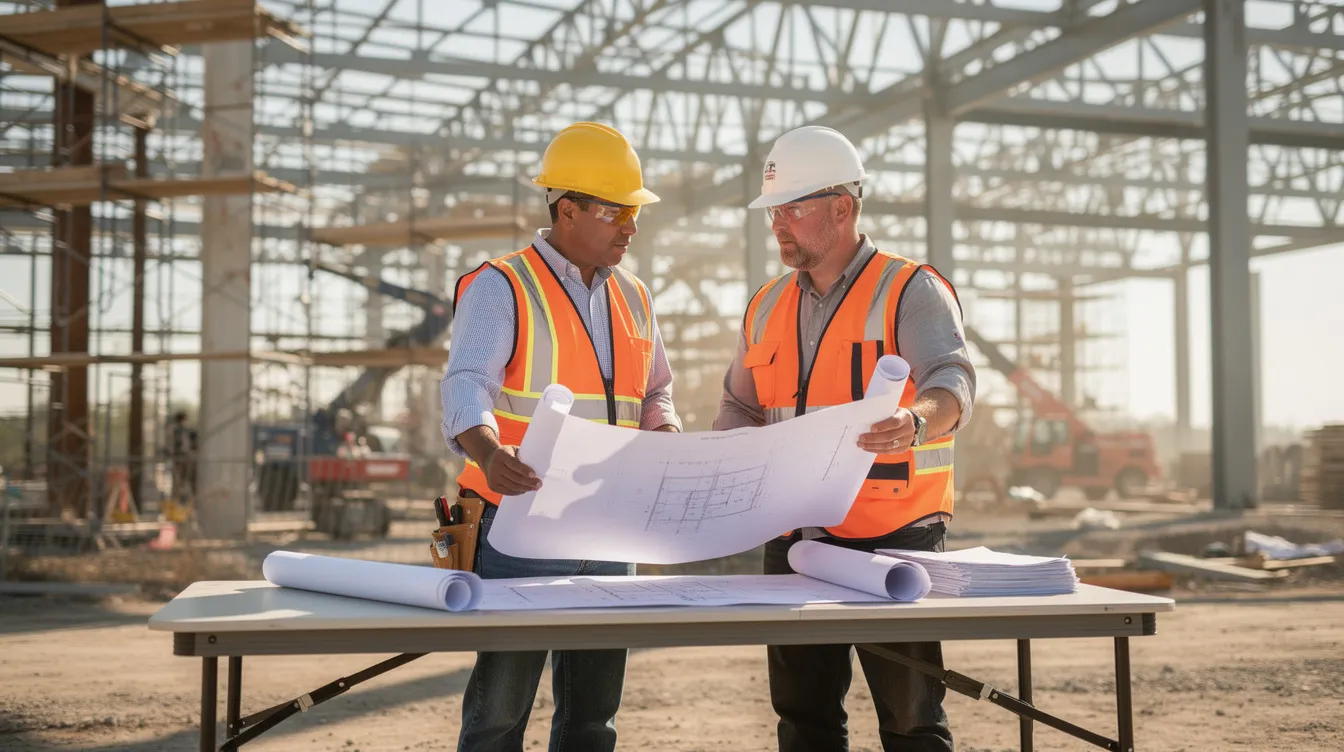
What Construction Contract Administration Means on a Jobsite
Construction contract administration is the daily execution side of the contract after the job starts. In practice, that means carrying contract requirements into documentation, communication, schedule control, and change handling from mobilization through closeout.
For field teams, the recurring pressure points usually include:
- drawing conflicts or missing details
- RFIs and unanswered design questions
- owner or design direction that may affect scope
- restricted access, resequencing, or trade interference
- inspection and quality requirements
- events that may trigger notice for time or cost impacts
Handled well, construction contract administration helps teams avoid building the mistake into the project. Handled poorly, it turns informal direction into permanent cost.
Consider a hypothetical interior build-out in Dayton. A foreman sees that the specified finish in one area conflicts with later verbal direction from the owner. Instead of proceeding on assumption, the foreman records the location, notes the exposed work, alerts the superintendent and project manager, and waits for written direction through the project process. That doesn’t guarantee any claim result, but it helps preserve a cleaner record and reduce the chance of avoidable rework.
A Simple Decision Tool: Clarification, Change, or Delay?
The most useful field habit in construction contract administration is sorting the issue correctly before the crew acts.
| If the issue is… | What the field should do first | What the PM should do next |
|---|---|---|
| Clarification Missing detail, drawing conflict, unanswered design question |
Document the exact area, identify affected work, and attach photos or a sketch if helpful | Route through the RFI process, track the response, and review any schedule effect |
| Change Owner request, revised instruction, extra work, substitution, changed direction |
Record who gave the direction, what changed, and when; do not rely on verbal instruction alone | Issue the notice or change documentation required by the contract and address time and cost implications |
| Delay or disruption Restricted access, predecessor delay, sequencing conflict, weather impact, unavailable area |
Record crew impact, duration, affected area, and immediate effect on planned work | Review notice timing, evaluate schedule impact, and decide on mitigation or recovery steps |
This tool is intentionally simple. Field leaders do not need to become contract lawyers. They do need a repeatable way to slow down questionable work before the project record falls behind the facts.
Why the Record Matters More Than the Argument Later
Most disputes get harder when the record is late, thin, or inconsistent. Good construction contract administration is not paperwork for its own sake. It is creating a usable project history while the facts are still visible.
For that reason, the highest-value habits are usually basic:
- daily reports tied to exact work areas
- time-stamped photos of conditions, progress, and restricted access
- same-day written confirmation of verbal direction
- consistent tracking of RFIs and open questions
- clear notes on weather, disruptions, and out-of-sequence work
The practical burden of unresolved questions is well established. In the April 2013 Navigant Construction Forum report for CMAA, Impact & Control of RFIs on Construction Projects, the estimated average cost to review and respond to an RFI was about $1,080. That is historical, not a current Ohio Valley project benchmark, but the lesson still holds: unresolved questions consume time, create confusion, and can affect downstream work.
Field Checklist Before Work Continues
When an issue appears, supervisors can use this observation checklist before the crew proceeds:
- What changed? Is this a clarification, change, or delay?
- Where is the impact? Record the room, elevation, grid line, work package, or area.
- What work is exposed right now? Note which crews, materials, or tasks are waiting or at risk of rework.
- What does the current record show? Check the latest drawing, specification, approved submittal, or prior written direction.
- Has the direction been confirmed in writing? If not, treat the issue as unresolved.
- Does the PM need to act now? If time, cost, access, or responsibility may be affected, escalate immediately.
- Should affected work pause? If moving ahead could conceal the condition or make later recovery harder, hold the area until direction is clear.
This is an observation and routing tool, not legal advice or a substitute for project-specific contract review.
Where PM and Superintendent Alignment Usually Breaks Down
Construction contract administration often weakens at the handoff between the office and the field. The project manager may own the commercial process, but the superintendent and foremen are usually the first to see the event that triggers it.
Common breakdowns include:
- verbal scope drift without same-day written follow-up
- extra work performed before documentation catches up
- late RFIs after crews have already made assumptions
- out-of-sequence work before approvals or inspections are complete
- unclear ownership over notice, tracking, or impact documentation
The fix is usually not more complexity. It is a cleaner pre-job handoff. Before work starts, the PM and superintendent should align on scope boundaries, milestone dates, notice triggers, change workflow, and what field documentation needs to capture.
That execution mindset aligns with ABC Ohio Valley’s broader content on why leadership habits matter more than software alone and its guidance on building stronger career development paths for field and project leaders.
Five Habits Worth Reinforcing on Every Project
- Write daily reports for retrieval, not just completion. Tie labor, equipment, disruptions, and constraints to specific work areas.
- Take photos that answer future questions. Capture preexisting conditions, concealed work, access restrictions, and changed conditions with time context.
- Confirm verbal direction the same day. A short written summary is usually more useful than a later reconstruction.
- Escalate possible notice issues early. Field leaders do not need to interpret every clause, but they should know when an event deserves immediate review.
- Train crews to stop guessing. The fastest wrong decision on a commercial jobsite is often the most expensive one.
Next Step for Ohio Valley Contractors
If your company wants to improve construction contract administration, start with one project instead of rewriting every procedure at once.
- Review one recent job for daily-report quality, RFI timing, and written follow-up on verbal direction.
- Ask the PM and superintendent where issues most often fall through: clarification, change, or delay.
- Use this decision tool in your next pre-job or field leadership meeting, and assign ownership for each escalation step.
That limited review is often enough to expose the habits that matter most. In the field, construction contract administration succeeds when crews know what they are seeing, what to document, and when to escalate before informal direction turns into avoidable cost.
For contractors working to strengthen field leadership and execution discipline, ABC Ohio Valley’s broader resources on construction leadership and leadership development offer a logical next step.