
Why Facial Recognition Matters on Construction Sites
Every contractor has faced the same question after an incident, a disputed invoice, or an insurance claim: who was actually on the job site that day? Construction biometrics helps answer it by verifying who actually walked through the gate, not just who was supposed to be there.
Construction biometrics applies biometric technology for worker identification, and the field encompasses both identity verification and physiological monitoring technologies used across construction sites. Facial recognition, the fastest-growing category, uses a camera or device to match a worker’s face against an enrolled template before allowing clock-in or entry. Face recognition technology improves identity-verification accuracy beyond what any card, code, or signature can deliver.
As Construction Executive framed it, the practical question for contractors is not whether these tools are futuristic. The question is what jobsite problems they solve. For operations leaders, safety professionals, and executives across the Ohio Valley, the wider business case centers on better records and stronger identity verification. Attendance records, compliance records, incident documentation, and the audit trails that tie them together.
This article walks through where traditional attendance methods fail, what facial recognition and AI do better, and how an Ohio Valley contractor can evaluate a controlled pilot before committing to a wider rollout.
Where Traditional Attendance Systems Fall Short
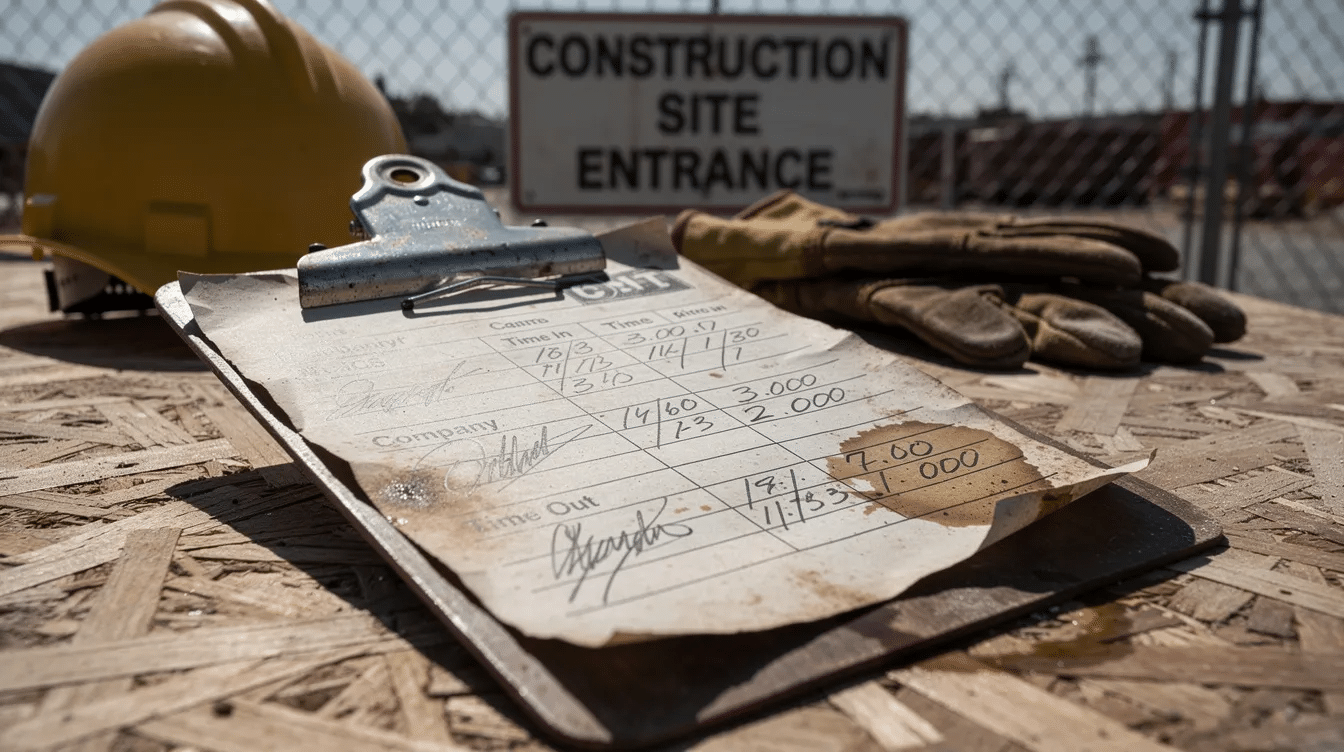
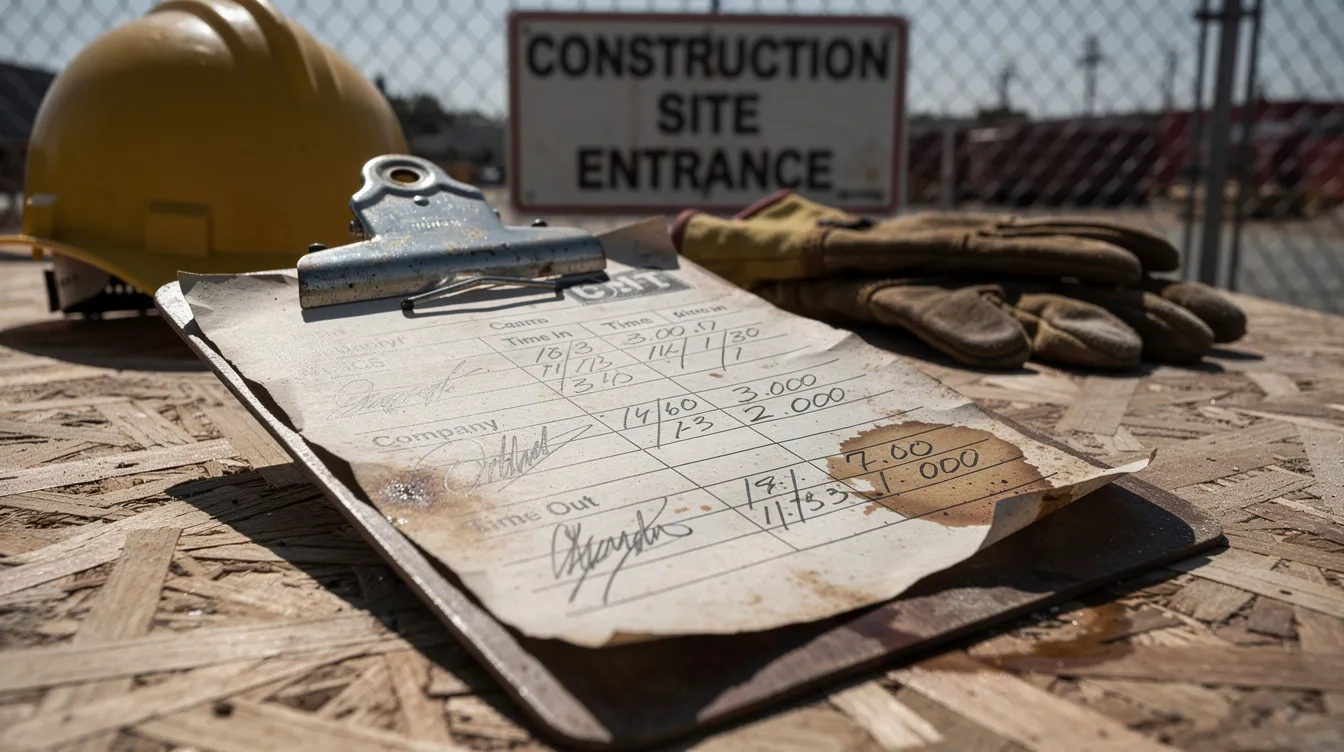
Paper sign-in sheets are still common on commercial and industrial projects. They are also the weakest link in jobsite recordkeeping. Sheets get lost, misfiled, or submitted days late. Handwriting is illegible. No verification confirms the person signing is the person named.
Shared badges create the same problem in digital form. A badge proves possession of a card, not identity. When crews rotate across locations or subcontractors share access credentials, the attendance record becomes unreliable when it matters most.
PINs and codes enable buddy punching, a form of proxy attendance where one worker clocks in for another. Identity verification prevents time theft and buddy punching, but PINs provide no identity verification. Any employee who knows the code can clock in that morning for a coworker who never arrived.
These manual and semi-manual methods feed directly into payroll errors. When hours worked are recorded inaccurately, contractors overpay, underpay, or spend hours reconciling discrepancies. Biometric attendance reduces payroll errors by replacing guesswork with verified data. Biometric systems can replace traditional sign-in methods such as paper logs and ID badges, closing the gap between who signed in and who was present.
The cost is not just financial. When a safety incident occurs and attendance records cannot confirm who was on site, the contractor’s ability to manage a claim or respond to an investigation weakens.
How Facial Recognition Improves Biometric Attendance
A face check at the point of entry works as identity verification: the worker presenting at a terminal is matched against their enrolled biometric template. Biometric attendance systems use unique biological traits for verification, including fingerprints, and each worker has a unique biometric identifier for clocking in, though face recognition is usually the better fit on active jobsites. The system confirms identity before recording attendance. Biometric systems ensure only authorized workers clock in, and face recognition prevents unauthorized clock-ins.
Liveness detection limits spoofing. Anti-spoofing controls require a live person (detecting blinking, depth, or movement) rather than a static photo. This addresses the possibility that someone could hold up a picture or use a screen to fake a clock-in.
AI supports recognition accuracy in changing site conditions. Construction workers wear hard hats, safety glasses, and dust masks. Lighting shifts between early morning, overcast skies, and nighttime. Modern systems train on these variables. Some facial recognition SDKs report accuracy above 99% under controlled conditions, with recognition completing in under half a second even when workers wear PPE.
Face recognition systems work offline for remote sites. Devices store enrolled templates locally and synchronize attendance data when a connection returns, and workers moving between locations may also clock in on phones. This matters for projects in rural areas or on sites without reliable internet.
Biometric systems provide accurate attendance records, and biometric attendance systems provide high accuracy and security. Biometric workforce management improves attendance tracking accuracy by removing manual input that introduces errors. Biometric time records give supervisors and payroll teams verified data instead of self-reported entries.
Records That Become More Reliable
The primary improved record is the attendance log itself. Each entry includes a timestamp, a verified identity match, and, in many systems, location metadata, with some platforms also attaching supporting documents to the record when needed. Biometric attendance systems provide accurate attendance records for compliance, creating a defensible account of who was on site and when.
Onsite proof supports incident documentation. When a worker files an injury claim, or when an investigation requires confirmation of who was present, verified attendance replaces ambiguous sign-in sheets.
Biometric systems can verify workers’ certifications and safety training requirements before granting entry. Systems that integrate with training and authorization records can confirm whether a worker has completed required safety inductions, holds current licenses, or has passed toolbox talk prerequisites.
Audit trails strengthen subcontractor attendance records. Instead of relying on a subcontractor’s self-reported hours, the general contractor has an independent, verified log. Real-time data from biometric systems improves health and safety compliance by making workforce composition visible at any point during a shift.
Biometric attendance systems eliminate buddy punching entirely. The face at the terminal is the face on the template, or entry is denied.
From Attendance System to Access Control
Verified biometric attendance can extend into physical access control. When a facial recognition terminal is installed at a turnstile or gate, it restricts entry to workers whose identities and credentials have been confirmed. Biometric scanners enhance jobsite security by restricting access to authorized personnel, and biometric technology prevents unauthorized access to construction sites.
Identity verification and physical access control are related but distinct. Attendance records confirm presence. Access control prevents unauthorized movement into restricted or hazardous zones. Some systems tie both functions together: a worker who has not completed a required safety induction or otherwise failed to comply with site access rules cannot pass the gate.
Subcontractor enrollment at project entry is a practical consideration. When new crews arrive, each worker enrolls a facial template, typically requiring a photo under controlled lighting, and construction companies need a repeatable enrollment process for new crews and subcontractors. That enrollment links identity to the subcontractor’s organization, trade, and credential status.
Biometric tracking can provide real-time headcounts for emergency evacuation management. In a site emergency, supervisors can verify who is on site and account for all personnel. Biometric systems provide real-time visibility into workforce locations, supporting both daily management and emergency response.
Identity verification improves safety compliance on construction sites by confirming that the workers present are the workers approved to be there.
What Construction Biometrics Mean for Ohio Valley Contractors
Commercial and industrial projects across Cincinnati, Dayton, Springfield, and Lima routinely involve multiple subcontractors, transient crews, and workers moving between projects. Each of these conditions makes traditional attendance tracking less reliable.
Contractors operating in Northern Kentucky and Southeastern Indiana face the same coordination challenges, with the added complexity of tri-state regulatory differences. An Ohio contractor running a project in Kentucky cannot assume that Ohio’s rules for biometric data collection apply across the river.
Verified identities help manage subcontractor safety effectively on multi-trade projects. When a general contractor can confirm which subcontractor employees were on site during a specific shift, disputes over hours worked, billing accuracy, and safety responsibility become easier to resolve. Biometric systems eliminate time theft and buddy punching, removing a category of payroll risk that grows with crew size.
Automated payroll processes reduce human errors across the organization. When attendance data flows directly from a biometric attendance system into payroll software, manual reconciliation that consumes office hours decreases, allowing payroll staff to focus on exceptions and higher-value review. Biometric systems automate payroll, reducing human errors that result from manual data entry or misread timesheets.
For contractors defending claims, pursuing insurance audits, or responding to OSHA investigations, the quality of attendance records matters. A verified biometric log is harder to dispute than a paper sheet with illegible signatures.
Biometric management systems strengthen compliance with safety regulations by linking worker presence to credentials and training status. A contractor using these tools on a prevailing wage project, for example, can produce attendance records that align verified identity with documented hours and trade classification.
Privacy, Data Security and Field Adoption
Biometric data requires governance that goes beyond standard personnel records. Facial templates are sensitive personal information. Privacy concerns require secure data-handling practices for collected biometric information, including encryption, access restrictions, and clear retention policies.
Worker resistance can stem from privacy and surveillance concerns. Field crews and subcontractors may question why the company is collecting facial data, who can view it, and what happens to it after the project ends. Addressing those questions before enrollment, not after, is essential to adoption.
Biometric data collection triggers strict legal frameworks requiring explicit worker consent. Ohio’s Revised Code Section 3965 defines biometric records in certain consumer contexts, and Illinois’ Biometric Information Privacy Act sets the strictest standard nationally. Contractors with projects crossing state lines into Kentucky or Indiana should verify local requirements independently, and employers should confirm that collection, consent, and retention practices comply with applicable state requirements.
Before enrolling workers, document the purpose of collection, the storage location, who has access, how long data is retained, and the process for deletion. Provide each user with a written explanation before capturing biometric data.
Harsh site conditions can interfere with biometric reader accuracy. Dust, rain, low light, and extreme temperatures affect camera and device performance. A practical system must include a nonbiometric exception process for workers whose faces are not recognized due to injuries, heavy PPE, or device failure.
Questions to Ask Before Selection
Before selecting a vendor or solution, contractors should address the following factors:
- Storage: Where are facial templates stored? On the device, on a local server, or in the cloud?
- Access: Who can view attendance and identity records? What controls exist for supervisors, the home office, and subcontractors?
- Retention: How long do attendance and biometric records remain available? What triggers deletion?
- Deletion: How does the vendor handle deletion requests from workers or from the organization after project completion?
- Fallback: What happens when facial recognition fails? Is there a secondary method such as a PIN, badge, or supervisor override?
How to Test a Biometric Time Pilot
Start with one project or one recurring attendance problem. A pilot on a single commercial or industrial site gives operations leaders enough data to evaluate whether the technology improves record accuracy without disrupting field work.
Audit current records before selecting technology. Collect data on attendance discrepancies, payroll corrections, and administrative hours spent resolving issues over the previous 60 to 90 days. This baseline makes the pilot measurable.
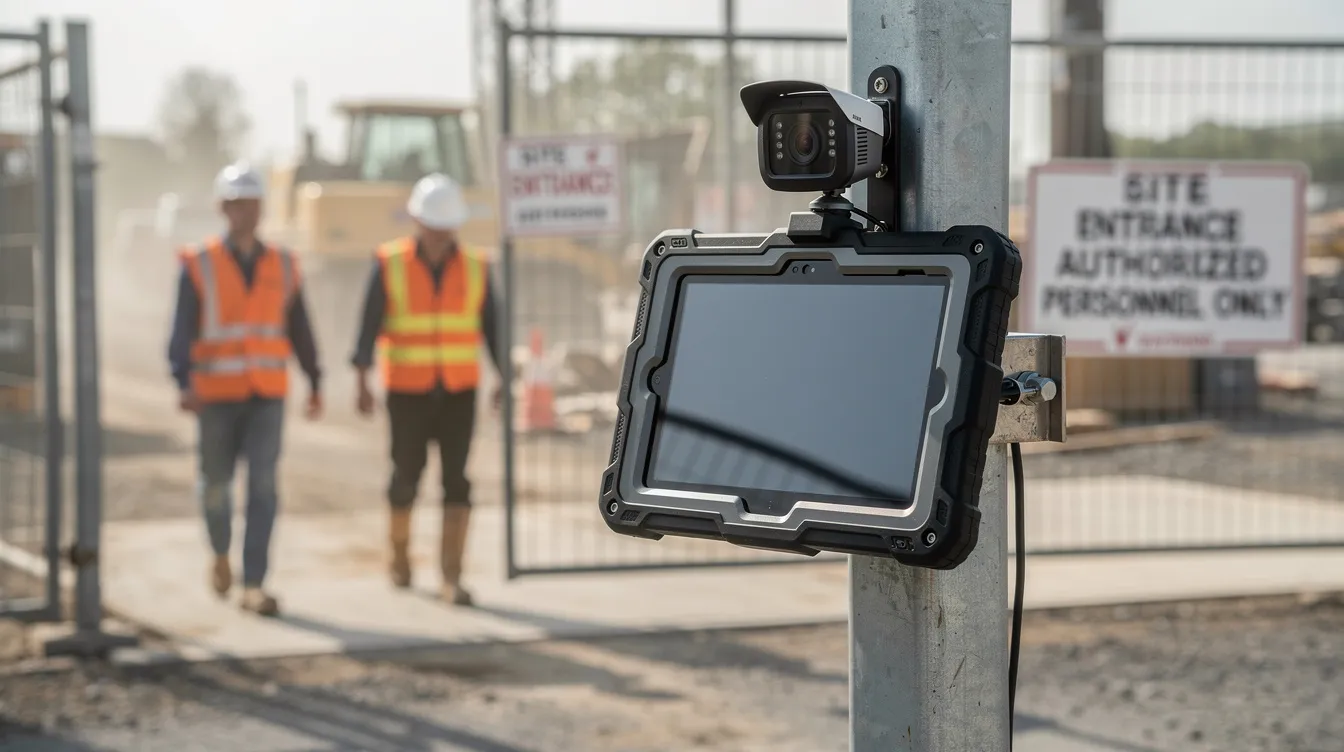
Test face check workflows at actual entry points. Install devices where crews enter, and use a pilot to test a shared tablet at the gate as a kiosk option for clock-ins, run enrollment for the project workforce, and track how long each clock-in takes under real conditions: hard hats, safety glasses, varying light, rain, dust.
Measure record accuracy without promising guaranteed savings. A pilot should answer whether the system produces fewer unresolved discrepancies, reduces time spent on manual corrections, and generates records that supervisors trust. Biometric systems enhance safety compliance on construction sites, but that compliance value depends on consistent, accurate data.
Biometric attendance systems provide accurate attendance records only when enrollment is thorough, devices are maintained, and workers use the system consistently. Some pilots also test clock-ins on workers’ own phones for crews moving between job sites. A pilot reveals whether those conditions hold on a real job site.
Pilot Measures for Construction Leaders
| Measure | What to Track | Why It Matters |
|---|---|---|
| Attendance discrepancies | Number of unresolved discrepancies compared with the pre-pilot period | Shows whether verified identity reduces record gaps |
| Administrative time | Hours spent correcting or chasing attendance data per week | Quantifies the office burden the system is expected to reduce |
| Failed matches | Frequency of false rejections, reviewed with field supervisors | Identifies device, lighting, or PPE issues that need adjustment |
| Worker feedback | Complaints, delays, or adoption concerns gathered from crews | Determines whether the process is accepted before expanding |
Gather worker input before expanding deployment. A system that the full team, including subcontractors, refuses to use does not improve records.
A Practical Next Step for Contractors
The starting point is not a vendor demo or a software purchase. It is a conversation among operations, safety, and payroll leaders about where current attendance records are weakest.
Select one documented attendance weakness: a project with recurring discrepancies, a subcontractor billing dispute, or a site where buddy punching is suspected. Use that case to define what a biometric attendance system would need to solve.
Review available construction safety software guidance to understand how digital compliance tools fit into broader recordkeeping workflows. Use the AI in construction pilot resource to structure a controlled test before committing to a full deployment.
Construction biometrics is not a technology that requires an all-or-nothing decision. A single controlled pilot on one project, with clear measures and a defined evaluation period, tells a contractor whether the records improve enough to justify the investment.
Contact ABC Ohio Valley for relevant technology education resources and to connect with members exploring similar tools across Southwest and West Central Ohio, Northern Kentucky, and Southeastern Indiana.