Key Takeaways
Building asset discipline, meaning how contractors plan, own, rent, deploy, and maintain their equipment and tools, has become a direct profit margin lever for Ohio Valley construction companies facing tariff-driven material volatility and tighter construction profit margins in 2026.
Improving construction asset management can move gross profit margin several points and protect net profit margin on commercial and industrial construction projects in Cincinnati, Dayton, Springfield, Lima, Northern Kentucky, and Southeastern Indiana. The average gross profit margin in the construction sector runs 20–27%, and net profit margins in construction typically range from 5% to 10%. When material costs are rising 7% year over year, and many contractors are already bidding lean, a few percentage points recovered through better equipment utilization, fewer idle rentals, and disciplined maintenance can determine whether a firm is making money or just moving it.
ABC Ohio Valley members should treat this article as a leadership-level operating memo. Pair it with existing resources on construction financial management in 2026, preconstruction services in a tariff-driven market, and construction material costs in 2026. The closing section provides a specific 30-day asset review plan that owners and project managers can start immediately to tighten asset control and improve profitability before the next bid cycle.
Defining a “Building Asset” for Ohio Valley Contractors
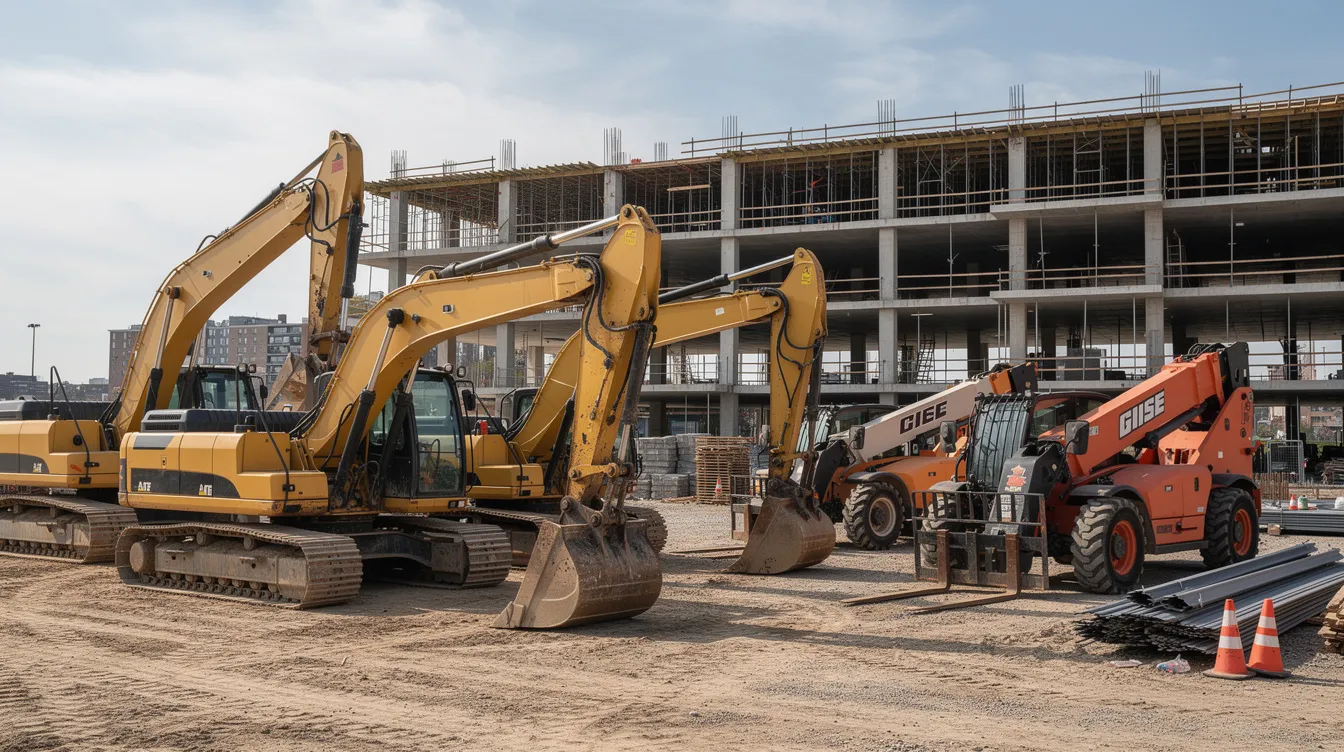
A building asset, in contractor terms, is any piece of owned or rented equipment, vehicle, tool, temporary structure, or technology that directly produces revenue on commercial and industrial construction projects. Construction asset management optimizes these physical assets throughout their lifecycle, from acquisition through deployment to disposal or replacement.
Concrete examples across the region include excavators on hospital work in Dayton, aerial lifts on warehouse projects along the I-75 corridor, service trucks in Northern Kentucky, skid steers on school renovations in Springfield, and temporary power systems and job site trailers in Lima. These assets show up on financial statements as capital expenses, leases, or rental costs, and the way leaders manage them influences gross profit, net profit, and cash flow on every project.
The critical distinction is between productive assets actively earning revenue on jobs and idle or duplicated assets quietly draining profit margins through storage, insurance, financing, and unneeded rental fees. Smart asset management sits alongside estimating accuracy, job costing, and WIP practices as a core discipline for any construction business.
The term “building asset” carries different meanings across industries. In financial markets, assets increase in value, generate income, or provide leverage for building more assets. Financial assets include ownership in paper or digital market instruments like stocks and bonds. Real estate generates cash flow and long-term capital appreciation through rental income. Equities provide growth through capital appreciation and income through dividend payments. In digital production, a structured, multi-phase pipeline is required to build a digital 3D asset. That pipeline includes concept and reference gathering (collecting visual research and defining scale and style), blocking and high-poly modeling (beginning with creating a clean low-poly base), retopology (rebuilding a high-density mesh into a low-poly mesh), UV unwrapping (preparing a 3D mesh for texture painting), map baking (projecting high-poly details onto a low-poly mesh to create texture maps), rigging and skinning (building a hierarchy of joints for asset articulation), and export and engine integration (exporting the final mesh and textures into a game engine). For Ohio Valley contractors, however, the term means something tangible: the iron, tools, and support assets that keep projects moving.
Why Building Asset Discipline Matters Now in a Tariff-Era Market
Material inputs for commercial and industrial construction in 2025 and 2026 have been volatile. The Producer Price Index for construction materials peaked at 354.9 in April 2026, with copper up roughly 32%, steel pipe and tube up about 12.5%, and cement up 7.7%. Tariff uncertainty, including the Section 122 expiration and transition to Section 301 duties, has compounded price changes across the Ohio Valley.
Many contractors have already tightened estimating and markup to cover overhead and protect competitive positioning, especially when bidding against multiple firms in Cincinnati and Northern Kentucky. There is less room to protect profit margins by adjusting bid prices alone.
Under these conditions, disciplined control of the building asset base becomes a second major margin lever. Controlling how equipment and tools are owned, rented, scheduled, and maintained reduces total cost per production hour. That might mean delaying a new excavator purchase, stretching the life of a crane through preventive maintenance, or avoiding double-booked rentals on parallel projects in Dayton and Springfield. This shift is strategic for merit-shop contractors who want to outperform average profit margins in the construction industry through operational discipline, not by simply chasing volume.
What Counts as a Building Asset on a Jobsite
Leaders should map building asset categories across every active project and yard location. The following framework covers the resources most Ohio Valley contractors deploy:
- Owned heavy equipment: Excavators, dozers, cranes, telehandlers, and large generators used on manufacturing, healthcare, and warehouse construction projects along the I-70 and I-75 corridors.
- Mid-sized equipment and fleet: Skid steers, mini-excavators, scissor lifts, pickup trucks, flatbeds, and service vans that support day-to-day operations and crew mobility between Lima, Cincinnati, and Southeastern Indiana job sites.
- Smaller tools and support assets: Laser levels, compactors, welders, power tools, gang boxes, trailers, temporary power systems, and job site office units. These are often overlooked but expensive when lost or duplicated.
- Rented and leased equipment: Cranes, specialized shoring systems, aerial lifts, and generators under rental or lease agreements. Mismanagement of rented equipment weakens construction profit margins just as much as owning too much iron.
Every category represents direct costs and overhead costs on a completed project. Getting the mix wrong, in either direction, erodes the bottom line.
How Building Asset Discipline Protects Gross and Net Profit Margin
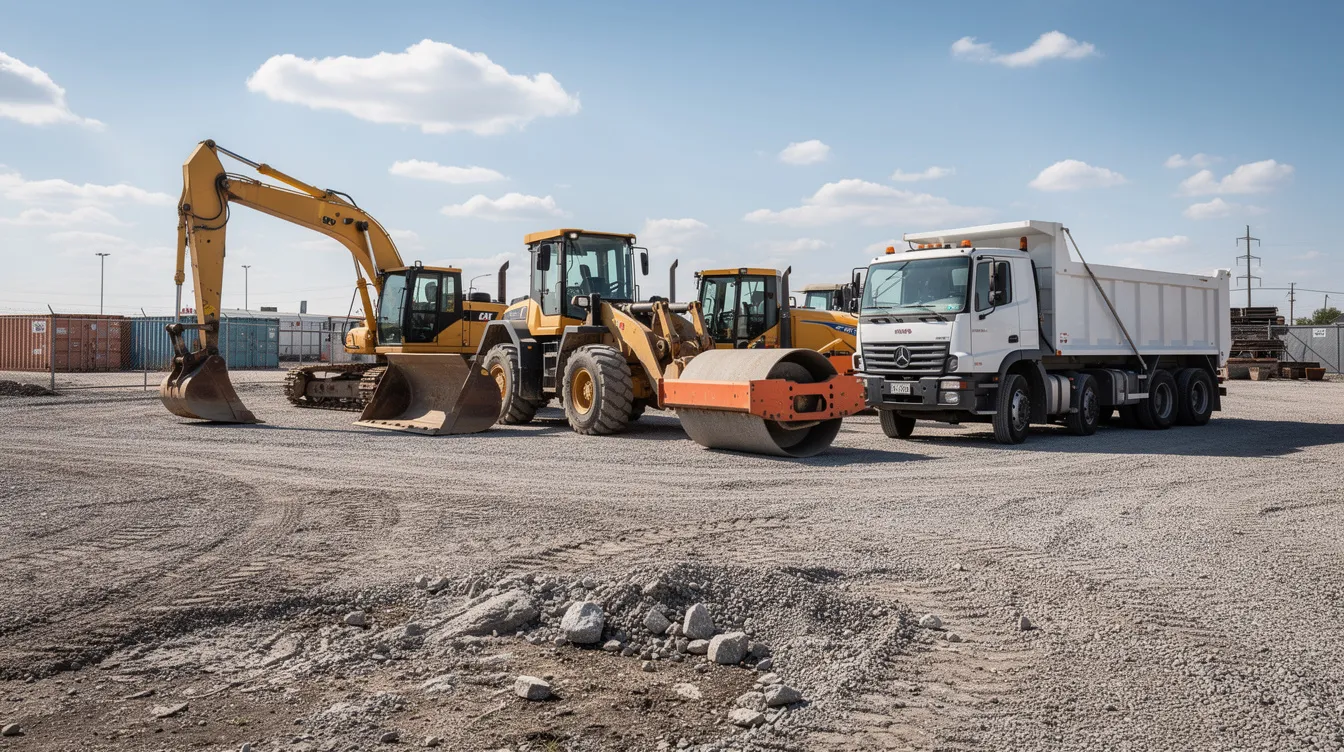
Construction companies had gross margins of 26.96% in Q2 2022, and a good starting profit margin is 20% based on the 10-10 rule. But those margins are only real if operating costs, including equipment, stay controlled. Idle equipment or excess rentals reduce profitability on individual projects and at the company level, so the core benefits of stronger building asset discipline are better cost control, higher efficiency, and stronger margins.
Utilization is the key metric: the percentage of available hours each major asset is productively used. Raising utilization from 55% to 70% on a small fleet of telehandlers can shift gross margins by multiple percentage points. Disciplined scheduling and dispatch reduce overlapping rentals, unneeded standby charges, and re-delivery fees that inflate total project costs on multi-job operations in the Ohio Valley.
Regular maintenance reduces unexpected breakdowns and project delays. Preventive maintenance scheduling extends the lifespan of construction equipment, meaning fewer emergency rental substitutions, less overtime for recovery work, and better average profit margins over time. Good asset records and clear custody (who is responsible for each asset on which job) reduce theft, loss, and damage disputes, which lowers insurance claims, deductibles, and unbillable expenses that otherwise reduce net profit.
Owned Versus Rented Equipment: A Margin-Focused Decision
The buy-versus-rent choice is a strategic calculation about total cost, cash flow, and construction profit margins over the life of the asset. Markup must cover direct costs, overhead, and profit, and equipment assumptions directly affect all three.
To compare properly, account for these ownership components:
| Cost Factor | Owned Equipment | Rented Equipment |
|---|---|---|
| Acquisition | Purchase price, financing | None |
| Maintenance | Owner’s responsibility | Mostly included |
| Insurance | Owner’s expense | Often included |
| Depreciation | Applies over useful life | Not applicable |
| Idle cost | Accrues regardless of use | Ends when returned |
| Cash flow impact | Ties up capital | Preserves liquidity |
A practical decision rule: own core equipment that exceeds a defined annual utilization threshold across projects in Cincinnati, Dayton, Springfield, and Lima. Rent highly specialized or seasonal machines that would sit idle much of the year. Research from EquipmentWatch shows that about 73.5% of contractors prefer using equipment they own, but 44.3% acknowledged renting made more financial sense in certain cases.
Rental can preserve cash flow and working capital, which may help contractors maintain bonding capacity and invest in workforce development, training, and safety programs. When large multi-year equipment purchases or leases involve complex contract structures, firms should consider consulting qualified legal counsel to manage risk on those commitments.
Jobsite Controls That Reduce Idle Time, Loss, and Unnecessary Spend
Most margin leakage from building assets comes from everyday inefficiencies, not spectacular failures. A centralized tracking system provides visibility into equipment location and maintenance history, which is the foundation of tighter control.
Practical steps include:
- Centralized dispatch and return: Coordinate equipment movement between jobs so machines move directly from a finishing project in Dayton to a starting job in Northern Kentucky instead of sitting idle in the yard.
- Daily or weekly checklists: Foremen and superintendents verify location, condition, and assignment of major equipment, preventing duplicate rentals and unnoticed losses.
- Asset tracking methods: Real-time asset tracking improves resource allocation across construction sites. Solutions range from barcodes and spreadsheets to dedicated construction asset management platforms with asset information available from field to office.
- Accountability systems: Custody logs for smaller tools reduce the overhead expense of replacing lost or duplicated items across a schedule of active projects.
These controls also support construction waste management compliance and reinforce an organized, safety-focused work environment.
Finance and Risk Questions Leaders Should Be Asking About Assets
Owners, CFOs, and operations leaders should connect building asset decisions directly to financial performance and risk. Consider these questions:
- Which categories of owned equipment are consistently underutilized, and how would selling or downsizing affect net profit and cash flow over the next 12 to 24 months?
- On which jobs did rental costs exceed the budget by more than 10%? Were overruns caused by schedule delays, duplicate rentals, or lack of return discipline?
- Which building assets carry the highest loss history, theft risk, or safety incidents? Are controls, training, and insurance coverage aligned with that risk?
- How does asset data feed into estimates, WIP reports, and project closeout reviews so that actual costs and utilization inform future bids?
In the broader business context, construction leaders should think about their physical asset base with the same rigor investors apply to financial portfolios. Cash and cash equivalents are highly liquid assets that provide immediate safety and capital preservation. Bonds provide stability and predictable income with lower volatility. Commodities serve as an inflation hedge and portfolio diversifier. Diversification across uncorrelated assets reduces risk and smooths returns. Combining various asset types can create a resilient portfolio for wealth accumulation. Passive income comes from assets that generate cash flow with little ongoing effort. Intellectual property can be monetized to create scalable passive income streams. Reinvesting earnings accelerates long-run wealth accumulation through compound growth. Business equity allows you to scale operations and capture higher valuations. For contractors, the same principle applies: the right mix of owned, rented, and liquid resources protects total income and supports long-term value.
Where Ohio Valley Construction Companies Can Tighten Control First
Start with a focused yard and fleet inventory of the top 20 to 30 highest-value pieces of equipment. Identify which assets were underutilized, frequently rented as duplicates, or costly to maintain in the past 12 months. This analysis alone often reveals significant margin improvement opportunities.
Review your busiest trade types, such as electrical, HVAC, and plumbing work supported by ABC Ohio Valley apprenticeship programs, to determine how specialized tools and lifts are shared or siloed between crews and branches. Map equipment flows between construction projects in Cincinnati, Dayton, Lima, Northern Kentucky, and Southeastern Indiana, looking for patterns where better planning could reduce standby costs, duplicate rentals, or rush deliveries.
This initial tightening effort should be coordinated with broader 2026 construction financial management initiatives so asset decisions reinforce cash flow, bonding capacity, and long-range capital planning.
Integrating Building Asset Management Strategy With Preconstruction and Estimating
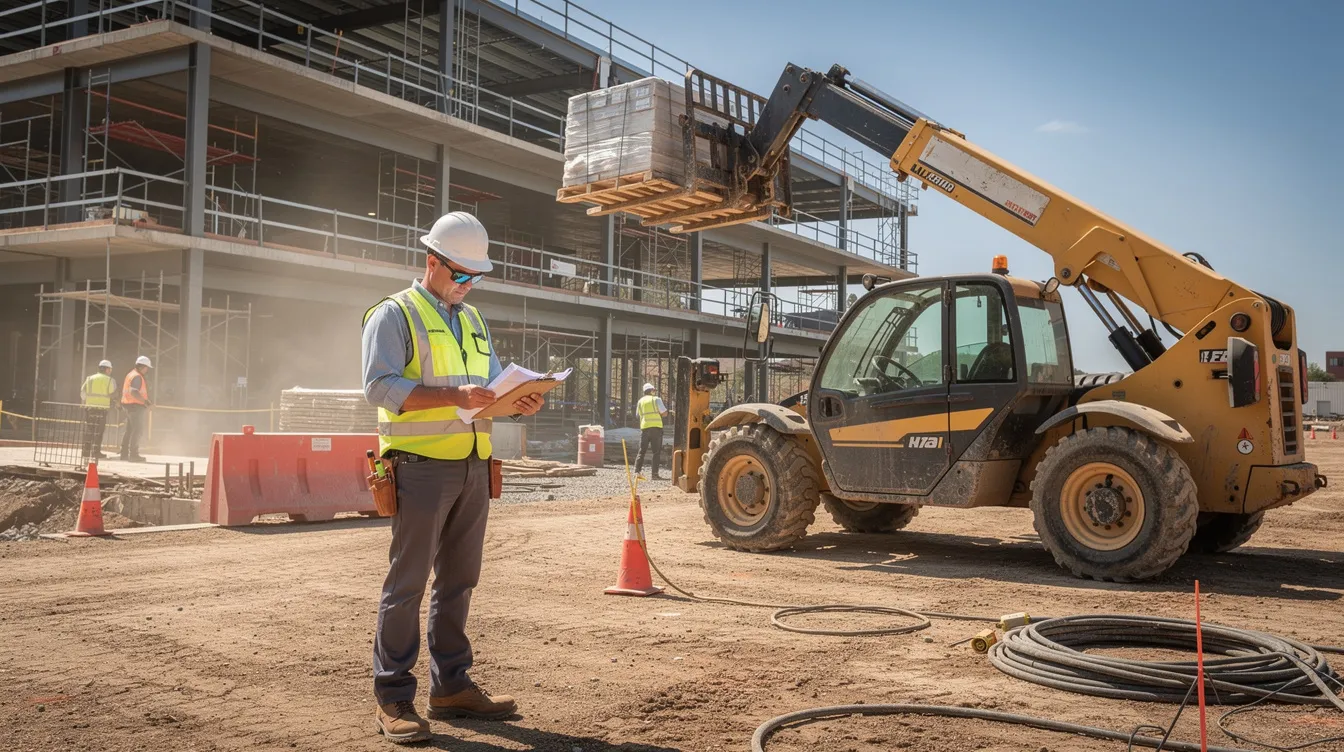
Building asset discipline should inform preconstruction and estimating, not just day-to-day operations. Construction cost estimating predicts project costs over its life cycle, and equipment assumptions are a significant line in that plan. Cost management includes estimating, budgeting, and cost control processes, and each stage is stronger when fed by accurate asset data.
Preconstruction teams can use historical utilization and rental data to build realistic equipment budgets and schedule assumptions. Margin fade occurs when actual profits fall below estimated profits, and underestimated equipment costs are a common cause. Estimators should flag large or unusual equipment needs on bid reviews, such as tower cranes for a new industrial facility in Springfield or specialized shoring for a healthcare project in Cincinnati, so leadership can decide early whether to rent, lease, or buy.
Integrating asset strategy at the preconstruction stage supports more accurate bids, steadier gross margins, and fewer surprises in WIP reports and final net profit outcomes. Apply the same rigor used for material escalation and procurement to equipment planning and rental contingencies.
A 30-Day Asset Discipline Plan for Ohio Valley Contractors
Owners and executives can translate these principles into action within 30 days without major software investments:
Week 1: Data gathering. Export the last 12 months of rental invoices, maintenance logs, and major equipment utilization records for core assets supporting projects across your footprint.
Week 2: Analysis. Identify the top 10 assets by annual cost (owned and rented). Highlight underutilized machines, chronic repair costs, and unexpected breakdowns, and jobs where rental costs significantly exceeded estimates.
Week 3: Decisions. Agree on three to five concrete policy changes: utilization thresholds for new equipment purchases, mandatory return dates for rentals, preventive maintenance intervals, and a named asset coordinator role. Use this analysis to determine where actual costs deviated from the budget.
Week 4: Implementation. Roll out the new practices to superintendents, foremen, and project managers through toolbox talks or leadership meetings. Connect the changes to broader financial goals, including improving construction profit margins and stabilizing cash flow across every site.
Connect with ABC Ohio Valley to align asset discipline with ongoing training, peer groups, and financial management resources that support a stronger bottom line in 2026 and beyond.
Frequently Asked Questions
Below are answers to common questions about this topic.
How does building asset discipline differ from general cost cutting?
Building asset discipline is about using equipment and tools more intelligently to support production, not simply slashing budgets. It aims to improve gross and net profit margins without undermining safety, quality, or project timelines. Good asset management may involve spending more in some areas, such as preventive maintenance operations or better tracking systems, to avoid higher unplanned costs and margin erosion later. The goal is smarter resource deployment, not fewer resources.
What simple metrics should we track first to measure asset performance?
Start with a short list: utilization rate (hours used divided by available hours), annual rental spend by job, maintenance cost as a percentage of replacement value, and the number of days major equipment sits idle between assignments. General contractors and subcontractors alike benefit from reviewing these metrics quarterly to see how changes in asset practices are influencing profit margins and cash flow. Even tracking idle days alone can reveal scope changes in fleet performance.
Can smaller contractors in the Ohio Valley benefit from asset tracking without expensive software?
Smaller firms can see meaningful gains using simple methods such as shared spreadsheets, whiteboards in the yard, or basic barcode labels, as long as responsibility for updates is clear and consistent. Many contractors underestimate how much value basic accountability creates. As operations grow, leaders can evaluate dedicated construction asset management tools that integrate with existing project and financial systems to provide better access to asset information across the business.
How often should we revisit buy-versus-rent decisions on existing equipment?
Perform a structured buy-versus-rent review on major equipment at least annually and whenever significant changes occur, such as a large new project award, a downturn in backlog, or notable shifts in financing costs or rental rates. These reviews help ensure the current mix of owned and rented assets still supports target profit margins given evolving demand across Cincinnati, Dayton, Springfield, Lima, Northern Kentucky, and Southeastern Indiana.
Where does asset discipline fit within our broader financial management plan?
Build asset strategy into the same planning cycles that drive budgeting, WIP reviews, and cash flow forecasting, rather than treating it as a separate operational issue. Pair this approach with ABC Ohio Valley resources on construction financial management in 2026 so that equipment decisions reinforce overall profitability, risk control, and long-term growth objectives for your construction business.